Quranic Answer
Hope for the Future in Islam: Cultivating Optimism through Faith Introduction Hope is a profound and essential aspect of the human experience, particularly in the context of spirituality and religion. In Islam, hope plays a pivotal role, as it provides believers with the strength to face life's challenges and uncertainties. The teachings of the Holy Quran inspire individuals to foster an enduring sense of hope in the mercy of Allah (God). This article delves into the significance of hope in Islamic teachings, highlighting key verses from the Holy Quran that illuminate this concept and the mechanisms through which hope can empower believers. The Essence of Hope in Islam Hope in Allah's mercy is not merely a superficial desire; it is a deep-rooted belief that sustains the faith of Muslims throughout their trials. The Quran profoundly emphasizes the importance of hope, especially in the face of adversity. In Surah Az-Zumar, verse 53, Allah guides His believers with a powerful message: "Say, O My servants who have believed, fear your Lord. For those who do good in this world is good, and the earth of Allah is spacious. Indeed, the patient will be given their reward without account." This verse echoes a fundamental Islamic principle – that doing good and maintaining courage in the face of difficulty leads to divine rewards. A significant aspect of this verse is its dual encouragement to fear Allah and to do good. It reinforces the Islamic belief that while believers face challenges, they are simultaneously tasked with performing righteous actions and maintaining hope for a better future. The remark about the earth's expanse serves as a reminder that opportunities abound and that believers may find solace and respite in the vastness of Allah's creations. Navigating Difficulties with Patience Life is replete with tests and trials, which is consistent with the human experience. Allah reminds believers of the inevitability of these tests in Surah Al-Baqarah, verse 155, stating: "And We will surely test you with something of fear and hunger and a loss of wealth and lives and fruits, but give good tidings to the patient." This verse encapsulates the reality of living a mortal life, where fear and deprivation pose significant challenges. However, it also provides a promise of comfort and rewards for those who exercise patience. Patience, or 'Sabr', is a recurring theme in Islamic teachings, serving not only as a means to endure hardships but also as a powerful tool for fostering hope. During difficult times, when it may seem challenging to see a way forward, patience allows individuals to remain steadfast, focusing on the promise of divine mercy. The concept of being rewarded without account is particularly uplifting, as it assures believers that their efforts and resilience do not go unnoticed by Allah. This divine assurance reinforces the importance of maintaining hope even amidst overwhelming challenges. The Role of Inner Discernment Moreover, Islamic teachings recognize the complexities of the human soul and its ability to discern between good and evil. Surah Ash-Shams, verses 7 to 8, articulates this beautifully: "And by the soul and He who proportioned it. And inspired it with [discernment of] its wickedness and its righteousness." These verses signify that human beings possess an intrinsic understanding of morality, enabling them to choose a path of righteousness. This divine capability is empowering, as it indicates that believers are equipped to overcome challenges by choosing goodness over wickedness. The more they align with positive choices, the stronger their hope becomes. This divine gift of discernment is instrumental in navigating life's trials, allowing believers to elevate their spirits and focus on the promises of Allah's mercy and grace. Hope as a Source of Strength The importance of hope extends beyond individual hardship; it shapes the communal and social fabric of Islamic society. When individuals maintain hope and share it within their communities, they contribute to a collective sense of optimism. This shared hope can have profound effects, uplifting those around them and fostering solidarity. Furthermore, prayers and supplications play a crucial role in nurturing hope. Engaging in regular prayer draws believers closer to Allah, reinforcing their faith and reminding them that they are never alone in their struggles. Through prayer, they can express their hopes and desires, seeking guidance and support from the Creator. In this way, prayer becomes a powerful tool for cultivating hope, as believers surrender their challenges to Allah while seeking the strength to overcome them. Conclusion In summary, hope for the future is an integral and significant concept in Islam, encompassing the mercy of Allah and the assurance of His unwavering support. The Holy Quran provides profound guidance, reminding believers to remain steadfast in their faith, exercise patience, and choose righteousness. Through these teachings, Muslims are empowered to navigate life's challenges with a resilient mindset, fostering hope even in the darkest of times. As individuals strengthen their faith, engage in prayer, and share hope within their communities, they cultivate a profound sense of optimism that can withstand any hardship. Ultimately, hope in Allah not only illuminates the path ahead but also transforms lives, providing comfort and reminding believers that every trial is a precursor to relief and mercy from the Almighty.
Related Verses
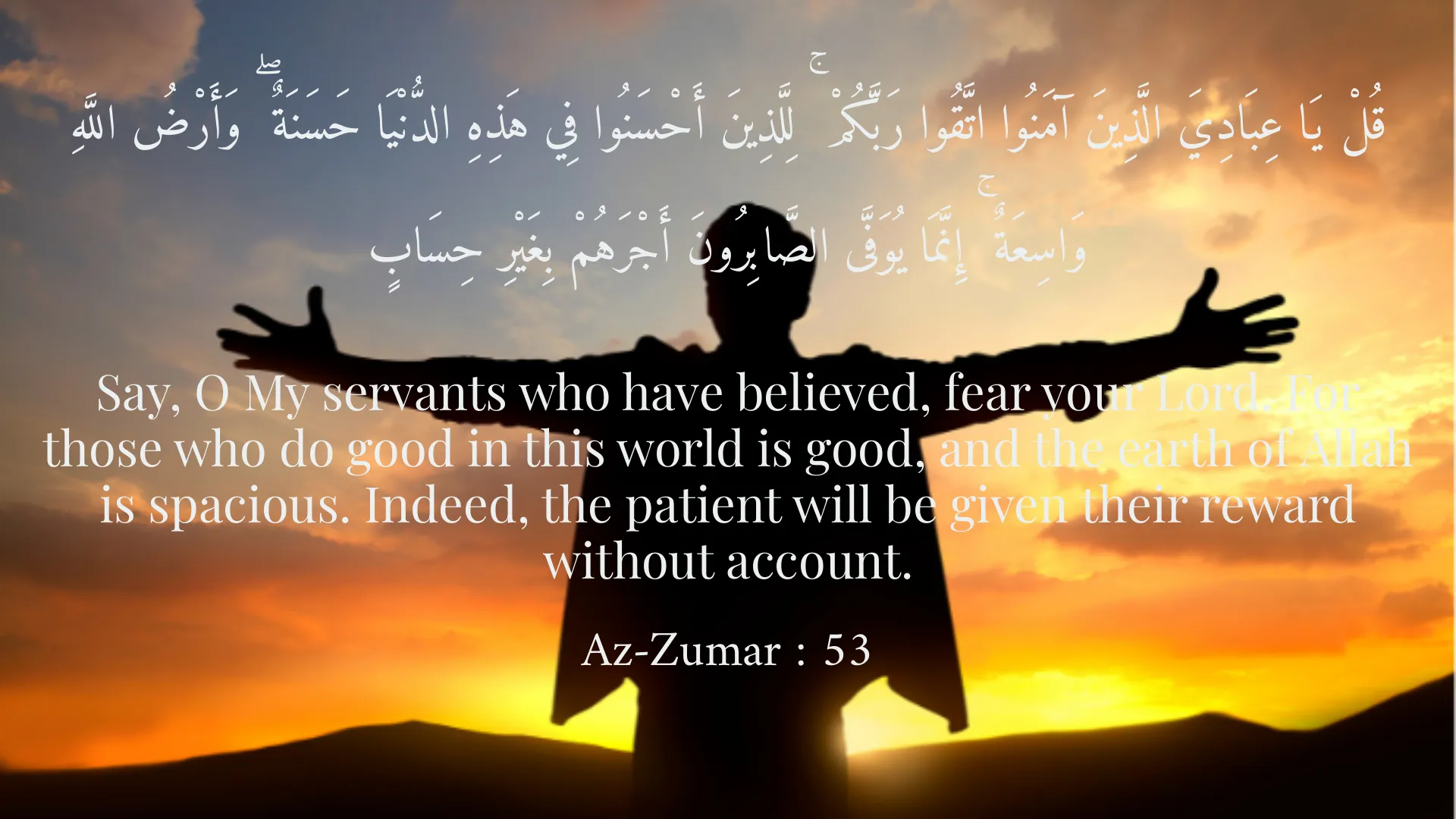
قُلْ يَا عِبَادِيَ الَّذِينَ آمَنُوا اتَّقُوا رَبَّكُمْ ۚ لِلَّذِينَ أَحْسَنُوا فِي هَذِهِ الدُّنْيَا حَسَنَةٌ ۖ وَأَرْضُ اللَّهِ وَاسِعَةٌ ۚ إِنَّمَا يُوَفَّى الصَّابِرُونَ أَجْرَهُمْ بِغَيْرِ حِسَابٍ
Say, O My servants who have believed, fear your Lord. For those who do good in this world is good, and the earth of Allah is spacious. Indeed, the patient will be given their reward without account.
Az-Zumar : 53
وَلَنَبْلُوَنَّكُم بِشَيْءٍ مِّنَ الْخَوْفِ وَ الْجُوعِ وَنَقْصٍ مِّنَ الْأَمْوَالِ وَ الْأَنفُسِ وَ الثَّمَرَاتِ ۗ وَبَشِّرِ الصَّابِرِينَ
And We will surely test you with something of fear and hunger and a loss of wealth and lives and fruits, but give good tidings to the patient.
Al-Baqarah : 155
وَنَفْسٍ وَمَا سَوَّاهَا ۖ فَأَلْهَمَهَا فُجُورَهَا وَتَقْوَاهَا
And by the soul and He who proportioned it and inspired it with its wickedness and its righteousness.
Ash-Shams : 7
Short Story
Once upon a time in a small town, there lived a man named Hasan who was always worried about his future. He faced life’s challenges every day and sometimes felt like there was no hope left for the future. One day, he met a wise man and asked him about hope. The wise man smiled and said, 'Hope for the future means having faith in Allah's mercy. Never despair, for Allah is always by His servants' side and will help them.' Upon hearing these words, Hasan remembered the verses of the Quran and felt a new sense of peace and hope in his heart. He decided to trust in Allah and confront his problems with patience and perseverance. From that day on, his life changed remarkably, and he always continued on his path with hope.