Quranic Answer
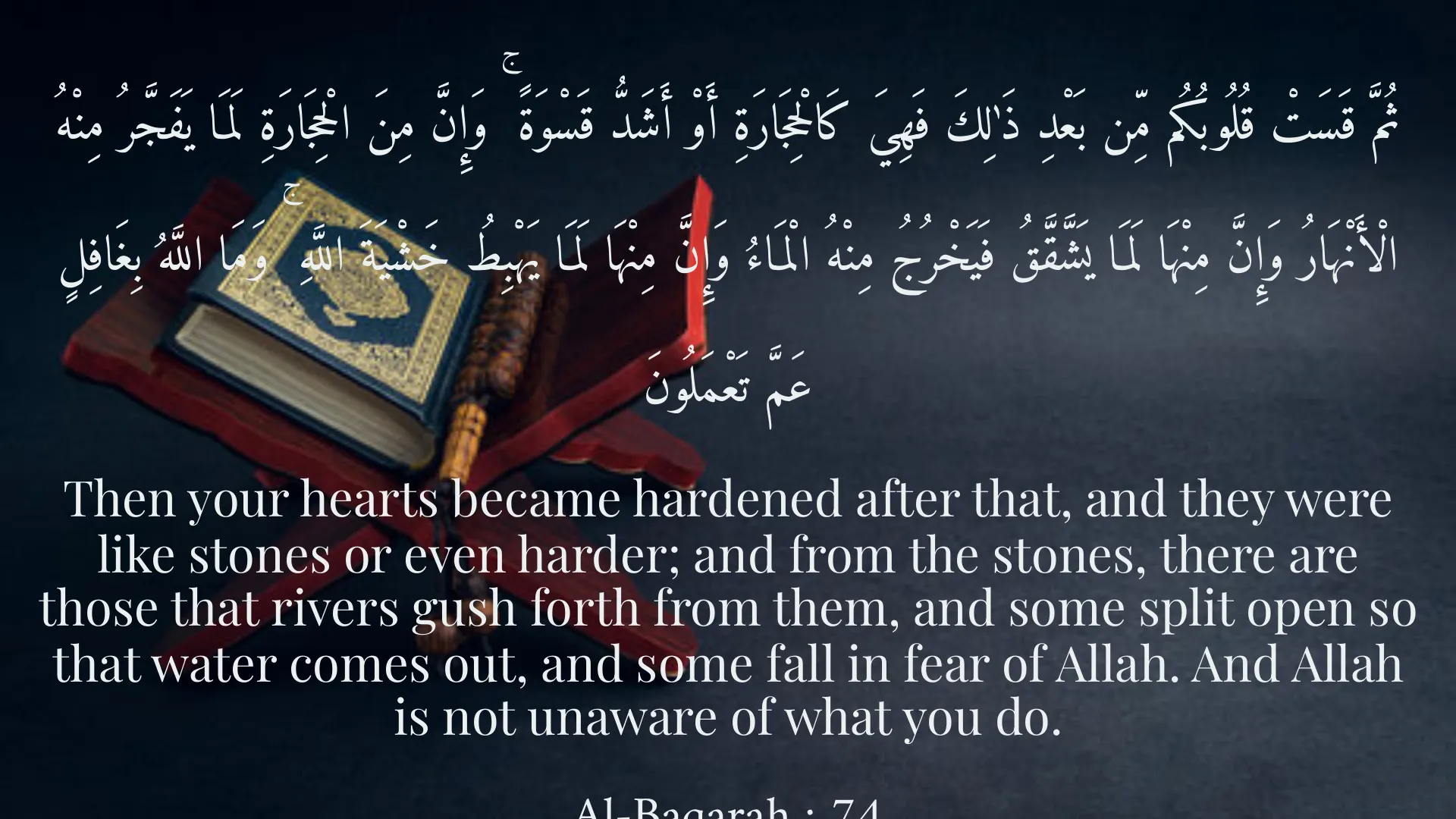
In the Holy Quran, a significant focus is placed on the spiritual state of the human heart. Throughout its verses, the Quran provides profound insights into the concept of softening the heart and the detrimental effects of deviating from the right path on one's spiritual well-being. The condition of the heart is central to faith and worship, as it directly influences an individual's relationship with Allah and the earnestness with which they pursue righteousness. One striking example of the Quran's teachings on this topic can be found in Surah Al-Baqarah, verse 74. Allah says: "Then your hearts became hardened after that, and they were like stones or even harder..." (Quran 2:74). This verse presents a vivid metaphor by comparing hardened hearts to stones, which are devoid of sensitivity and flexibility. The imagery conveys the gravity of spiritual numbness, highlighting how disbelief and disobedience to divine commands can lead to a state where the heart is rendered impervious to divine mercy and guidance. The eroding effects of sin and transgression become evident in this analogy, emphasizing that neglecting one’s spiritual duties can significantly distance an individual from the compassion and grace of the Almighty. Moreover, the Quran emphasizes the necessity of remembrance of Allah in achieving tranquility of the heart. In Surah Al-Imran, verse 155, it is stated: "Surely, hearts find peace only in the remembrance of Allah" (Quran 3:155). This verse underscores the importance of engaging in dhikr, or the remembrance of Allah, as a means to rejuvenate and heal the heart. When individuals stray from regular remembrance and neglect their spiritual obligations, it is not uncommon to experience a sense of numbness or lethargy towards engaging in acts of worship and good deeds. This disinterest serves as a potential indicator that the heart is falling into a hardened state, requiring urgent attention and rectification. Additionally, prophetic traditions give weight to the importance of prayer and seeking forgiveness in the context of softening the heart. Engaging in regular prayers and sincerely asking for forgiveness are both acts that draw a person closer to Allah, fostering a sincere acknowledgment of one's shortcomings and a desire for improvement. It is through these actions that individuals are reminded of their dependence on the mercy and compassion of Allah, allowing for a renewal of their commitment to righteousness. Being alive and sensitive to the call of worship and to the urge to perform good actions requires constant engagement with Allah and the observance of His commands. Therefore, if one feels distanced from these practices, it can be a source of concern, indicating that their heart may have hardened over time. The hardened heart exhibits signs of indifference towards sins and transgressions, often glossing over the gravity of actions that are contrary to the teachings of Islam. In contrast, a person blessed with a soft heart is acutely aware of their personal failings and actively seeks to correct them. This sensitivity is key to spiritual growth and piety, urging individuals to remain vigilant and committed to their faith. The Quran also encompasses the idea of reflecting upon one’s inner self as a means of diagnosing the state of one’s heart. Surah Al-Anfal, verse 24, encourages believers to respond to Allah and His Messenger, even when their own feelings or desires might deter them, stating: "O you who have believed, respond to Allah and to the Messenger when he calls you to that which gives you life." (Quran 8:24). This command highlights the inherent connection between responsiveness to divine guidance and the nourishment of the heart; in response to the call of Allah, the heart can flourish with life and spiritual vitality. Furthermore, understanding the underlying causes that lead to the hardening of the heart is crucial in addressing this issue. Factors such as negligence in worship, exposure to sinful environments, and persistent engagement in wrongful acts can all contribute to the gradual hardening of the heart. The heart, much like a muscle, requires nurturing through prayer, reflection, and righteous actions to maintain its flexibility and sensitivity. In today's world, the distractions and temptations surrounding individuals can starkly challenge their spiritual focus. The bombardment of materialistic pursuits and societal expectations can lead to a gradual neglect of faith-based practices. Awareness of this dynamic is vital—believers must be proactive in recognizing early signs of a hardened heart and take deliberate steps to reinvigorate their spirituality. Engaging in community worship, reading the Quran, attending religious lectures, and seeking the companionship of righteous individuals can significantly aid in rejuvenating one’s heart. Moreover, the practice of self-reflection and accountability plays a crucial role in softening the heart. Individually taking the time to ponder over one’s actions, intentions, and their alignment with Islamic teachings encourages a sense of humility and fosters a desire to improve. This practice can help unlock avenues for heartfelt repentance and ultimately revive the connection between the believer and Allah. In conclusion, the Holy Quran offers comprehensive guidance on nurturing a soft heart while shedding light on the perilous consequences of spiritual deviation. Both the verses and the prophetic traditions collectively emphasize that the state of the heart is paramount to an individual's spiritual journey. By recognizing the signs of a hardened heart, engaging in acts of remembrance, and seeking repentance and forgiveness, believers can actively work towards reviving their sensitivity to faith and righteousness. Softening the heart is not merely a spiritual pursuit; it is a lifelong endeavor that encapsulates the return to the core values of worship and adherence to divine guidance. As believers, the pursuit of a tender and pliant heart serves as both a responsibility and a blessing, indicative of a life lived in consciousness of Allah's boundless mercy.
Related Verses
ثُمَّ قَسَتْ قُلُوبُكُم مِّن بَعْدِ ذَٰلِكَ فَهِيَ كَالْحِجَارَةِ أَوْ أَشَدُّ قَسْوَةً ۚ وَإِنَّ مِنَ الْحِجَارَةِ لَمَا يَفَجَّرُ مِنْهُ الْأَنْهَارُ وَإِنَّ مِنْهَا لَمَا يَشَّقَّقُ فَيَخْرُجُ مِنْهُ الْمَاءُ وَإِنَّ مِنْهَا لَمَا يَهْبِطُ خَشْيَةَ اللَّهِ ۚ وَمَا اللَّهُ بِغَافِلٍ عَمَّ تَعْمَلُونَ
Then your hearts became hardened after that, and they were like stones or even harder; and from the stones, there are those that rivers gush forth from them, and some split open so that water comes out, and some fall in fear of Allah. And Allah is not unaware of what you do.
Al-Baqarah : 74
أَلَمْ يَأْنِ لِلَّذِينَ آمَنُوا أَن تَخْشَعَ قُلُوبُهُم لِذِكْرِ اللَّهِ وَمَا نَزَلَ مِنَ الْحَقِّ وَلا يَكُونُوا كَالَّذِينَ أُوتُوا الْكِتَابَ مِن قَبْلُ فَطَالَ عَلَيْهِمُ الْأَجَلُ فَقَسَتْ قُلُوبُهُمْ ۖ وَكَثِيرٌ مِّنْهُم فَاسِقُونَ
Has the time not come for those who have believed that their hearts should become humbly submissive at the remembrance of Allah and what has come down of truth, and not be like those who were given the Scripture before, and time prolonged for them, so their hearts became hardened? And many of them were defiantly disobedient.
Al-Imran : 155
Short Story
One day, a young man named Reza was facing many challenges in his life. He felt that he had drifted away from the remembrance of Allah, and his heart had hardened. So he decided to pray with his friends every day and speak about good deeds. Gradually, he found peace and softness in his heart again, and his life transformed.