Quranic Answer
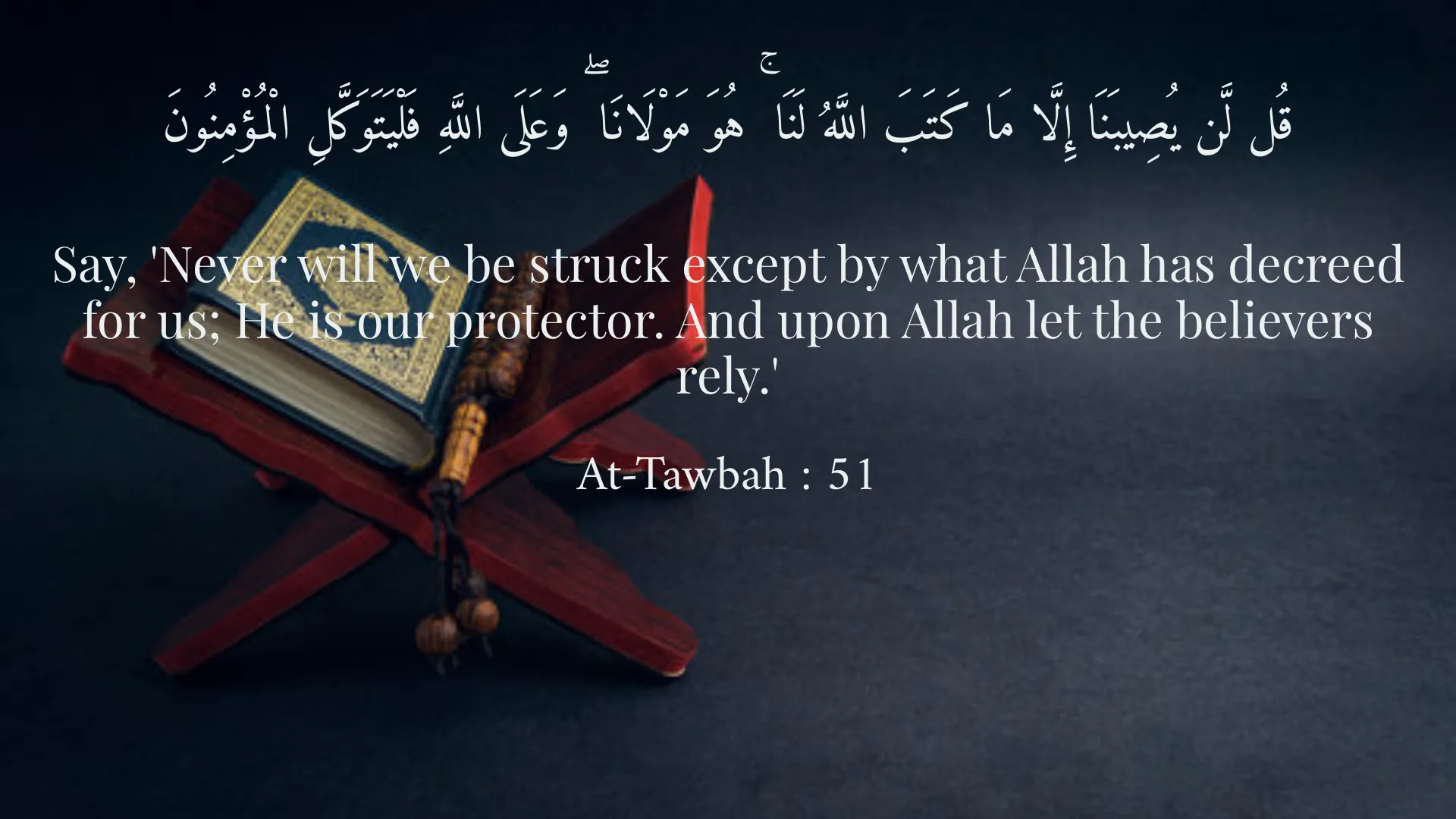
The verses of the Holy Quran provide invaluable guidance on how to let go of regrets and past disappointments. Among the many facets of life that challenge us, grappling with regret is one of the most common and destructive experiences. The Holy Quran, as a source of divine wisdom and instruction for billions of Muslims around the world, addresses the concept of regret and offers profound lessons on how to navigate through it. By contemplating the teachings presented in the Quran, specifically focusing on the importance of hope for the future and trust in Allah, we can find a pathway towards mental peace and spiritual growth. One of the key verses that speak to this theme is found in Surah At-Tawbah, verse 51. Here, Allah states, "Say, Never will we be struck except by what Allah has decreed for us; He is our protector. And upon Allah let the believers rely." This verse serves as a reminder that everything that happens in our lives is preordained by Allah, which includes both our triumphs and our failures. Understanding that what we experience is part of a larger divine plan can bring an immense sense of peace. Rather than residing in a state of regret for past mistakes, we should refocus our energy on the present and the future, drawing upon the belief that Allah is always there to guide and protect us. Regret often stems from a fixation on our past decisions and actions; it can painfully paralyze us, prevent growth, and inhibit the ability to embrace life's new opportunities. However, the Quran encourages a shift in mindset. Instead of allowing past errors to haunt us, we must extract valuable lessons from those experiences while encouraging ourselves to move forward. Life is a continuous journey of evolution, and as such, it necessitates resilience and an ability to adapt. This principle is echoed in Surah Al-Anfal, verse 53, which states, "That is because they are a people who do not understand." This verse serves as a reminder for believers that understanding and acceptance are key components of moving on. To remain stagnant in our past frustrations suggests a lack of insight into the broader dynamics of life and the profound mercy of Allah. Moreover, it is important to express that regret is a natural human emotion. It is only human to feel remorse when reflecting on the choices we have made, especially if we feel they have led to negative outcomes. In Islamic teaching, however, while it is acceptable to acknowledge those sentiments, it is imperative to channel them constructively into spiritual development. By harnessing the power of prayer and connecting with Allah through sincere supplication, we can seek repentance for our past transgressions. This act not only provides a framework for personal accountability but also prompts us to develop a deeper relationship with Allah—one based on understanding, forgiveness, and faith. Reflections on our past actions should serve a purpose. Instead of becoming overwhelming burdens that anchor us to despair, they should become stepping stones toward character building and personal improvement. Every lesson learned through failure or regret can inform our decisions and actions in the future, helping us to become wiser and more compassionate individuals. In engaging with the Quran, we are also reminded of the significance of having hope in Allah's mercy and forgiveness. The notion that we can always return to Him, seeking solace and pardon, is a tenet that resonates deeply within the teachings of Islam. One beautiful aspect of Islam is the assurance that no matter how grave our mistakes may be, Allah’s mercy encompasses all things, allowing room for redemption and renewed commitment. By placing our trust in Allah and sincerely striving to be better individuals, we reinforce our resilience against the negativity that often accompanies regret. The practice of dhikr, or remembrance of Allah, can also play a pivotal role in overcoming regret. When we fill our hearts and minds with the remembrance of Allah, we organically shift our focus from past disappointments to gratitude for the present. This shift represents not only an escape from the shackles of regret but also an invitation to engage with a more profound purpose. In conclusion, to truly let go of regrets and past disappointments, we must anchor our faith in the teachings of the Holy Quran. The verses remind us of the unmatched wisdom of Allah in determining our fates and highlight the importance of resilience and hope for the future. As articulated in Surah At-Tawbah, verse 51, and Surah Al-Anfal, verse 53, it is imperative for believers to trust in Allah's plan while understanding that life progresses onward, regardless of our past. The journey from regret to acceptance is not a linear one; rather, it requires ongoing self-reflection, prayer, and an unwavering relationship with Allah. Ultimately, by harnessing the wisdom of the Holy Quran, we pave the way towards a life rich in spiritual growth, compassion, and fulfillment.
Related Verses
قُل لَّن يُصِيبَنَا إِلَّا مَا كَتَبَ اللَّهُ لَنَا ۚ هُوَ مَوْلَانَا ۖ وَعَلَى اللَّهِ فَلْيَتَوَكَّلِ الْمُؤْمِنُونَ
Say, 'Never will we be struck except by what Allah has decreed for us; He is our protector. And upon Allah let the believers rely.'
At-Tawbah : 51
ذَٰلِكَ أَنَّهُمْ قَوْمٌ لَّا يَفْقَهُونَ
That is because they are a people who do not understand.
Al-Anfal : 53
Short Story
Once upon a time, a man named Hasan was reflecting on his life and regretting the mistakes he had made in the past. He decided to look at the verses of the Quran and find solutions to get out of this regret. By reading Surah At-Tawbah and verse 51, Hasan realized that he could not dwell on the past and needed to be hopeful for the future. He began to pray and trust in Allah, and through this action, he found inner peace. Gradually, Hasan noticed that his life had shifted for the better, and he felt liberated from the burdens of regrets.