Quranic Answer
The Remembrance of Death in Islam: A Guiding Principle for Life The remembrance of death is a profound theme that permeates the teachings of the Quran and the traditions of Islam. This acknowledgment of mortality is not merely a morbid reflection on the inevitable end of life; rather, it serves as an essential catalyst for meaningful living. In Islamic thought, the mindfulness of death influences one's priorities, ethical perspectives, and spiritual journey. It encourages believers to engage with life purposefully, to make righteous choices, and to seek closeness to God through virtuous actions. ### The Reality of Death in Islamic Teachings From the outset, Islam teaches that death is a natural part of human existence. In Surah Al-Imran, verse 185, it is declared: "Every soul will taste death, and you will only be given your full compensation on the Day of Resurrection." This verse encapsulates the essence of human mortality, conveying that death is an inescapable reality that awaits every individual. Rather than engendering despair, this acknowledgment prompts Muslims to reflect on their lives and the legacy they wish to leave. The verse also highlights a critical aspect of the Islamic belief system: the notion of accountability. The idea that individuals will receive their due recompense on the Day of Judgment reinforces the importance of righteous living, thereby redirecting one's thoughts and actions towards spiritual betterment. Furthermore, the Quran emphasizes that the impending nature of death can lead to a profound transformation in one's priorities. In Surah Al-Mu'minun, verse 99, it states: "Until, when death comes to one of them, he says, 'My Lord, send me back that I might do righteousness in that which I left behind.'" This poignant verse illustrates a common human sentiment faced in the proximity of death—the desire to amend past misdeeds and embrace a life committed to righteousness. It underscores how the contemplation of our mortality can serve as a wake-up call, motivating us to prioritize our spiritual health and moral actions. The knowledge that time is finite encourages us to act before it is too late, drawing us closer to God through repentance and good works. ### The Spiritual Implications of Remembering Death The remembrance of death, known in Arabic as Dhikr al-Maut, is not solely about fear or anxiety regarding the afterlife; rather, it serves several essential spiritual functions. One primary function is to fuel a greater awareness of one's actions and choices. When individuals keep death in mind, they are more likely to evaluate their daily activities, relationships, and aspirations through a lens that prioritizes spiritual fulfillment and ethical conduct. This consciousness can lead to more significant religious devotion. When individuals remember that life is transient and filled with opportunities for repentance, they are encouraged to enhance their prayers, engage in charitable acts, and cultivate a deeper connection with God. Traditions in Islam emphasize that remembering death leads to increased humility, gratitude, and mindfulness of God’s presence, which ultimately fosters a more fulfilling spiritual experience. Moreover, the appreciation of life stemming from the memory of death allows believers to see every moment as precious. This perspective invites individuals to cultivate gratitude for their lives, fostering a sense of purpose even amid life's trials and tribulations. Instead of succumbing to despair, individuals who acknowledge the reality of death can approach each day with renewed vigor and appreciation, encouraging acts of kindness, compassion, and service to others. ### The Role of Death in Ethical Living Remembrance of death has significant implications for establishing ethical priorities in a Muslim's life. Knowing that one will eventually face judgment prompts believers to reflect on their actions, aiming to create a legacy built on good deeds and positive contributions to society. This contemplation leads to a heightened sense of social responsibility, as individuals recognize the interconnectedness of humanity and their duty to promote justice, mercy, and compassion. Furthermore, when Muslims remember death, they are reminded of two key principles: the insignificance of worldly possessions and the ultimate significance of spiritual wealth. The Quran regularly stresses the transient nature of life and the futility of being consumed by materialistic desires. Surah Al-Hadid, verse 20, encapsulates this sentiment: "Know that your possessions and your children are but a trial and that Allah has with Him a great reward." This reflection compels believers to invest in their spiritual development rather than chasing fleeting worldly gains. Such prioritization encourages acts of charity, nurturing relationships, and pursuing knowledge, activities that enrich one's soul and contribute to the well-being of humanity. ### A Source of Comfort and Hope In addition to fostering ethical behavior and spiritual growth, the remembrance of death serves as a source of comfort for many believers. Understanding that death is not the end, but rather a transition to an eternal existence beyond the grave, offers profound solace. The Quran reassures believers of the promise of the afterlife, where individuals will encounter rewards based on their earthly conduct. Surah Al-Baqarah, verse 154 reminds us: "And do not say about those who are killed in the cause of Allah, 'They are dead.' Rather, they are alive, but you perceive [it] not." This promise of an afterlife can alleviate the fear surrounding death, transforming it from a harbinger of despair into an invitation for hope and aspiration. The belief in resurrection and divine justice provides a framework for understanding the struggles of life, allowing for the acceptance of loss and grief as natural parts of the human experience. ### Conclusion In conclusion, the remembrance of death emerges as a crucial and multifaceted theme within Islamic teachings. It serves as a guiding principle for ethical living, a catalyst for spiritual growth, and a source of comfort and hope. By reflecting on our mortality, we are urged to align our priorities toward righteousness, fostering an enduring connection with God and a deep appreciation for life itself. The teachings of the Quran illuminate this path, inviting believers to create a life imbued with purpose, compassion, and mindfulness, ultimately leading to a more meaningful existence. As we navigate the complexities of life, the remembrance of death encourages us to seize the moment, prioritize spirituality, and cultivate virtues that will resonate in the afterlife. Hence, the act of remembering death becomes not just about contemplating the end of life, but about enriching the journey that leads us to our Creator.
Related Verses
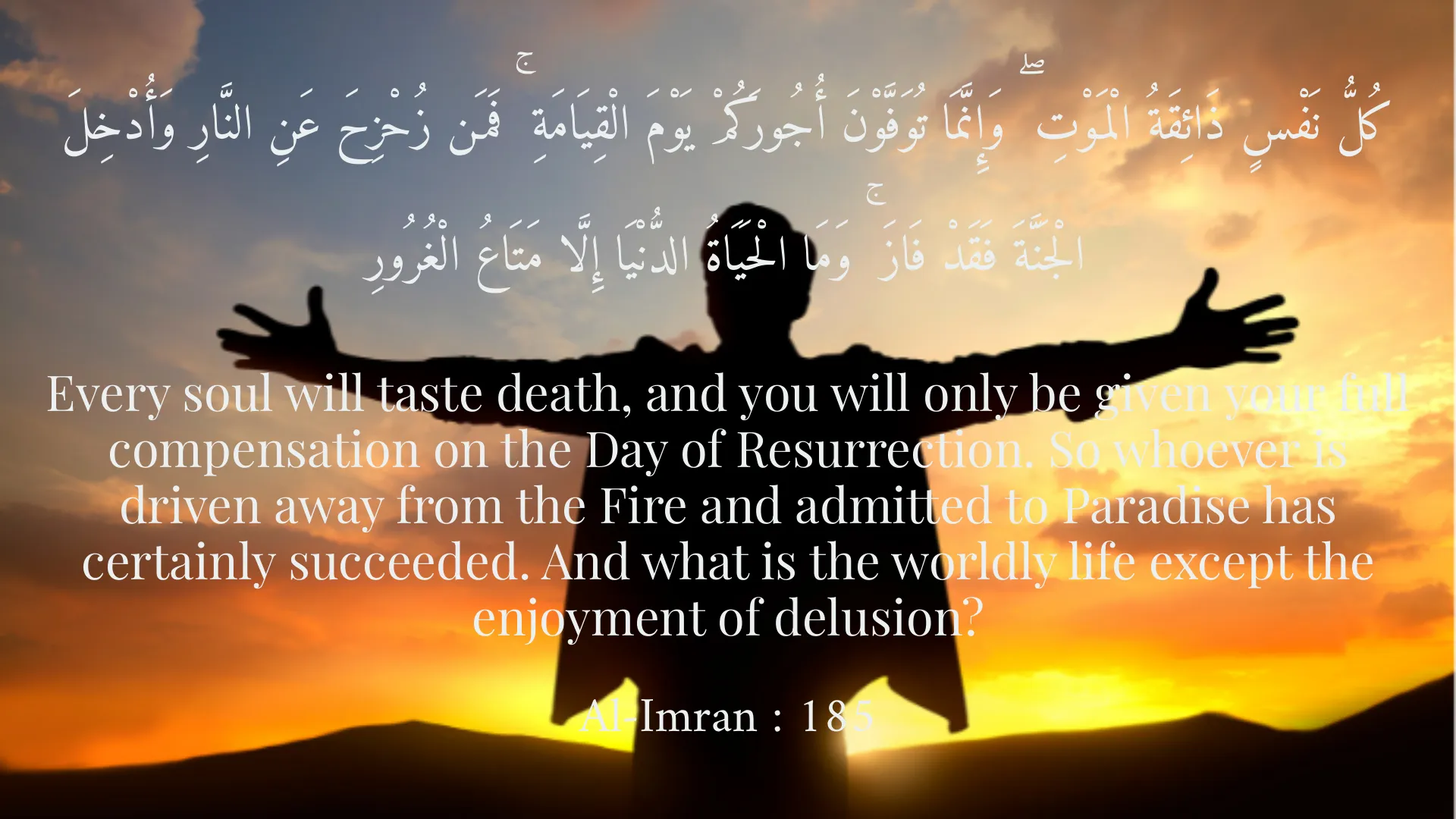
كُلُّ نَفْسٍ ذَائِقَةُ الْمَوْتِ ۖ وَإِنَّمَا تُوَفَّوْنَ أُجُورَكُمْ يَوْمَ الْقِيَامَةِ ۚ فَمَن زُحْزِحَ عَنِ النَّارِ وَأُدْخِلَ الْجَنَّةَ فَقَدْ فَازَ ۚ وَمَا الْحَيَاةُ الدُّنْيَا إِلَّا مَتَاعُ الْغُرُورِ
Every soul will taste death, and you will only be given your full compensation on the Day of Resurrection. So whoever is driven away from the Fire and admitted to Paradise has certainly succeeded. And what is the worldly life except the enjoyment of delusion?
Al-Imran : 185
حَتَّى إِذَا جَاءَ أَحَدَهُمُ الْمَوْتُ قَالَ رَبِّ ارْجِعُونِ
Until, when death comes to one of them, he says, 'My Lord, send me back.'
Al-Mu'minun : 99
Short Story
One day, a man named Ahmad was thinking about his death and what he should focus on in his life. He recalled the verses of the Quran and decided to concentrate more on good deeds with the remembrance of death. As a result, he chose to forget about his problems and help others with more love and kindness. This change in his approach transformed him into a better person and filled his life with peace and joy.