Quranic Answer
The Sacred Teachings of the Quran on Happiness and Altruism: Fostering Joy Through Benevolence and Kindness The Holy Quran, the revered scripture of Islam, provides profound insights into the values of happiness, joy, and kindness. Embedded within its verses are teachings that speak directly to the human heart, encouraging individuals to embrace a life filled with joy, purpose, and compassion. This article delves into the Quranic perspective on happiness, focusing on the significance of benevolence, charity, and kindness as effective means to cultivate joy not only within ourselves but within our communities. One of the foundational principles of Islam is the importance of helping those in need. In Surah Al-Baqarah, verse 177, Allah emphasizes charity and kindness, stating that righteousness is not merely measured by one's rituals of prayer and fasting, but significantly by one's attitude towards others, especially the less fortunate. The verse conveys that true piety is demonstrated through acts of charity, helping the needy, and engaging in kindness towards those who are struggling. Such actions resonate deeply, bringing joy not only to the recipients but also to the givers. It creates a virtuous cycle of joy where helping others becomes a source of happiness for individuals, fostering a sense of community and togetherness. Moreover, one effective approach to spreading happiness is through kind speech and communication. Surah Luqman, verse 19, imparts wisdom by advising individuals to engage in kind speech. The way we communicate has a profound impact on our relationships and the atmosphere around us. Words hold power; they can build bridges of compassion or erect walls of discord. By speaking kindly and empathetically, we can uplift others, create an environment of trust, and ultimately contribute to their happiness. When we engage with others in a respectful and uplifting manner, we sow seeds of happiness that flourish and multiply, impacting not just the individuals we speak to, but the broader community as well. Furthermore, the Quran highlights the significance of nurturing love and friendship within the community, as emphasized in Surah Al-Imran, verse 159. Allah encourages believers to foster kindness and establish peace. When individuals unite to create a supportive and loving environment, hearts naturally gravitate towards happiness. In many societies, a lack of connection and understanding leads to isolation and sorrow. By prioritizing communal bonds and encouraging open dialogue, we can collectively address challenges while nurturing a culture of compassion. This collaborative effort fosters resilience, enhances interpersonal relationships, and ultimately blossoms into a happier and thriving community. The value of human life and the imperative of saving lives are further underscored in Surah Al-Maidah, verse 32. This verse articulates the sanctity of human life, stating that saving one life is akin to saving all of humanity. These words resonate deeply with the ethical foundation of Islam and highlight the moral responsibility of individuals toward one another. When we dedicate ourselves to protecting and preserving human life, we foster an environment of gratitude and happiness. Each act of service, whether it be through charitable actions, volunteerism, or merely offering support to those in crisis, contributes to the collective joy and peace of humanity. Additionally, the focus on spiritual fulfillment within the Quran cannot be overlooked as it directly relates to personal happiness. The act of engaging in worship and obedience to Allah is intrinsically linked to attaining joy. Surah Ar-Ra'd, verse 28 states, 'Indeed, in the remembrance of Allah do hearts find rest.' This profound statement emphasizes that a deep connection with the Divine provides solace, contentment, and happiness. When individuals prioritize spiritual growth and maintain a relationship with Allah, they cultivate inner peace and happiness, which radiates outwardly, affecting those they encounter. To encapsulate these teachings, it is essential to recognize that happiness is not merely the absence of adversity. Instead, it is the result of intentional actions grounded in kindness, benevolence, and a commitment to uplifting one another. The Quran provides a roadmap for achieving this as it encourages believers to act in accordance with human values that strengthen interpersonal connections. The significance of community and human interaction is woven throughout the Quranic narrative, reminding us that our well-being is interlinked with that of others. Moreover, the pursuit of happiness in Islam is not a solitary endeavor. It is a shared journey that begins with empathy and extends outward through our relationships. Every act of kindness, every charitable deed, and every word of encouragement contributes to a tapestry of joy that envelops both the giver and the receiver. true happiness lies in the act of serving one another and embodying the values espoused in the Quran. By embracing these principles, we can create a world infused with positivity, strength, and compassion. In conclusion, the teachings of the Quran offer invaluable guidance on how to foster happiness and joy through benevolence, kind speech, and communal love. As individuals dedicated to upholding human values, let us strive to embody these principles in our daily lives, creating ripples of positivity that reverberate through our families, communities, and the world at large. The quest for happiness is inexorably linked to our commitment to serve humanity, and by illuminating our path with the teachings of Islam, we can cultivate a more joyful and compassionate existence.
Related Verses
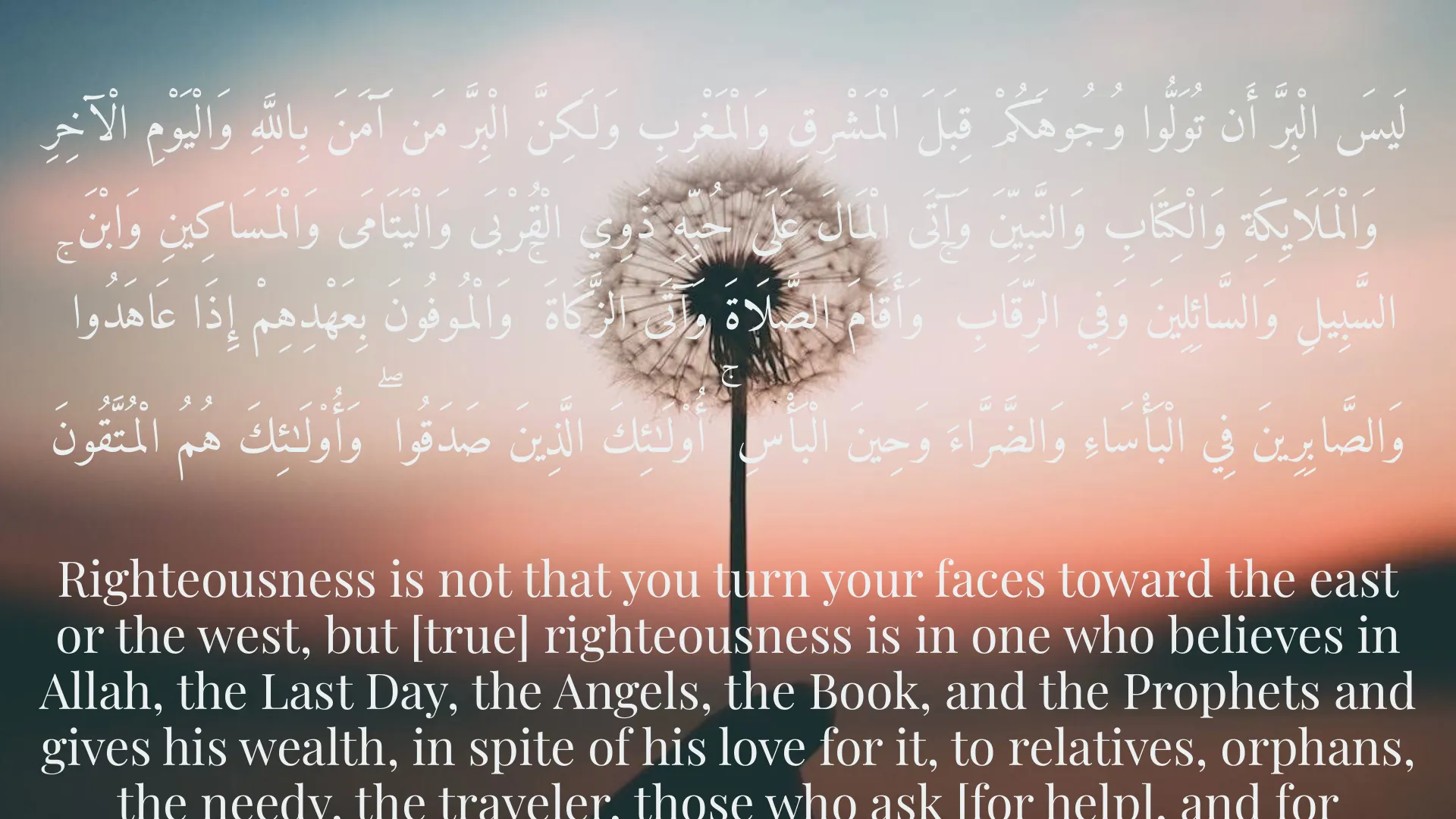
لَيسَ الْبِرَّ أَن تُوَلُّوا وُجُوهَكُمْ قِبَلَ الْمَشْرِقِ وَالْمَغْرِبِ وَلَكِنَّ الْبِرَّ مَن آَمَنَ بِاللَّهِ وَالْيَوْمِ الْآخِرِ وَالْمَلَايِكَةِ وَالْكِتَابِ وَالنَّبِيِّنَ وَآتَى الْمَالَ عَلَى حُبِّهِ ذَوِي الْقُرْبَى وَالْيَتَامَى وَالْمَسَاكِينِ وَابْنَ السَّبِيلِ وَالسَّائِلِينَ وَفِي الرِّقَابِ ۚ وَأَقَامَ الصَّلَاةَ وَآتَى الزَّكَاةَ ۚ وَالْمُوفُونَ بِعَهْدِهِمْ إِذَا عَاهَدُوا ۚ وَالصَّابِرِينَ فِي الْبَأْسَاءِ وَالضَّرَّاءَ وَحِينَ الْبَأْسِ ۚ أُو۟لَـٰئِكَ الَّذِينَ صَدَقُوا ۖ وَأُو۟لَـٰئِكَ هُمُ الْمُتَّقُونَ
Righteousness is not that you turn your faces toward the east or the west, but [true] righteousness is in one who believes in Allah, the Last Day, the Angels, the Book, and the Prophets and gives his wealth, in spite of his love for it, to relatives, orphans, the needy, the traveler, those who ask [for help], and for freeing slaves; and [who] establishes prayer and gives zakah; [those who] fulfill their promise when they promise; and [those who] are patient in poverty and hardship and during battle. Those are the ones who have been true, and it is those who are the righteous.
Al-Baqarah : 177
وَإِنَّكَ لَتَفْعَلُ اللَّهُمَّ خَيْرِ مَا فَعَلْتَ
And indeed, you do good in your actions.
Luqman : 19
فَإِنَّمَا يَسْتَجِيبُونَ لِلَّذِينَ قَالُوا لَهُمْ نَفْسُكُمِ أُنْفُسِكُمْ أَنْ تَذكروا الله بجلاء.
So only those who are with you will not be rebuked.
Al-Imran : 159
Short Story
One pleasant day, Ali decided to make an effort to bring happiness to others. He first visited a friend who had been feeling down for a long time. He went to his house with a flower and kindly said, 'Dear friend, this is for you.' Before long, his friend's face lit up with a smile. Then, Ali went close to the market and offered support to a charity. Ali's day ended, and he realized that true happiness lies in giving and being kind to others.