Quranic Answer
Worship, as one of the cornerstones of a Muslim's life, transcends the mere performance of duties; it serves as a profound pathway to forge a deeper connection with God. To many, worship might traditionally be viewed as a set of obligatory actions — rituals that are carried out without much thought beyond fulfilling religious requirements. However, this perspective overlooks the rich spiritual landscape that lies within the act of worship. In Islam, worship should be cherished not merely as a duty but as an opportunity to express love and devotion to Allah. The dimensions of this relational aspect are intricate and deeply rooted in the teachings of the Holy Quran. The love for God is a recurring theme in the Quran, often manifesting through verses that encourage believers to nurture a loving relationship with their Creator. For instance, in Surah Al-Baqarah, verse 165, Allah draws a significant distinction between those who associate partners with Him and the true believers who hold a special place for the love of Allah in their hearts. The verse reads, "And of the people are some who take other than Allah as equals [to Him]. They love them as they should love Allah. But those who believe are stronger in love for Allah." This affirmation underscores the significance of maintaining undivided loyalty and affection toward Allah, as opposed to heartily engaging in partnerships that dilute one’s faith. Consequently, cultivating love and affection for God during worship becomes essential, positioning worship as not merely an act of duty but a manifestation of heartfelt devotion. Moreover, the concept of intention in worship cannot be understated. A sincere intention is fundamentally crucial in Islam, for it determines the quality and acceptance of one’s actions. Worship must be imbued with love, and a pure intention is the prerequisite through which this love can flow. It serves as a lens through which all acts of worship are perceived. For instance, when individuals approach their prayers, fasting, or charity with love, humility, and sincerity, their acts transform into profound acts of devotion. In Surah Al-Imran, verse 31, Allah states: "Say, 'If you love Allah, then follow me, so Allah will love you.'" This directive not only invites believers to embrace a commitment to following the Prophet Muhammad (PBUH) but emphasizes the dialogue of love that exists between Allah and His followers. Obedience to the teachings and example of the Prophet becomes a vessel of expressing one’s true love for Allah. The implications of this loving relationship extend well beyond just following commandments; it invites Muslims to revive an internal love for Allah. This means engaging in actions that not only adhere to religious obligations but also reflect a genuine desire to connect with God. For instance, the simple act of performing the five daily prayers can evolve into a passionate dialogue with Allah when performed with joy and devotion instead of mere compliance. Each prayer can bring joy, solace, and a sense of belonging, demonstrating how ritual can indeed transform into a loving affair. Additionally, one practical method of nurturing this love during worship is through the act of remembrance (dhikr). Engaging in the remembrance of Allah allows individuals to continually focus their hearts and minds on their Creator. This connection fosters a sense of spirituality that transcends everyday life, making worship a deeply personal experience shaped by love and affection. By dedicating specific times for remembrance – whether through reciting Quranic verses, engaging in supplications, or engaging in reflective prayers – the faithful can enrich their worship experience and grow closer to Allah. Another core aspect that transforms worship into a loving encounter is ‘presence’ — that is, ensuring one’s mind and heart are fully engaged while in acts of worship. Striving for a state of mindfulness during prayer or other forms of devotion can create a more powerful and intimate connection with Allah. Finding a quiet space, eliminating distractions, and channeling one’s thoughts towards Allah can elevate the worship experience beyond just actions and into realms of heartfelt engagement. This presence allows believers to feel the nearness of Allah, igniting the flame of spiritual affection and reinforcing the bond that ties them to their Creator. Moreover, the understanding and appreciation of God’s immense love for humanity also significantly contribute to how Muslims engage in worship. Realizing how profoundly Allah loves His creation – a love that is full of mercy, forgiveness, and compassion – can profoundly change a believer’s approach to worship. Understanding this dynamic encourages worshipers to reciprocate that love through their actions, developing a cyclical relationship of love between Allah and His believers. The notion that Allah is the Most Merciful and Compassionate should resonate deeply, prompting individuals to approach their worship with warmth and gratitude rather than fear and trepidation. As one delves deeper into the loving ways of worship, it becomes clear that every act of devotion can be an opportunity to express affection and connect with Allah on a deeper level. Ultimately, a holistic worship experience encompasses sincere intention, active engagement, a realization of God’s love, and a focused mindfulness that transforms the act of worship into a source of joy, peace, and love. In conclusion, worship, in essence, transforms into a loving affair when committed with a pure intention and expressed authentically through acts of devotion, remembrance, and presence. This understanding unlocks the potential of worship to serve not merely as an obligation but as an ever-growing relationship teeming with love and spirituality, urging every believer to engage wholeheartedly in their relationship with Allah. By embracing worship as an act of love, Muslims can elevate their devotion from mere duty to a passionate expression of their faith, creating a life steeped in spirituality and connectivity with the Divine.
Related Verses
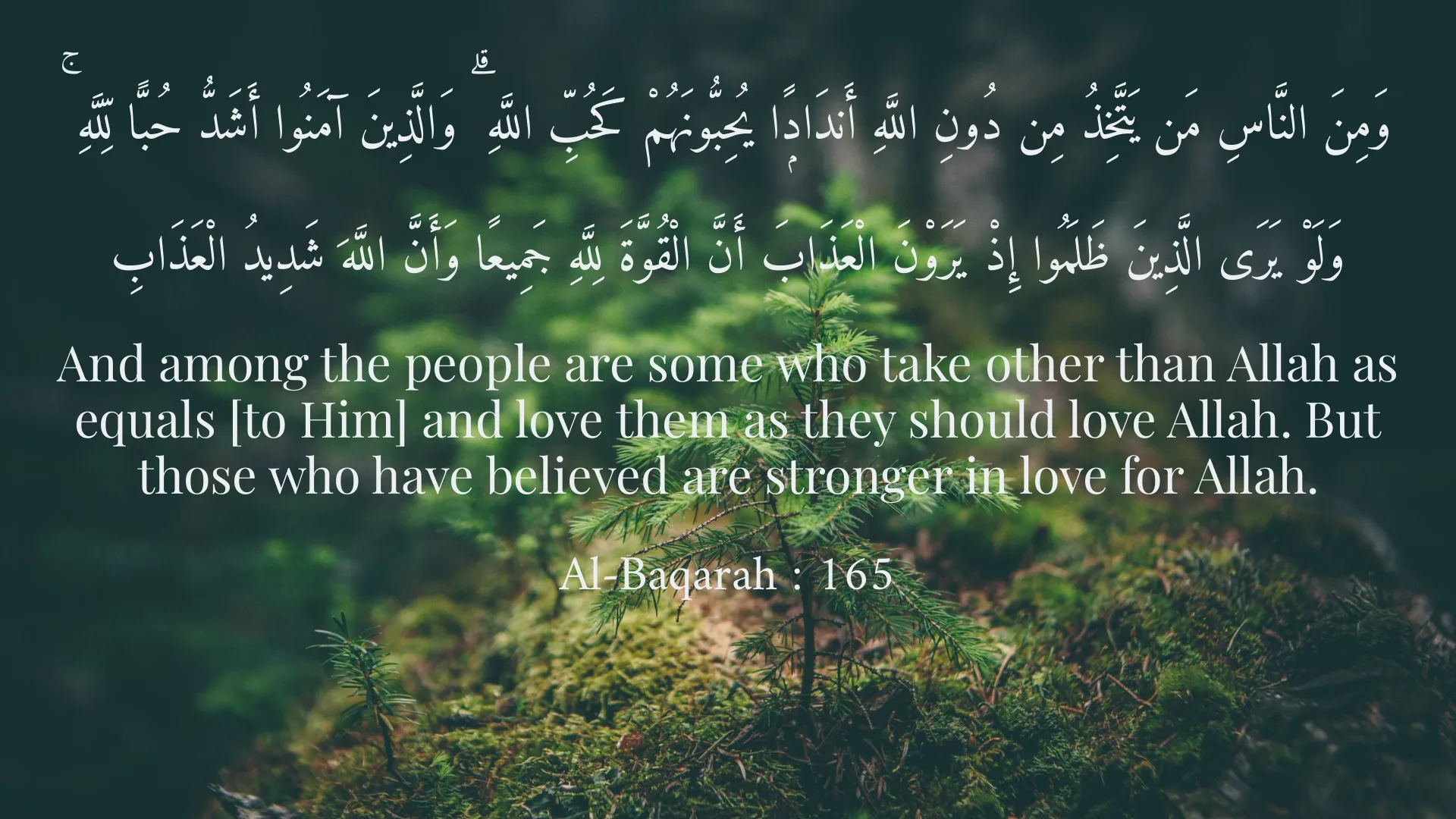
وَمِنَ النَّاسِ مَن يَتَّخِذُ مِن دُونِ اللَّهِ أَندَادًۭا يُحِبُّونَهُمْ كَحُبِّ اللَّهِ ۗ وَالَّذِينَ آمَنُوا أَشَدُّ حُبًّا لِّلَّهِ ۚ وَلَوْ يَرَى الَّذِينَ ظَلَمُوا إِذْ يَرَوْنَ الْعَذَابَ أَنَّ الْقُوَّةَ لِلَّهِ جَمِيعًا وَأَنَّ اللَّهَ شَدِيدُ الْعَذَابِ
And among the people are some who take other than Allah as equals [to Him] and love them as they should love Allah. But those who have believed are stronger in love for Allah.
Al-Baqarah : 165
قُلْ إِن كَانَتْ أَحَبُّ إِلَيْكُم أَمْوَالُكُمْ وَأَوْلَادُكُمْ وَإِخْوَانُكُمْ وَأَزْوَاجُكُمْ وَعَشِيرَتُكُمْ وَأَمْوَالٌ اقْتَرَفْتُمُوهَا وَتِجَارَةٌ تَخْشَوْنَ كَسَادَهَا وَمَسَاكِنُ تَرْضَوْنَهَا أَحَبَّ إِلَيْكُم مِّنَ اللَّهِ وَرَسُولِهِ وَجِهَادٍ فِي سَبِيلِهِ فَتَرَبَّصُوا حَتَّى يَأْتِيَ اللَّهُ بِأَمْرِهِ ۚ وَاللَّهُ لَا يَهْدِي الْقَوْمَ الْفَاسِقِينَ
Say, 'If your fathers, your sons, your brothers, your wives, your relatives, the wealth which you have obtained, and the commerce in which you fear decline, and the dwellings in which you delight are more beloved to you than Allah and His Messenger and jihad in His cause, then wait until Allah executes His command. And Allah does not guide the defiantly disobedient people.
Al-Imran : 31
Short Story
Once upon a time, a man felt a burning love for God within his heart. He decided that with every step he took, he would take a step towards God. In his prayers, he read with a calm heart and felt that Allah was with him. One day, he went to the mosque and alongside other believers, he prayed and experienced a deep affection for God in his heart. His prayers and acts of worship were filled with love and sincerity, and he realized that this love had led to greater peace and satisfaction in his life.