Quranic Answer
The significance of perseverance and adherence to the truth is a pervasive theme within the Holy Quran, illuminating the path for believers across the centuries. The Quran serves as a guide for millions, providing not only spiritual nourishment but also practical advice on how to navigate the trials of life. Among the critical verses that elaborate on the importance of these virtues is verse 151 of Surah Al-Imran, where Allah – the Almighty – states, 'And We will surely test you with something of fear and hunger and a loss of wealth and lives and fruits, and give good tidings to the patient.' This profound verse establishes a foundational understanding: on the journey toward truth, adherents must expect challenges, fears, and losses. Rather than succumbing to despair, individuals are urged to embrace patience, demonstrating resilience amid adversities while keeping faith in God. The trials mentioned in this verse encompass a broad spectrum of life's difficulties, including emotional, physical, and financial struggles. The Divine wisdom behind these tests is aimed not at punishing believers but at strengthening their faith and character. By enduring hardship, individuals cultivate virtues such as empathy and compassion, enhancing their connection with their communities and, most importantly, with their Creator. The Quran teaches that trials serve a higher purpose, shaping individuals into better versions of themselves and allowing them to appreciate the mercy and grace of Allah. Furthermore, patience is not a passive state but an active form of worship that requires discipline and commitment. In Surah Fussilat, verse 30, it is eloquently articulated: 'Indeed, those who have said, 'Our Lord is Allah' and then remained steadfast, the angels will descend upon them, [saying], 'Do not fear and do not grieve, but receive good tidings of Paradise, which you were promised.' This verse encapsulates profound reassurance for believers. It emphasizes that fidelity to one’s faith, coupled with steadfastness amidst life’s upheavals, assures divine support and a reward in the afterlife. The promise of angels descending upon steadfast believers not only instills hope but also signifies recognition by the celestial realm of the believer's unwavering commitment to the truth. In times of tribulation, individuals often experience anxiety or loss, both of which can be formidable obstacles to maintaining faith. However, the Quran continuously invites believers to seek solace through prayer. Surah Al-Baqarah, verse 153, states, 'Seek help through patience and prayer...' This directive underscores the crucial role that prayer plays in reinforcing one’s resilience. Prayer is not merely a ritualistic act; it serves as a vital link between the believer and Allah, providing spiritual sustenance and comfort during challenging times. Through prayer, individuals can articulate their fears, seek guidance, and strengthen their relationship with God. The act of turning to Allah through supplication enables believers to express their vulnerabilities, fostering an environment of trust and dependence on divine wisdom. Moreover, congregational prayers and communal worship further instill a sense of belonging, enabling believers to collectively support one another in their quest for truth and righteousness. The bond formed in community worship also acts as a reminder of shared struggles and joys, reinforcing the notion that believers are not alone on their paths. The intertwining of perseverance and prayer forms a robust framework for navigating life’s tumultuous waters. When faced with adversity, individuals armed with patience and continuous supplication are likely to find clarity and direction. They come to develop a deep-seated understanding that challenges are transient while faith and character endure. This understanding can transform the mindset from one of despair to that of hope, an essential shift that fosters resilience. Moreover, perseverance as experienced within the Islamic tradition is not only a personal endeavor but encapsulates a communal dimension as well. Communities that collectively uphold the principles of patience, support, and faith become beacons of hope for each other. Such solidarity fosters an environment where individuals encourage one another, share experiences, and provide support in times of need. The Prophet Muhammad (PBUH) emphasized the importance of community, suggesting that the strength of one is intrinsically linked to the strength of many. This notion underscores that the journey toward truth and righteousness is not meant to be undertaken in isolation. In summary, the prevalence of perseverance and adherence to truth in the Quran serves as a guiding principle for its followers. The verses of Surah Al-Imran and Surah Fussilat highlight the necessity of patience amid trials, offering comfort and hope through divine promises. The call to prayer and supplication further reinforces the importance of maintaining a connection with Allah, providing believers with the tools to navigate life's uncertainties. As believers engage with these tenets, they can cultivate a robust foundation that not only fortifies their integrity but also enriches their experience of life. Ultimately, perseverance in truth and maintaining faith during adversities is a timeless message that resonates across cultures and generations, reminding all of the lasting value of steadfastness, community, and devotion to God.
Related Verses
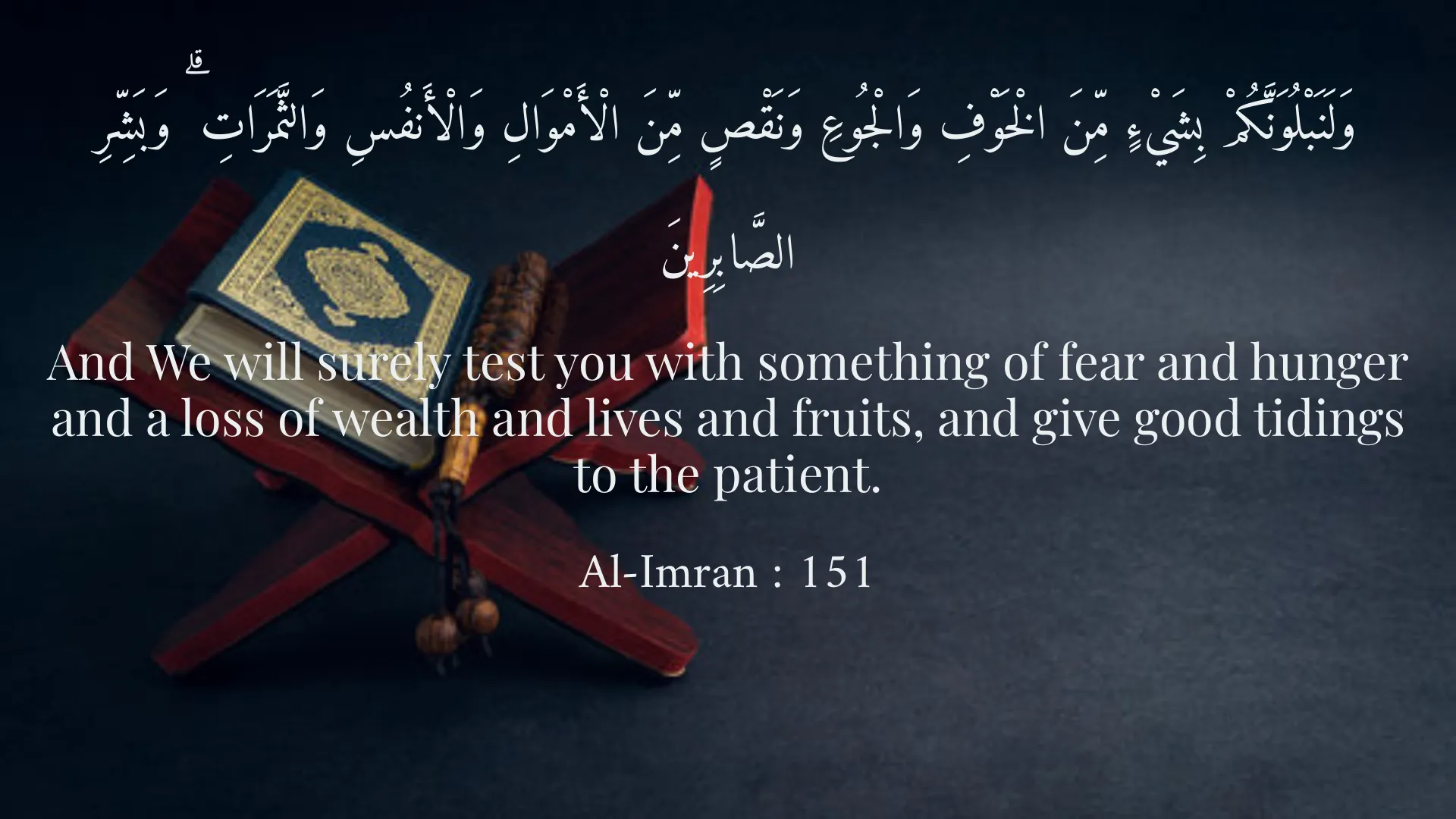
وَلَنَبْلُوَنَّكُمْ بِشَيْءٍ مِّنَ الْخَوْفِ وَالْجُوعِ وَنَقْصٍ مِّنَ الْأَمْوَالِ وَالْأَنفُسِ وَالثَّمَرَاتِ ۗ وَبَشِّرِ الصَّابِرِينَ
And We will surely test you with something of fear and hunger and a loss of wealth and lives and fruits, and give good tidings to the patient.
Al-Imran : 151
إِنَّ الَّذِينَ قَالُوا رَبُّنَا اللّهُ ثُمَّ اسْتَقَامُوا تَتَنَزَّلُ عَلَيْهِمُ الْمَلَائِكَةُ أَلَّا تَخَافُوا وَلَا تَحْزَنُوا وَأَبْشِرُوا بِالْجَنَّةِ الَّتِي كُنتُمْ تُوعَدُونَ
Indeed, those who have said, 'Our Lord is Allah' and then remained steadfast, the angels will descend upon them, [saying], 'Do not fear and do not grieve, but receive good tidings of Paradise, which you were promised.'
Fussilat : 30
يَاأَيُّهَا الَّذِينَ آمَنُوا اسْتَعِينُوا بِالصَّبْرِ وَالصَّلَاةِ ۚ إِنَّ اللَّهَ مَعَ الصَّابِرِينَ
O you who have believed, seek help through patience and prayer. Indeed, Allah is with the patient.
Al-Baqarah : 153
Short Story
One day, a man faced a path filled with challenges and difficulties. He wondered how he could overcome these obstacles. Upon recalling the verses of the Quran, he decided to turn to God with patience and prayer. From that day forward, whenever he encountered problems, he remembered God, and strengthening his faith allowed him to continue with more vigor. He learned that with every challenge came an opportunity to draw closer to God.