Quranic Answer
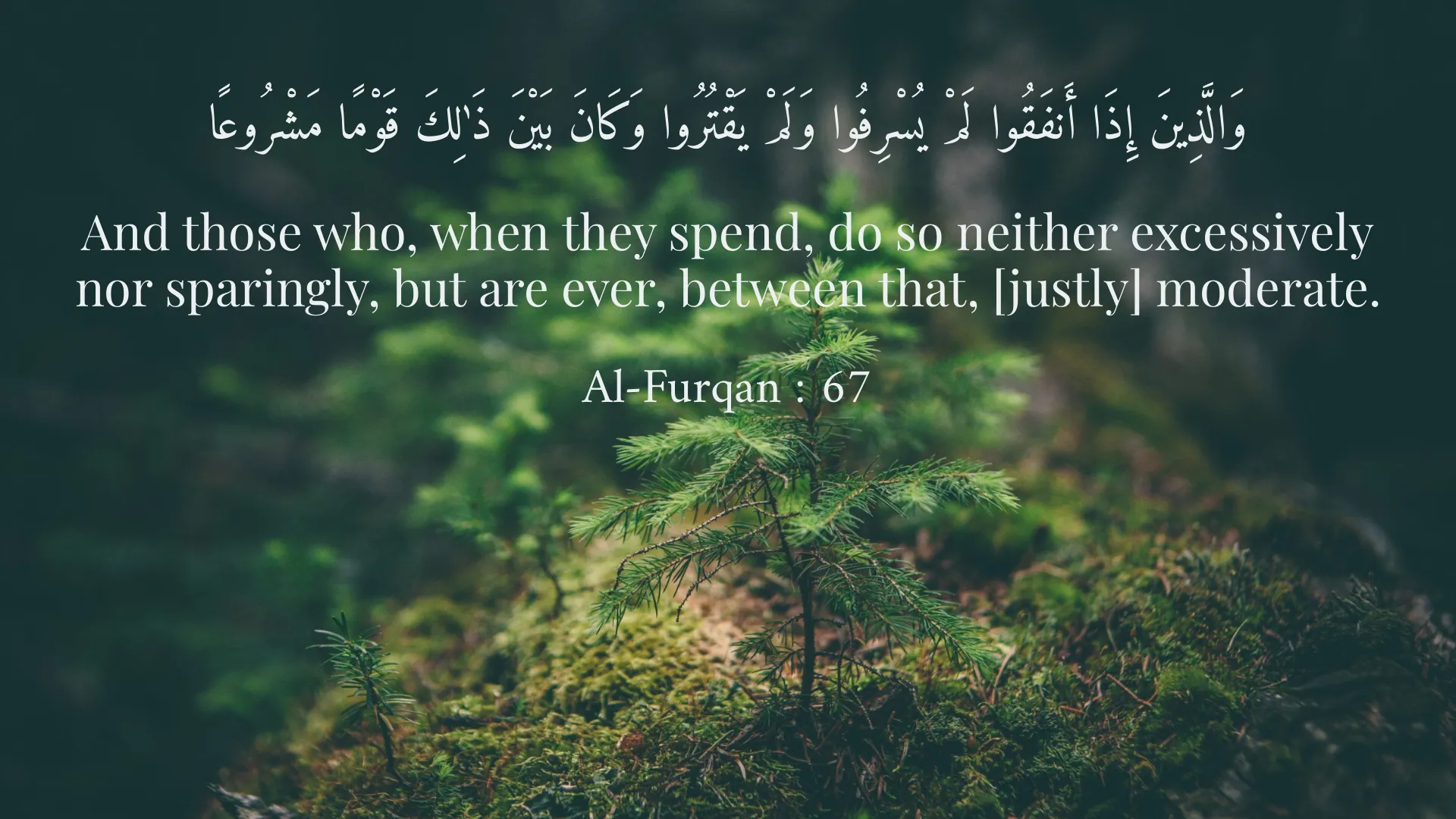
In the Holy Quran, simplicity and a simple lifestyle are depicted as characteristics of true believers. The emphasis on leading a simple life resonates deeply within the teachings of Islam, calling followers towards moderation and balance in all aspects of life. The essence of this belief is beautifully encapsulated in Surah Al-Furqan, verse 67, where Allah proclaims: 'And those who, when they spend, do so neither excessively nor sparingly, but are ever, between that, [justly] moderate.' This profound verse provides us with a framework for understanding financial responsibility and sets the tone for how believers should engage with their material possessions. It signifies that true wealth does not lie in the abundance of extravagant possessions, but rather in the wisdom to utilize resources in a balanced way. Spending in life should neither be extravagant nor miserly; it should reflect a moderated approach, striking a harmonious balance that benefits both the individual and the community. Furthermore, the Quran elucidates the dangers accompanying complexities and rampant materialism, which can easily divert individuals from their true spiritual goals. It is essential to recognize that a life consumed by the pursuit of wealth and luxury often leads to dissatisfaction and disconnect. The ultimate aim of existence, as outlined in Islamic teachings, is to foster spiritual growth and to nurture relationships with others. Simplicity acts as a catalyst for this growth by allowing individuals to focus on what truly matters — cultivating human and spiritual values over material gain. To embody this principle of simplicity in daily life, one needs to engage in conscious decision-making and mindful behaviors. For instance, by refraining from unnecessary purchases, resisting the allure of excessive luxury items, and seeking a more minimalistic approach to life, individuals can showcase a meaningful and simpler lifestyle. This not only fosters personal fulfillment but also displays a commitment to the ideals of moderation espoused by the Quran. Moreover, it is vital to remind family, friends, and the community at large that the intrinsic value of human connections and spiritual well-being surpasses the temptations of wealth and luxury. Sharing meals, spending time with loved ones, and engaging in community service can enhance one’s sense of belonging and purpose in life, anchoring them firmly to the ideals of simplicity. In Surah Al-A'raf, verse 31, it is proclaimed: 'Eat and drink, but be not excessive.' This directive underscores the necessity of moderation in our dietary habits and consumption practices. Overindulgence in food, drink, or any other pleasure can have adverse effects both on one's health and overall well-being. By promoting moderation in eating and drinking, we reinforce the message of living in balance, allowing for both enjoyment and restraint. This approach nurtures physical health and encourages mindfulness in what we consume. Promoting a culture of simplicity within society is not merely an individual effort but a collective responsibility. As members of a community, it is essential to cultivate discussions and awareness around the benefits of simple living. Organizing workshops, seminars, and discussion groups can serve as effective platforms through which individuals can be educated about the values inherent in simplicity. These events can provide individuals with the tools needed to navigate a consumer-driven world that often glorifies excess and materialism. An emphasis on simplicity can be accomplished through storytelling, sharing personal experiences, and creating spaces for dialogue about the teachings of Islam regarding moderation. Such initiatives can encourage individuals to reflect on their consumption behaviors, aligning them with spiritual and ethical values that prioritize the greater good over individual gratification. Furthermore, community leaders and influencers can play a significant role in championing a simpler lifestyle. By modeling behavior that reflects moderation and simplicity, they can inspire others to follow suit. Social media, for instance, can be a powerful tool to share messages around moderate living and the joys of simplicity, reaching diverse audiences. Embracing a lifestyle of simplicity can lead to greater communal harmony and collective well-being as individuals are unified in their quest for meaningful living rather than accumulation of material wealth. To this end, educational institutions can integrate curricula that emphasize simple living and the values derived from Islamic teachings. Encouraging students to engage in service learning, promote sustainability, and develop a consciousness about consumption and waste can foster a new generation of individuals committed to simplicity. This solidarity in pursuit of a simpler and more fulfilling lifestyle can proliferate across generations and cultivate a societal shift towards moderation. In conclusion, the teachings of the Holy Quran regarding simplicity offer invaluable insights into achieving a balanced and harmonious life. By embodying the principles of moderation, resisting material excess, and focusing on the cultivation of human and spiritual values, true believers can lead fulfilling lives that respect the teachings of Islam. The call to simplicity is an invitation not merely to adopt a different lifestyle but to embrace a profound shift in perspective — one that transcends the lure of material wealth and seeks to cultivate community, mindfulness, and spiritual growth. As we continue to engage with these values, we can contribute to the formation of healthier and happier communities, fostering a legacy of simplicity that honors both our beliefs and the human experience.
Related Verses
وَالَّذِينَ إِذَا أَنفَقُوا لَمْ يُسْرِفُوا وَلَمْ يَقْتُرُوا وَكَانَ بَيْنَ ذَٰلِكَ قَوْمًا مَشْرُوعًا
And those who, when they spend, do so neither excessively nor sparingly, but are ever, between that, [justly] moderate.
Al-Furqan : 67
كُلُوا وَاشْرَبُوا وَلَا تُسْرِفُوا إِنَّهُ لَا يُحِبُّ الْمُسْرِفِينَ
Eat and drink, but be not excessive. Indeed, He does not like the excessive.
Al-A'raf : 31
Short Story
Once upon a time, there was a man named Hassan who lived in a small town. He always tried to keep his life simple and uncluttered. He recalled the verses of the Quran that encouraged him to meet only essential needs and to stay away from extravagance. Hassan would engage in discussions with his friends, encouraging them toward simplicity. On a beautiful day, he decided to host a simple gathering in his backyard and told his friends to come without any decorations. The gathering turned out to be memorable and sweet, with everyone feeling content with simplicity and affection.