Quranic Answer
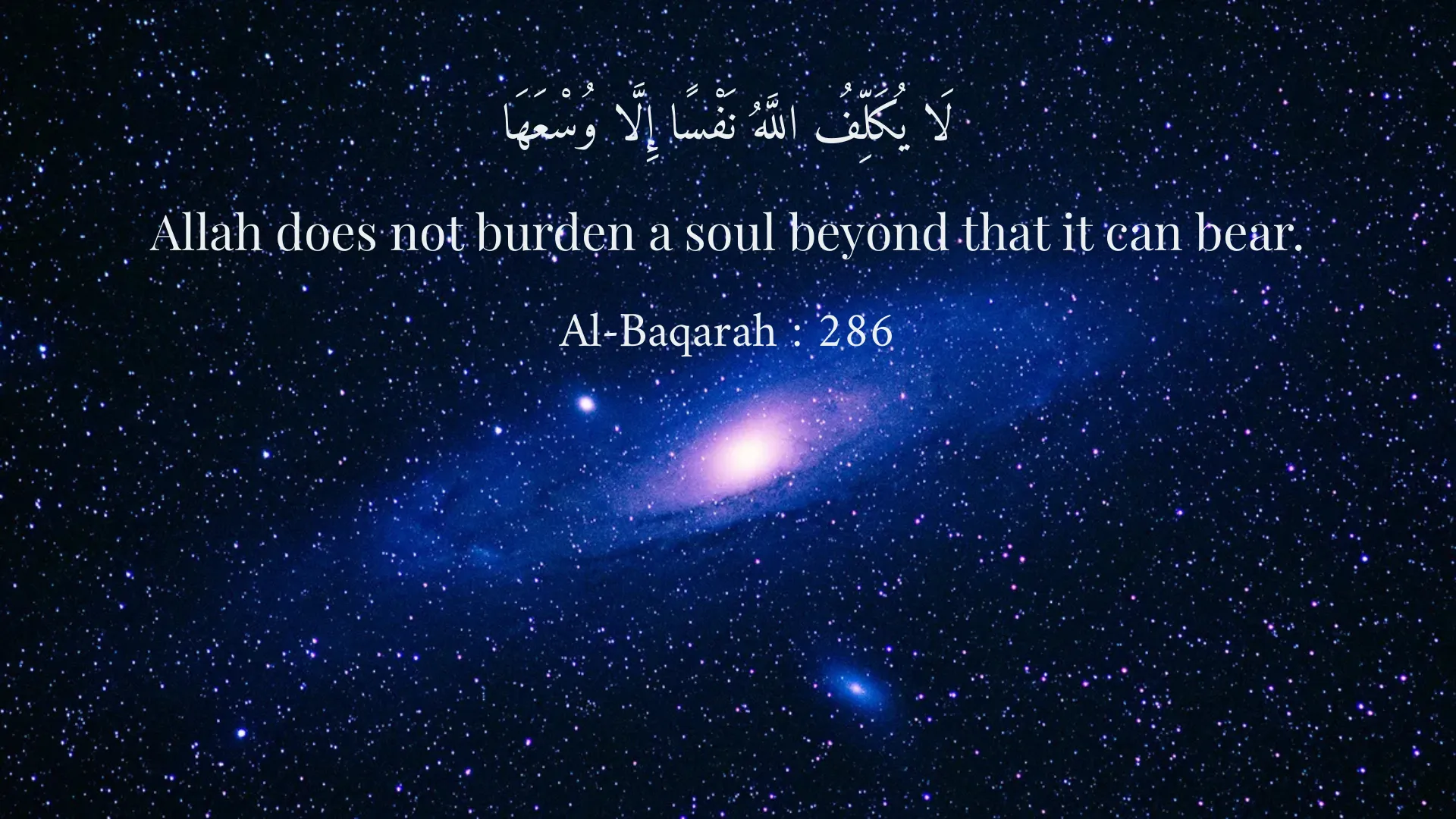
In the Holy Quran, believers are provided with a myriad of teachings that guide them through the various trials and tribulations they encounter throughout their lives. One of the core messages found within its verses is the importance of maintaining hope during difficult circumstances. It advises us to have unwavering faith in the assistance and support of Allah, the Almighty, which serves as a beacon of light in the darkest of times. This message is crucial, as life is filled with challenges, and the ability to remain hopeful can significantly influence our resilience and overall well-being. An illuminating reference can be found in Surah Al-Baqarah, verse 286, which states, 'Allah does not burden a soul beyond that it can bear.' This powerful verse reminds us that every challenge we face has a purpose and is, in fact, manageable. Such divine reassurance is essential, especially during periods of despair when one might feel overwhelmed by their circumstances. The idea that we are only given what we can handle is a source of comfort, an anchor that allows us to draw on our inner strength and cope with difficult situations. In moments of distress, when challenges pile upon us, it is crucial to remember that we are not alone. Surah Ar-Ra'd, verse 28 offers further solace, declaring, 'Indeed, by the remembrance of Allah do hearts find rest.' This emphasizes the significance of remembering Allah in our lives, for it is through this remembrance that we cultivate peace and hope in our hearts. Establishing a connection with our Creator enables us to rise above the tumultuous waves of life and find stability amidst chaos. When we are mindful of Allah, we remind ourselves of His mercy, love, and support, which can alleviate feelings of anxiety and hopelessness. Hope is not merely a fleeting emotion; it is a continual commitment to trust in the divine plan. An inspiring illustration of this is presented in the story of Prophet Ibrahim's companions, as mentioned in Surah Ash-Shu'ara, verse 80. They remained steadfast and trusted in Allah’s promise during their hardships, and as a result, they were delivered from their trials. Their unwavering faith exemplifies that when one perseveres in belief, they are often rewarded in ways that may surpass their expectations. It reinforces the idea that just as Allah helped His prophets and their believers, He is equally attentive to our struggles and desires to aid us through our challenges as well. Throughout various challenges that we face in life, having faith in Allah can empower us to overcome despair. When we embrace the Quran’s teachings and internalize its messages, we equip ourselves with the tools necessary to navigate through adversity. This faith not only illuminates our path, providing clarity and direction, but it also instills within us the strength to persist despite the trials we encounter. Moreover, prayer is an essential component of cultivating hope and resilience. Engaging in regular prayer allows us to express our fears, hopes, and aspirations directly to Allah. It provides a structured moment in our daily lives to reflect on our blessings and seek guidance. The act of prayer fosters a sense of community as well, as believers often gather to pray together, reinforcing social support systems that are vital during tough times. In addition to prayer, reflecting on Allah’s mercy and blessings can significantly alter our perspectives. By recognizing the countless gifts we have, even in the simplest aspects of life, we cultivate gratitude. Gratitude training has been shown in psychological studies to improve overall life satisfaction and well-being; thus, implementing this within a spiritual framework enhances its efficacy. Recognizing the blessings allows us to see that despite our struggles, there is always something to be thankful for, which nurtures hope. Further, nurturing hope through faith allows us to develop resilience, an essential quality that helps individuals bounce back from setbacks. Resilience is not just the absence of despair; it is the presence of growth and the ability to thrive despite challenges. By relying on Allah's promises, believers develop patience (sabr) and a steadfast heart that is not easily shaken by life’s adversities. In conclusion, the message conveyed in the Quran, particularly regarding hope and faith in Allah, is incredibly profound and significant for believers confronting challenges. The teachings found in verses such as Surah Al-Baqarah, verse 286, and Surah Ar-Ra'd, verse 28, solidify the understanding that Allah supports us and does not burden us with more than we can handle. Furthermore, the stories of the prophets serve as reminders of the importance of trust in Allah's plan and timing. In a world that often discourages hope, reflecting on Allah’s mercy, engaging in prayer, and cultivating gratitude become our means of shining light into the shadows of despair, dispelling hopelessness, and illuminating our hearts. With this profound understanding of faith and resilience, believers can navigate the challenges of life with a renewed spirit, drawing strength from their relationship with Allah and knowing that hope is always within reach.
Related Verses
لَا يُكَلِّفُ اللَّهُ نَفْسًا إِلَّا وُسْعَهَا
Allah does not burden a soul beyond that it can bear.
Al-Baqarah : 286
أَلَا بِذِكْرِ اللَّهِ تَطْمَئِنُّ الْقُلُوبُ
Indeed, by the remembrance of Allah do hearts find rest.
Ar-Ra'd : 28
وَإِذْ قَالَ إِبْرَاهِيمُ لِأَبِيهِ وَقَوْمِهِ أَصَنْعِمَةً دُونَ اللَّهِ تُرِيدُونَ
And when Ibrahim said to his father and his people, 'Do you worship idols besides Allah?'
Ash-Shu'ara : 80
Short Story
Once upon a time, a young man named Amir faced numerous challenges in his life. He was constantly feeling hopeless and sad. One rainy day, while sitting alone, he remembered the verses of the Quran and decided to revive hope in his heart. He began to pray and trust in Allah and gradually realized that problems could be opportunities for growth and development. With each prayer and remembrance of Allah, Amir felt an increasing sense of hope, and ultimately overcame his challenges with determination.