Quranic Answer
The concept of arrogance, known as 'kibr' in Arabic, is a recurring theme in various religious texts, particularly the Holy Quran. In Islam, arrogance is viewed not only as a negative trait but also as a significant moral failing that may hinder an individual's spiritual growth and ability to connect with God. Throughout the Quran, believers are strongly cautioned against falling into the trap of arrogance, as it can lead to severe consequences both in this life and the hereafter. One of the most illustrative examples of arrogance in the Quran is the story of Iblis, as mentioned in Surah Al-Baqarah, verse 34. The verse describes a pivotal moment when Allah commanded the angels to prostrate to Adam, the first human being. While all the angels complied, Iblis, a being created from smokeless fire, refused to obey due to his arrogance, claiming superiority over Adam, who was created from clay. This refusal to submit to God's command, driven by his inflated sense of self-importance, ultimately led to Iblis being cast out of grace. This narrative serves as a cautionary tale about the destructive nature of arrogance, indicating that even the most knowledgeable and powerful beings can fall from grace if they allow pride to cloud their judgment and obedience to God. Moreover, in Surah Luqman, verse 18, Allah explicitly warns believers about the dangers of displaying contempt and arrogance towards others. The verse states: 'And do not turn your cheek [in contempt] toward people, and do not walk through the earth exultantly. Indeed, Allah does not like every self-deluded braggart.' This verse teaches us that self-display and boasting are not just discouraged; they are outright condemned. Instead of elevating ourselves above others, humility must be our guiding principle. To truly embody the virtues of humility and modesty, we need to cultivate these traits in both our speech and our actions. Humility is not solely about the absence of arrogance; it is about a conscious effort to prioritize others above ourselves. When we refrain from boasting about our achievements and capabilities, we naturally create a space where arrogance cannot thrive. The Quran reinforces the value of humility in Surah Al-Mu'minun, verses 1 and 2, which states: 'Certainly will the believers have succeeded: they who are during their prayer humbly submissive.' These verses highlight the importance of being humbly submissive in our prayers, a practice that fosters a deeper connection with God while simultaneously eradicating feelings of pride. In order to combat the inclination towards arrogance, it is beneficial for believers to draw closer to God and acknowledge their weaknesses. This practice not only emphasizes our dependence on Allah but also instills a sense of gratitude for the myriad of blessings we have received. It is essential to remind ourselves continually of these blessings, especially in solitude, where the distractions of the worldly life fade away, allowing us to focus on our relationship with the Divine. Taking care of our hearts and intentions is paramount in our journey towards humility. By sincerely striving for empathy and kindness towards others, we can avoid falling into the arrogance trap. The tendency to look down upon others often stems from a misunderstanding of our own worth and the recognition that all human beings are created by the same Creator. By acknowledging our shared humanity, it becomes easier to cultivate compassion and understanding rather than arrogance and contempt. Furthermore, social interactions are vital in shaping our character. By associating with individuals who embody humility and modesty, we reinforce these traits in ourselves. Engaging in acts of kindness towards others, regardless of their status, helps in nurturing a spirit of humility. It also assists in breaking down the barriers that might arise from feelings of superiority or pride. Islamic teachings impart the importance of social responsibility and caring for one another. When we view ourselves as part of a larger community, our focus shifts from individual accomplishments to collective well-being. This understanding fosters a sense of unity, negating the basis for arrogance as we learn to celebrate the achievements of others and contribute positively to the society around us. Additionally, the practice of self-reflection can be instrumental in recognizing and mitigating feelings of arrogance. Regularly examining our thoughts, actions, and motivations enables us to identify areas where pride may have crept in. In moments of contemplation, we should ask ourselves probing questions: Are we truly serving others, or are we seeking recognition for our efforts? Are we acting out of a desire to please God, or are we driven by the need for admiration from others? In conclusion, the Holy Quran presents a clear and powerful message about arrogance and humility. Through the stories and teachings found within its verses, believers are urged to avoid the pitfalls of arrogance and instead embrace a life characterized by humility, empathy, and kindness. By prioritizing others over ourselves and remaining conscious of our weaknesses, we can foster a deeper connection with Allah and with each other. The journey towards humility is not an easy one, but it is a necessary one for anyone seeking to truly embody the spirit of faith and submit to the will of God. As we navigate through life, let us commit ourselves to being humble, recognizing that our worth is not determined by our accomplishments but rather by our character and our ability to uplift those around us.
Related Verses
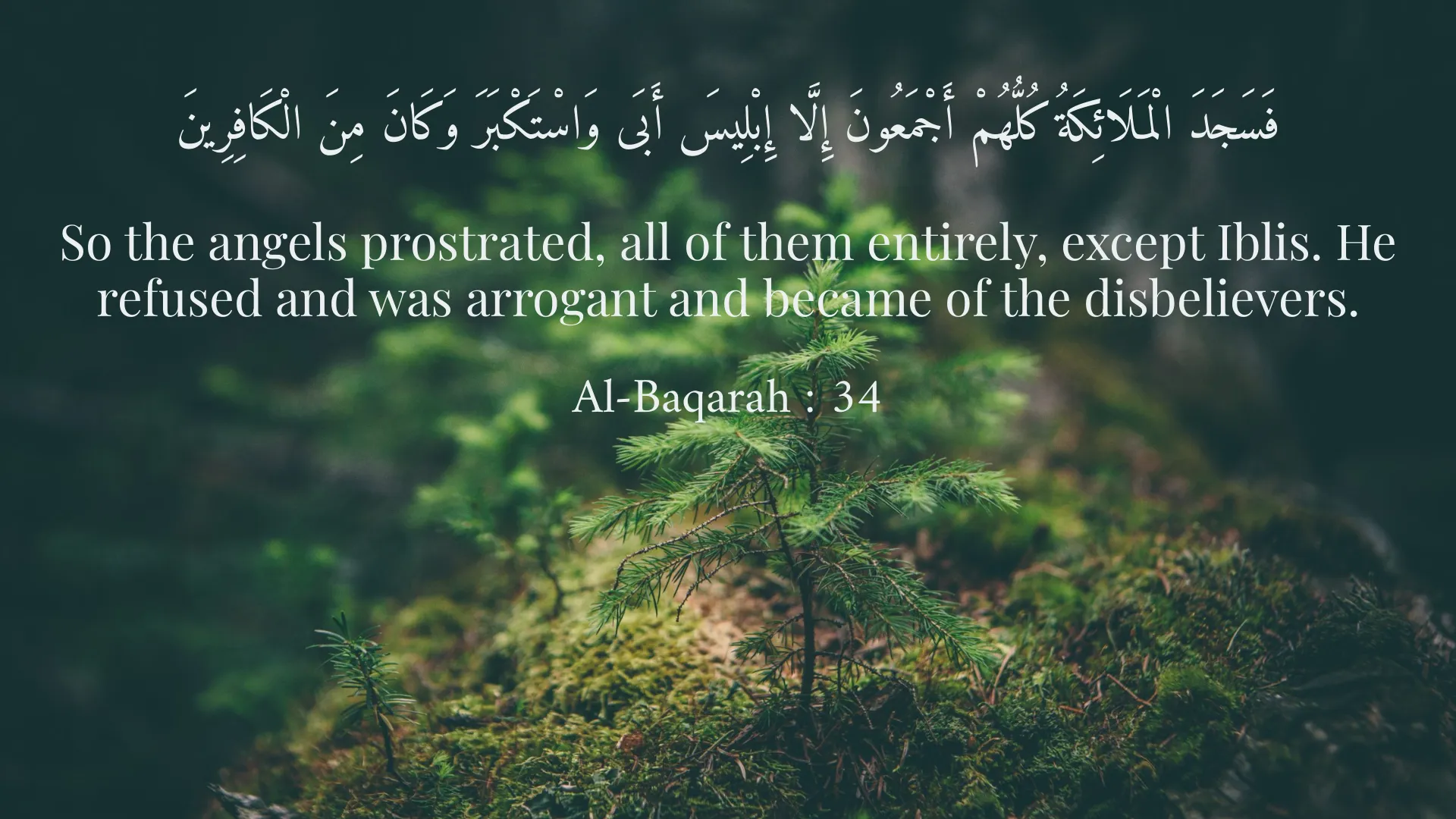
فَسَجَدَ الْمَلَائِكَةُ كُلُّهُمْ أَجْمَعُونَ إِلَّا إِبْلِيسَ أَبَى وَاسْتَكْبَرَ وَكَانَ مِنَ الْكَافِرِينَ
So the angels prostrated, all of them entirely, except Iblis. He refused and was arrogant and became of the disbelievers.
Al-Baqarah : 34
وَلَا تَصْعَرْ خَدَّكَ لِلنَّاسِ وَلَا تَمْشِ فِي الْأَرْضِ مَرَحًا إِنَّ اللَّهَ لَا يُحِبُّ كُلَّ مُخْتَالٍ فَخُورٍ
And do not turn your cheek [in contempt] toward people, and do not walk upon the earth exultantly. Indeed, Allah does not like every self-deluded braggart.
Luqman : 18
قَدْ أَفْلَحَ الْمُؤْمِنُونَ
Certainly will the believers have succeeded.
Al-Mu'minun : 1
Short Story
Once upon a time, there was a man named Hassan who was traveling. In the middle of his journey, he encountered an old man who appeared to be very poor and discontented. Initially, Hassan kept his distance, thinking to himself, 'Why should I talk to him when I am in a better position?' However, after a few moments, he recalled the verses of the Quran that emphasize the greatest virtue, which is reliance on God and humility. Hassan turned back to the old man and exchanged a few words with him. In doing so, Hassan felt better and realized that his arrogance had distanced him from happiness and peace.