Quranic Answer
Regret over the past is a sentiment that resonates deeply with many individuals, and it is not uncommon for people to find themselves haunted by decisions made or opportunities missed. This feeling can sometimes be debilitating, overshadowing happiness and preventing individuals from moving forward in life. However, guidance from the Holy Quran offers profound wisdom on how to manage the emotions associated with regret. The verses from the Quran encourage believers to adopt a mindset of resilience and forward-thinking, reminding us that our past does not have to define our future. One of the pivotal verses in this regard is found in Surah Al-Imran, verse 139, where Allah reassures us: "And do not weaken and do not grieve, and you will be superior if you are true believers." This verse serves as a call to reject sorrow and despair. It emphasizes a fundamental principle in Islamic teachings: faith and belief in oneself can transform one's perspective. The mention of becoming superior if one is a true believer serves as both a reassurance and a challenge. It invites individuals to tap into their inner strength, reminding them that setbacks are a part of life and do not lessen their worth. The implication here is that belief, coupled with perseverance, can lead to an empowered and fulfilling life, free from the burdens of past mistakes. Additionally, in Surah Al-Kahf, verse 32, Allah further advises: "Do not grieve for what has passed." This verse is especially crucial for those who find themselves ensnared in a cycle of regret. The directive here is clear: it is counterproductive to mourn over what cannot be changed. Instead, believers are urged to let go of the past and redirect their energies towards the present and the future. This guidance aligns with psychological principles that advocate for living in the moment and focusing on current opportunities rather than being trapped in retrospective sorrow. With every moment being unique and a chance for personal growth, embracing the now can pave the way for a more hopeful tomorrow. Moreover, in Surah Al-An'am, verse 34, it is articulated: "And indeed, it has been revealed to you, and to those before you: If you associate anything with Allah, your work will surely become worthless, and you will be among the losers." This verse emphasizes the integrity of one's faith and actions. Maintaining a relationship with Allah is depicted as essential to ensuring that one's endeavors bear fruit. When individuals become consumed by regret, they might drift away from their core beliefs and values, causing their actions to lose significance. This part of the message reinforces the intertwining of faith and purpose; by aligning one's actions with their faith, individuals can foster a sense of fulfillment and alleviate the weight of regret. It is a reminder that actions grounded in sincerity and genuine belief are liberating and can lead to greater life satisfaction. The Quran's teachings provide not only comfort but also practical steps on how to navigate the turbulent waters of regret. To truly embrace a life of peace and joy, Muslims are encouraged to adopt several principles: 1. Acceptance of the Past: Accept that the past is unchangeable. Recognizing this truth is the first step toward freeing oneself from regret. Acceptance does not mean condoning previous actions; rather, it means acknowledging that those experiences have contributed to who you are today. 2. Focus on Attention: Direct your focus on the present moment. Engage in mindfulness practices that anchor you in the here and now. Whether it’s through prayer, meditation, or simple reflection, cultivating a present-centered mindset will help in alleviating feelings of regret. 3. Exercise Forgiveness: Forgive yourself for past mistakes. This can be one of the hardest steps, but it is essential. Self-forgiveness can lead to healing and the ability to move forward with a clearer mind and spirit. 4. Learn and Grow: Utilize past experiences as teaching moments. Every mistake or regret can be transformed into a lesson. Understanding what went wrong can provide greater insight into how to make better choices in the future. 5. Strengthen your Faith: Engaging with your faith can provide support and guidance that alleviates feelings of remorse. Whether through prayer, reading the Quran, or seeking the company of those with similar beliefs, reconnecting with your faith can help you view your past in a more forgiving light. 6. Set New Goals: Look to the future by setting new objectives and aspirations. By channeling energy into future pursuits, you create opportunities for growth and success, replacing regret with ambition. In summary, the Holy Quran provides profound insights that help individuals cope with regret over the past. Through verses like those in Surah Al-Imran and Surah Al-Kahf, we are reminded of the importance of resilience in faith and the necessity of focusing on the present. The connection between faith and action is crucial in preventing feelings of remorse from taking root in our lives. With the right mindset and guidance, moving past regret can unlock a fulfilling and joyous existence. Therefore, the path to happiness lies not in lamenting what was, but rather in embracing what can be, grounded in the strength of our beliefs and aspirations.
Related Verses
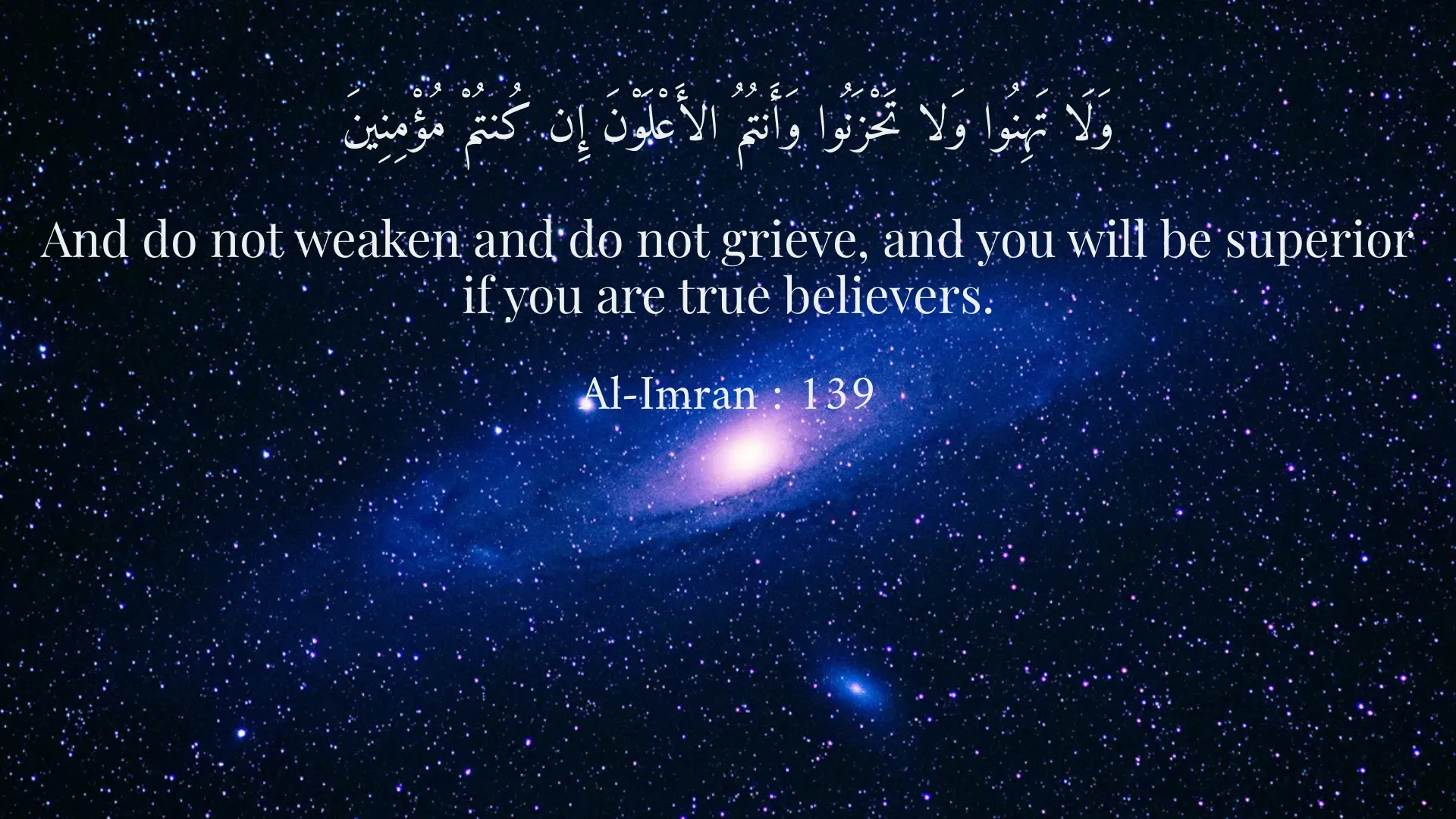
وَلَا تَهِنُوا وَلا تَحْزَنُوا وَأَنتُمُ الأَعْلَوْنَ إِن كُنتُمْ مُؤْمِنِينَ
And do not weaken and do not grieve, and you will be superior if you are true believers.
Al-Imran : 139
لا تَأَسَفُوا عَلَى مَا فَاتَكُمْ
Do not grieve for what has passed.
Al-Kahf : 32
وَلَقَدْ أُوْحِيَ إِلَيْكَ وَإِلَى الَّذِينَ مِن قَبْلِكَ لَإِنْ أَشْرَكْتَ لَيَحْبَطَنَّ عَمَلُكَ وَلَتَكُونَنَّ مِنَ الْخَاسِرِينَ
And indeed, it has been revealed to you, and to those before you: If you associate anything with Allah, your work will surely become worthless, and you will be among the losers.
Al-An'am : 34
Short Story
One day, a person named Amir was feeling sad about the mistakes he had made in the past. He decided to turn to the words of the Quran and read Surah Al-Imran, verse 139. After that, he reminded himself to look towards the future and live his life based on faith and hope. By accepting his past and embracing new moments, he began to live life anew.