Quranic Answer
Piety, often defined as a reverence for God and a commitment to live a morally upright life, is not merely a characteristic but a crucial moral quality that shapes the essence of humanity. In many religious texts, including the Holy Quran, the topic of piety is highlighted as essential for personal and communal development. The concept of piety transcends mere ritualistic adherence to religious practices; it beckons a deeper, more meaningful connection to the divine, which lays the foundation for ethical decision-making, social responsibility, and community cohesion. To truly understand the importance of piety, one must first grasp its significance in human life. Piety leads to a state of mindfulness and conscientiousness, where a person is aware of their actions and the impact they have on themselves and others. This awareness fosters a sense of accountability and encourages individuals to make choices that resonate with their beliefs and values. In this context, piety can be seen as a guiding force that shapes personal character, influences social interactions, and offers a spiritual compass. The Holy Quran places a significant emphasis on the cultivation of piety. It serves as a moral guide, prompting believers to reinforce their relationship with Allah. One of the foundational steps in augmenting our piety is developing a stronger connection with Allah, which can be achieved through various forms of worship. Prayer, supplication, and the recitation of the Quran are primary methods that enhance this relationship. Surah Al-Baqarah, verse 2, states, "This is the Book about which there is no doubt, a guidance for those conscious of Allah." This verse underlines the Quran’s role as the ultimate guide to fostering greater piety and ethical conduct. When individuals engage deeply with the Quran, they not only find guidance for their spiritual journeys but also gain insights into how to navigate the complexities of daily life with integrity and grace. Furthermore, the Quran encourages believers to pay careful attention to their actions and behavior towards others as a reflection of their piety. In Surah Al-Imran, verse 200, it is noted, "O you who have believed, persevere and endure and remain stationed and fear Allah that you may be successful." This verse advocates for the development of virtues such as patience and resilience, especially in the face of adversities. These qualities are intrinsic to a pious life, enabling individuals to maintain their faith and moral direction amidst life’s challenges. By persevering and enduring, one not only nurtures their own soul but also embodies the qualities of a role model for those around them. The support one provides to others in times of hardship exemplifies not just personal strength but also a profound commitment to communal well-being. Moreover, the path to enhanced piety greatly hinges on the conscious avoidance of sinful actions and ethical transgressions. It is essential for individuals striving for a pious existence to develop the ability to discern between right and wrong, taking active steps to embrace virtue while shunning vice. This discernment is often cultivated through continuous self-reflection and moral education, underscoring the importance of personal responsibility in the pursuit of a spiritually fulfilling life. Engaging in activities that promote community values, social justice, and mutual respect further solidifies one’s piety and serves to strengthen the fabric of society. Research in various psychological and sociological disciplines supports the notion that individuals who commit to ethical and religious values often lead more peaceful and successful lives. Studies suggest that people with high levels of piety tend to have better mental health outcomes, a stronger sense of purpose, and more stable relationships. The commitment to ethical living not only benefits oneself but also contributes positively to the community, fostering a spirit of compassion and cooperation. As we explore the multifaceted nature of piety, it becomes clear that enhancing this quality requires a continuous and dedicated effort. This is more than just a superficial engagement with religious practices; it represents a lifelong journey of self-improvement and spiritual growth. Individuals are encouraged to reflect on their intentions and live authentically in line with their beliefs. This reflection can also lead to an increased awareness of the needs of others, prompting action that supports those who may be struggling or less fortunate. In conclusion, piety is a central moral quality that significantly influences human life and societal norms, primarily emphasized in the Holy Quran. It encompasses a deep connection with Allah fostered through prayer, supplication, and the sacred act of reciting the Quran. Additionally, cultivating piety involves an unwavering commitment to ethical living, the endurance of life's challenges, and the avoidance of sin. As individuals immerse themselves in these practices, they not only provide themselves with spiritual sustenance but also serve as positive influences in their communities. Thus, the pursuit of piety is a noble and transformative endeavor, shaping both personal character and community value structures, ultimately steering humanity towards a more harmonious and ethical existence.
Related Verses
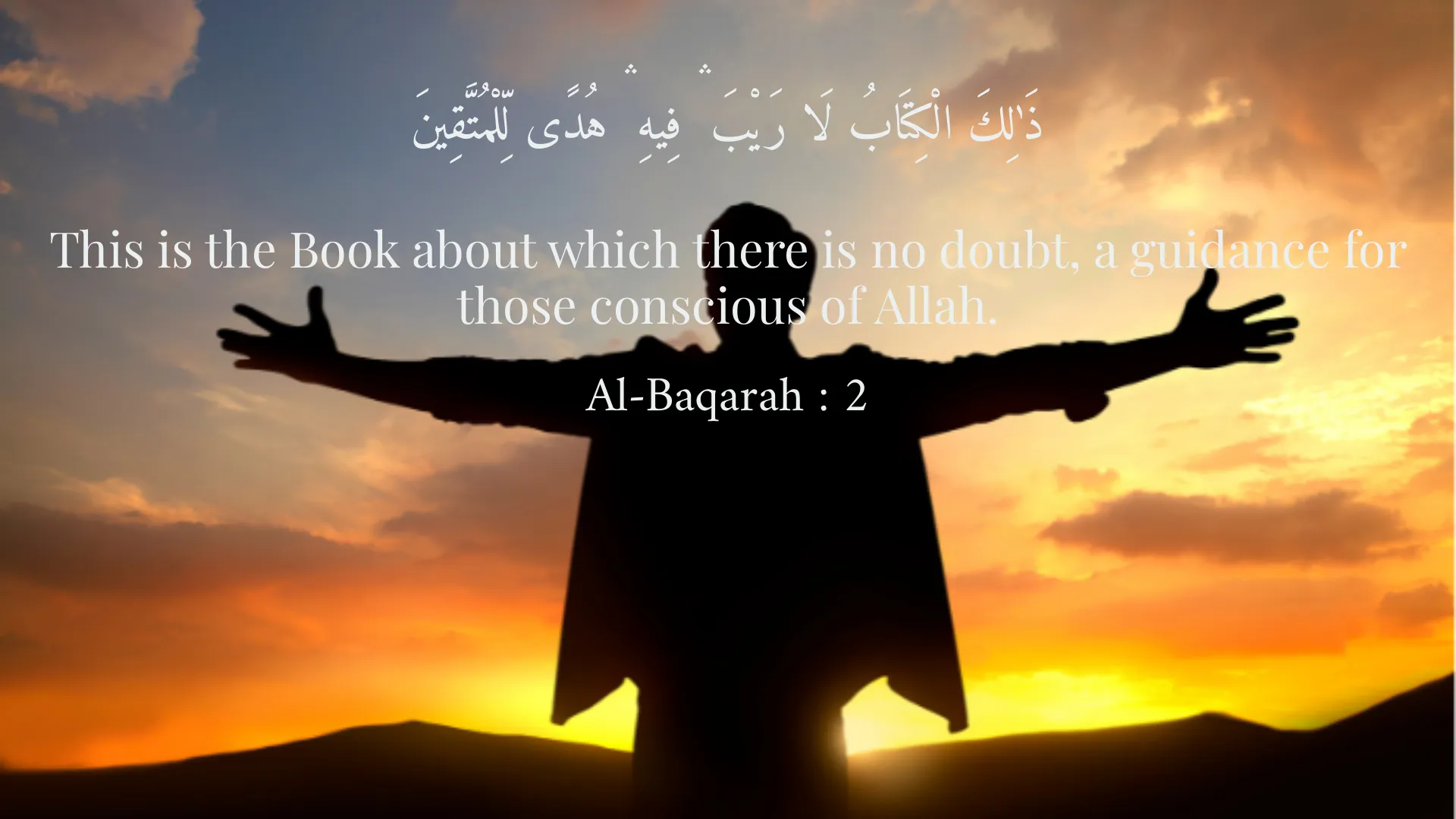
ذَٰلِكَ الْكِتَابُ لَا رَيْبَ ۛ فِيهِ ۛ هُدًى لِّلْمُتَّقِينَ
This is the Book about which there is no doubt, a guidance for those conscious of Allah.
Al-Baqarah : 2
يَا أَيُّهَا الَّذِينَ آمَنُوا اصْبِرُوا وَصَابِرُوا وَرَابِطُوا وَاتَّقُوا اللَّهَ لَعَلَّكُمْ تُفْلِحُونَ
O you who have believed, persevere and endure and remain stationed and fear Allah that you may be successful.
Al-Imran : 200
Short Story
Once upon a time, a man named Ahmad pondered deeply on how to increase his piety. He decided to dedicate time each day for reading the Quran and engage in prayer and supplication. Over time, he felt his heart became brighter, and his life calmer. With every verse he read, he grew closer to fearing and loving God, which gradually transformed him into a better person.