Quranic Answer
The Holy Quran serves as a profound guide for humanity, offering wisdom and direction on various aspects of life, including the critical importance of speech. This article explores the representation of the tongue and its significant implications in our daily interactions through the lens of Islamic teachings. Within the Quran, the care of the tongue and the importance of speaking with caution are distinctly emphasized. Language is a powerful tool, and its misuse can lead to moral decay in society. The Quran guides believers towards using their words to uplift, encourage, and speak the truth, rather than causing harm. One significant verse concerning this subject is found in Surah Al-Hujurat, verse 12, which states: "O you who have believed, avoid much [negative] assumption. Indeed, some assumption is sin. And do not spy or backbite each other." This verse explicitly highlights the necessity of caution in our speech and behaviors. The counsel given here is not just a guide to oral communication but can be extended to our digital interactions in this information age. The words we speak or type can reach countless people in mere moments, making the stakes much higher. In this instance, the Quran urges believers to avoid making unfounded assumptions, underscoring that mere speculation can lead to misunderstandings, hurt feelings, and sometimes even escalated conflicts. It admonishes against backbiting, which is a serious matter in Islam, further repeating the message that our language must foster unity and understanding rather than division and contempt. Hence, the concept of speaking with care emphasizes that our words should reflect kindness, integrity, and honesty. In line with this, Surah Al-Baqarah, verse 83, brings forth another crucial aspect of speech — the prohibition of falsehood. The verse states: "And [mention] when We took the covenant from the Children of Israel, [enjoining upon them], 'Do not commit to any illusion believing you are above others, and be good to parents.'" This reiterates the profound responsibility placed upon individuals regarding their speech. It suggests that untruths not only affect individual reputations but also tarnish communal relationships. Each spoken word can either build a society founded on honesty and morality or dismantle it with deceit and treachery. From such teachings, we understand that our words carry immense weight, and we are tasked with the responsibility of wielding them with care. Furthermore, the Quran continues to provide guidance regarding our interactions with others. Surah Luqman, verse 19 emphasizes the importance of politeness in speech: "And do not turn your cheek [in contempt] toward people, and do not walk through the earth exultantly. Indeed, Allah does not like every transgressing, arrogant person." Here, we see how the Quran sets a standard for our demeanor and communication. Politeness is as important as the truth in our speech; it deals with the manner in which we convey our thoughts to others. Just as words are significant, the attitude and approach we portray while speaking play a crucial role in determining people's responses. Arrogance and contempt can raise barriers between individuals and groups and lead to a breakdown in communication. This verse calls upon believers to not only mortgage the truth in their statements but also ensure a respectful approach in their interactions with all. By highlighting these principles, we embark on a journey of introspection and mindfulness in our daily communication. Being conscious of our tongue involves fully understanding the ramifications of our words and choices. Before we speak, we can ask ourselves whether our words are beneficial or harmful. Will they build someone up or tear them down? Do they promote truth and justice, or do they merely cater to our biases and assumptions? If we can align our speech with the values taught in the Quran, we contribute to creating a culture of respect, dignity, and understanding within our communities. By adhering to the principles laid out in these Quranic verses, we can enhance the quality of our speech, fostering a more compassionate society. Our speech becomes a tool of empowerment rather than destruction. It creates a space in which misunderstandings can be addressed; kindness can flourish, and a vibrant community can thrive. Our responsibility extends beyond individual conduct to shaping the environment around us through kind and fair communication. Thus, the lessons presented in the Quran are not merely religious; they provide a universal message of humanity. By practicing mindfulness in our conversations, we carry forth the spirit of these teachings, ultimately contributing to a world more aligned with the values of love, respect, and understanding that resonate throughout the Quran. In conclusion, the Quran's guidance on the tongue plays a critical role in our daily interactions and responsibilities. It implores us to speak truthfully, avoid gossip, steer clear of backbiting, and practice humility in our interactions. By taking these principles to heart, we advocate for meaningful dialogue and build connections grounded in positivity and support, enabling us to cultivate a better society. Therefore, being mindful of our tongue not only reflects our characters but also sets the tone for our communities, leading us towards a healthier, more harmonious existence.
Related Verses
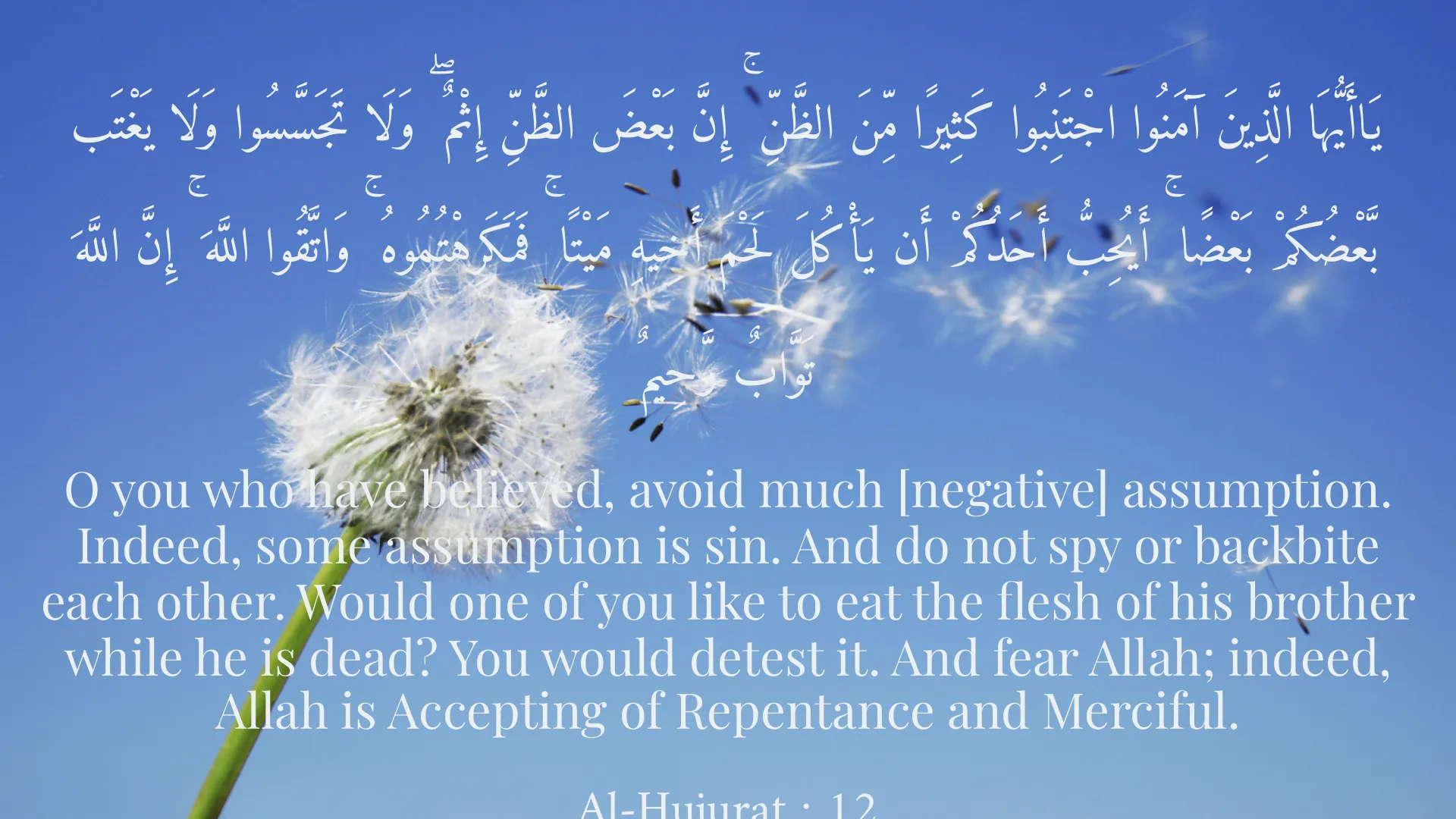
يَاأَيُّهَا الَّذِينَ آمَنُوا اجْتَنِبُوا كَثِيرًا مِّنَ الظَّنِّ ۚ إِنَّ بَعْضَ الظَّنِّ إِثْمٌ ۖ وَلَا تَجَسَّسُوا وَلَا يَغْتَب بَّعْضُكُمْ بَعْضًا ۚ أَيُحِبُّ أَحَدُكُمْ أَن يَأْكُلَ لَحْمَ أَخِيهِ مَیْتًا ۚ فَمَكَرِهْتُمُوهُ ۚ وَاتَّقُوا اللَّهَ ۚ إِنَّ اللَّهَ تَوَّابٌ رَّحِيمٌ
O you who have believed, avoid much [negative] assumption. Indeed, some assumption is sin. And do not spy or backbite each other. Would one of you like to eat the flesh of his brother while he is dead? You would detest it. And fear Allah; indeed, Allah is Accepting of Repentance and Merciful.
Al-Hujurat : 12
وَإِذْ أَخَذْنَا مِيثَاقَ بَنِي إِسرائيلَ أَلَّا تَعْبُدُوا إِلَّا اللَّهَ وَبِالْوَالِدَيْنِ إِحْسَانًا
And [mention] when We took the covenant from the Children of Israel, [enjoining upon them], 'Do not commit to any illusion of falsehood but to God and be good to parents.'
Al-Baqarah : 83
وَاخْفِضْ جَنَاحَكَ لِلْمُؤْمِنِينَ
And do not turn your cheek toward people in contempt. And do not walk through the earth exultantly. Indeed, Allah does not like every transgressing, arrogant person.
Luqman : 19
Short Story
One day, a woman with a sharp tongue came to a sage and said, "I never mind other people's actions; I just want to speak the truth." The sage smiled and replied, "Yes, truth is good, but do you know that every truth should be spoken with love and gentleness?" The woman thought for a moment and replied, "Then how can I do this?" The sage said, "Try to think a bit before you speak and ask yourself if my words will hurt someone." The woman diligently followed this advice and gradually realized that her tongue could be a tool for love and friendship.