Quranic Answer
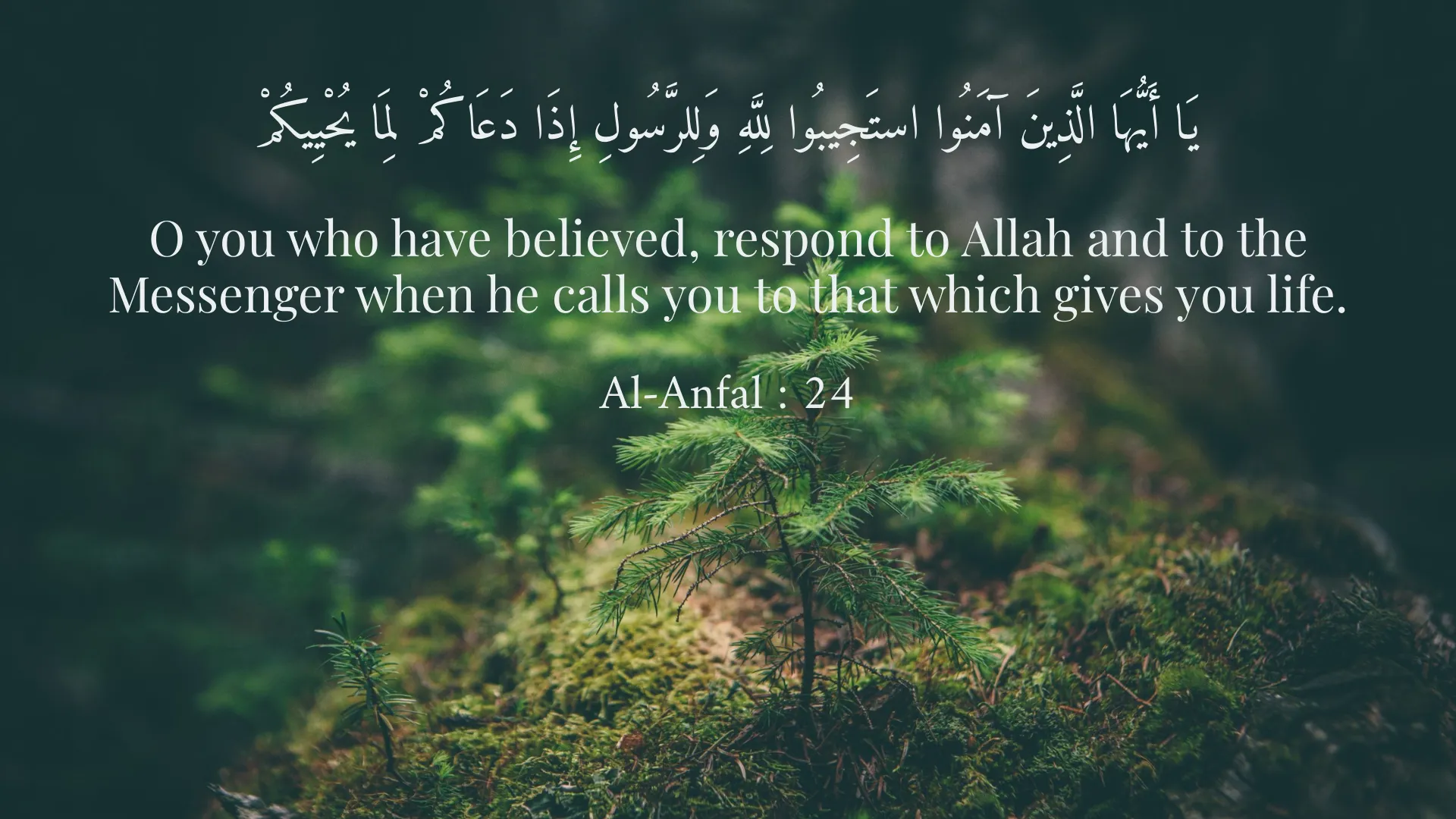
In various religious traditions, communication with the divine is considered a fundamental aspect of faith and spirituality. The Holy Quran, a sacred text for Muslims, elucidates how individuals can engage in a profound relationship with God (Allah) through various means. Among these is the concept of silence and peace as a medium for divine communication. It is in these moments of quiet reflection that a deeper connection can be forged, allowing one to hear the heartfelt whispers of the soul. This article explores the significance of silence in communicating with God as discussed in the Holy Quran, with a focus on key verses that illustrate this spiritual communication. The Quran emphasizes the importance of responding to the call of God and His Messenger, a recurring theme throughout its verses. In Surah Al-Anfal, verse 24, Allah addresses believers, urging them to heed His call: 'O you who have believed, respond to Allah and to the Messenger when he calls you to that which gives you life.' This verse is not merely a statement but a profound reminder that faith is characterized by a responsiveness to the divine. It insinuates that true life is found not in material pursuits but in the spiritual awakening that follows a sincere response to divine guidance. Here, silence becomes a vital element in this communication. When believers set aside the distractions of the worldly noise, they can engage in self-reflection and contemplation of the divine verses. It is during these moments of silence that the heart can truly open to receive the wisdom of Allah. This silence allows individuals to create a tranquil space in which they can ponder their existence, purpose, and their relationship with God. Silence is not an absence of words but a presence of understanding. As highlighted in Surah Ta-Ha, verse 14, Allah speaks to Moses: 'Indeed, I am Allah. There is no deity except Me, so worship Me and establish prayer for My remembrance.' This verse reinforces the idea that worship transcends mere ritualistic practices and articulations. Worship can originate from the depths of one's heart, taking on a more profound significance when offered in silence. Individuals may not always find the right words to express their innermost feelings, yet in the stillness of their hearts, they can communicate with God on a level that is deeply personal and sincere. Moreover, silence does not imply a lack of communication; rather, it serves as a medium through which personal feelings, desires, and supplications can be conveyed to God. Just as a whisper carries significant weight in a quiet room, so too can silent prayers resonate powerfully with the divine. In moments of distress, joy, or reflection, individuals can share their needs and gratitude with their Creator even in the absence of vocal expression. Such intimate communication fosters spiritual closeness and enhances one’s feeling of connection with God. To facilitate this sacred communication further, it is useful for believers to deliberately invite moments of silence and peace into their lives. Special times dedicated to prayer, meditation, or even contemplation in nature offer an opportunity to deepen this relationship. Nature, in its serene beauty, often inspires silent reflection, allowing individuals to connect with the universe and the Creator who governs it. These moments encourage one to step away from the demands of everyday life and immerse themselves in the tranquility that silence brings. In contemporary society, with its constant rush and incessant noise, finding these moments of silence can be challenging yet profoundly rewarding. Engaging in spiritual practices that promote quiet and contemplation, such as prayer, meditation, or mindful nature walks, can help individuals bridge the gap between their worldly concerns and their spiritual needs. Allowing oneself to enter into a state of peaceful silence can result in a powerful inward journey, leading to greater self-awareness and understanding. The practice of silence is not only beneficial for communication with God but also aids in broadening one’s perspective on life. When individuals take the time to listen—both to themselves and to the divine—they can find clarity and peace. This important aspect of worship draws believers closer to their faith, urging them to explore the depths of their spirituality. Just as still waters reflect the surrounding beauty, so too does a tranquil heart reflect the beauty of God's creation and grace. Furthermore, silence as a form of communication with God fosters an environment in which divine insights and guidance can emerge. In moments of silence, individuals can become more attuned to the subtle inspirations that flow from a higher power. This connection can lead to profound realizations and a harmonious existence in alignment with divine will. It cultivates patience and understanding, equipping believers with the resources they need to navigate life's challenges while remaining steadfast in their faith. In conclusion, the Holy Quran illustrates that communication with God encompasses various forms, among them the serene practice of silence. Believers are called to respond to Allah’s guidance sincerely, reflecting on the verses and engaging deeply with their faith without necessarily relying on spoken words. Silence becomes a powerful tool for self-exploration and divine connection, reinforcing the essence of worship as a deeply personal experience. By inviting moments of peace and quiet into their lives—whether through prayer, meditation, or nature walks—individuals can embark on an inner journey toward a more profound self-awareness and a closer relationship with God. Through these practices, silence transcends mere absence of sound, evolving into a sacred space for intimate communication and spiritual growth.
Related Verses
يَا أَيُّهَا الَّذِينَ آمَنُوا استَجِيبُوا لِلَّهِ وَلِلرَّسُولِ إِذَا دَعَاكُمْ لِمَا يُحْيِيكُمْ
O you who have believed, respond to Allah and to the Messenger when he calls you to that which gives you life.
Al-Anfal : 24
إنني أنا الله لا إله إلا أنا فاعبدني وأقم الصلاة لذكري.
Indeed, I am Allah. There is no deity except Me, so worship Me and establish prayer for My remembrance.
Ta-Ha : 14
Short Story
Once, a young man named Sajjad pondered on how he could strengthen his connection with God. He decided to sit in the silence of nature and listen to his heart. While paying attention to the sounds of the birds and the wind, he found a deep peace within. This silence made it possible for him to talk to God, and he recalled Quranic verses, realizing that he could share his feelings with the Lord in this quiet.