Quranic Answer
Understanding God's Love: A Comprehensive Exploration Understanding God's love is essential for establishing a deep connection with Him. For many believers, this love serves as the foundation of their faith and shapes their worldview. The Holy Quran, as a divine guide, provides insight regarding the signs and manifestations of God's love for His servants. It is through these verses that we come to understand the depth and breadth of His affection, mercy, and forgiveness. One of the most profound signs of God's love is His boundless mercy and forgiveness. As highlighted in Surah Az-Zumar, verse 53: 'Say, O My servants who have believed, fear your Lord. For those who do good in this world is good, and the earth of Allah is spacious. Indeed, the patiently persevering will be given their reward without account.' This verse conveys a powerful message: while humanity may falter through sin and error, God’s mercy is perpetually accessible. It serves as a reminder that no matter how far one strays or how deeply one falls into despair, there exists a path back to divine grace. This unwavering mercy is a profound indication of God's love towards His creations, demonstrating that His compassion supersedes any transgression. Delving deeper into the Quran, the theme of hope intertwined with God's love becomes increasingly evident. It is a common human experience to feel despondent during times of tribulation. However, the Quran reassures us that God's observance of our conditions and His provision of hope is integral to His relationship with humanity. True love is often reflected through the ability to offer support, and God exemplifies this perfectly by consistently reaching out to guide us through our darkest moments. Furthermore, God’s love for believers is emphasized through various Quranic verses, reinforcing the idea that this love is not one-sided but reciprocal. For instance, in Surah Al-Imran, verse 146 states: 'And Allah loves the doers of good.' This verse signifies the importance of actions that align with goodness and virtue in the eyes of God. There exists a close relationship between the believers and their Creator; as individuals strive to perform righteous deeds, they nurture their bond with God. The act of doing good, then, becomes not only a reflection of divine love but a reciprocal response from believers willing to embrace this love. Building a deeper understanding of God's love necessitates an awareness of its signs such as mercy, hope, and affection. The above verses remind us of our potential to harm ourselves through our choices, yet highlight that God's love is a constant source of encouragement. By acknowledging our mistakes and seeking forgiveness, we extend our hands towards God's love. In doing so, one can truly appreciate the beauty of a relationship grounded in mutual respect, trust, and a yearning for divine approval. To embody and reciprocate God's love, believers are encouraged to engage in good deeds and acts of worship. Such practices form the core of faith and align an individual’s actions with the virtues celebrated in the Quran. By doing so, believers not only experience a deeper relationship with God but also contribute to a positive environment that reflects divine love and compassion in everyday life. Moreover, it is within community interactions that the manifestation of God’s love can reach its highest form. When believers come together to support one another, sharing kindness and compassion, they embody the love that God has for them. Acts of charity, community service, and supporting those in need are practical manifestations of understanding and reciprocating God’s love. These deeds draw hearts closer together and cultivate a sense of belonging and unity founded on divine principles. In conclusion, comprehending God's love involves recognizing its manifestations through mercy, forgiveness, and a sense of hope. The Quran illustrates that God's love is not simply an abstract concept but a practical guide for living a life aligned with His will. By engaging in good deeds, nurturing our relationship with God, and extending love to others, we can fully embrace and understand the profound nature of divine love. This understanding will not only transform individual lives but has the potential to create a ripple effect throughout communities, fostering an environment filled with compassion, kindness, and respect for all of creation. Engaging with the concept of God's love invites individuals to contemplate their purpose in life and their relationships with one another. It encourages believers to reflect on their actions and how those align with the divine attributes of love and mercy celebrated in many religious texts. The journey toward understanding God’s love is continuous, and every act of kindness, forgiveness, and compassion brings us a step closer to comprehending the depth of His affection for us. Ultimately, recognizing and embodying God's love can significantly enrich our spiritual journey, leading us toward a more fulfilling, compassionate, and purposeful life.
Related Verses
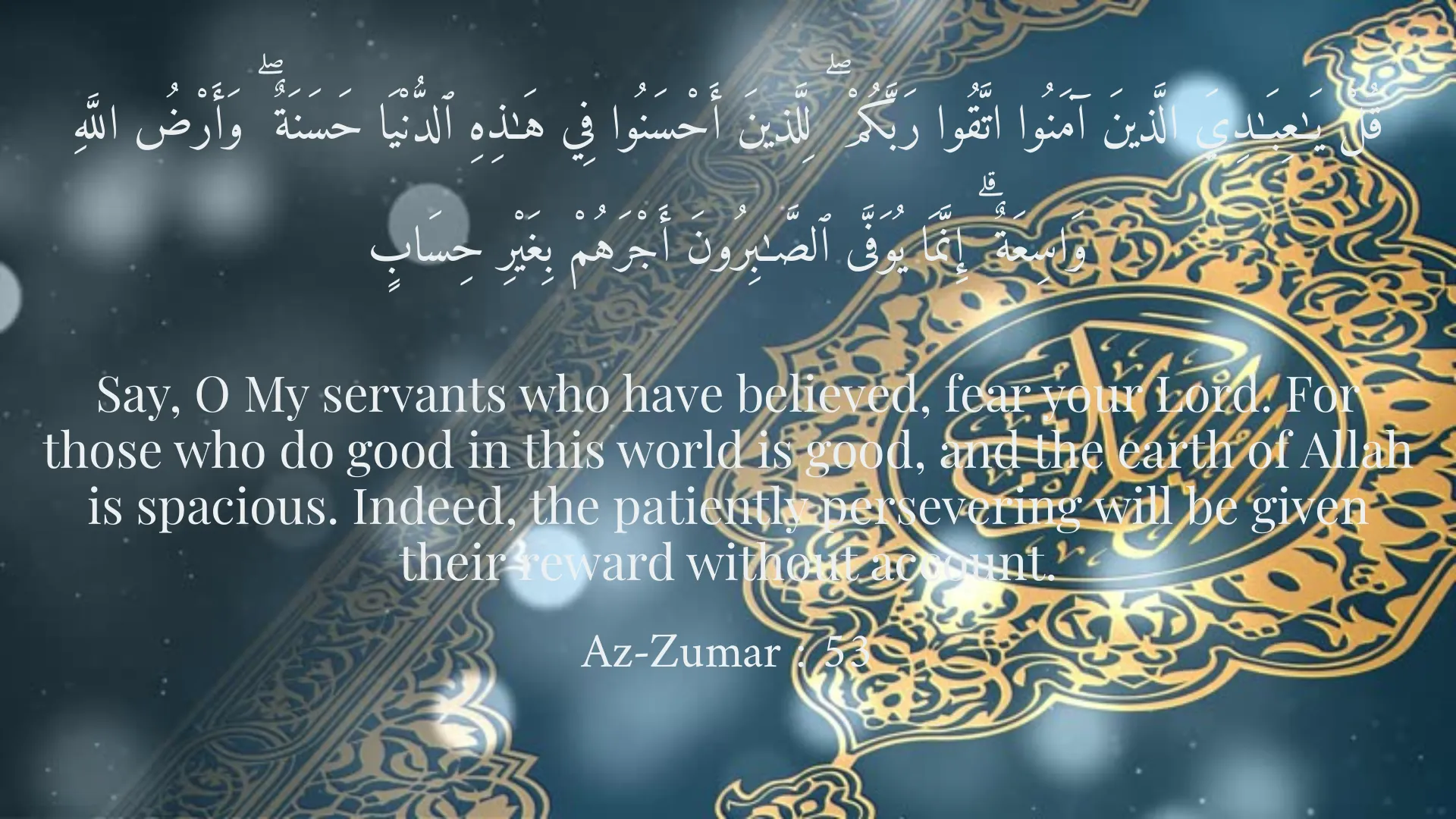
قُلْ يَـٰعِبَـٰدِيَ الَّذينَ آمَنُوا اتَّقُوا رَبَّكُمْ ۖ لِلَّذينَ أَحْسَنُوا فِي هَـٰذِهِ ٱلدُّنْيَا حَسَنَةٌ ۖ وَأَرْضُ اللَّهِ وَاسِعَةٌ ۗ إِنَّمَا يُوَفَّى ٱلصَّـٰبِرُونَ أَجْرَهُمْ بِغَيْرِ حِسَابٍ
Say, O My servants who have believed, fear your Lord. For those who do good in this world is good, and the earth of Allah is spacious. Indeed, the patiently persevering will be given their reward without account.
Az-Zumar : 53
وَأَحَبَّ اللّهُ الْمُحْسِنِينَ
And Allah loves the doers of good.
Al-Imran : 146
Short Story
One day, a young man named Amir was searching for understanding God's love. He felt lost in his life for various reasons. In pursuit of answers, he turned to the Quran and studied different verses. He came across verse 53 of Surah Az-Zumar, which reminded him never to lose hope in God's mercy. After several days of reflection and practicing his faith, Amir realized that by performing good deeds and worship, he felt God's love and affection in his life.