Quranic Answer
The Holy Quran emphasizes the significance of speech and the use of one's tongue, reminding believers of the responsibilities that come with the ability to communicate. Language is a powerful gift granted to humanity, allowing for expression, connection, and the exchange of ideas. However, with this great power comes an equally great responsibility to use it wisely and with respect. The Quran provides many insights into the ethical use of speech, teaching us to channel our words towards goodness rather than harm. Through various verses, it guides us on how to foster healthy communication that enhances relationships and uplifts communities. In Surah Al-Hujurat, verse 11, Allah cautions believers against mocking and ridiculing one another. This verse states, 'O you who have believed, let not a people ridicule [another] people.' The implication here is profound; it emphasizes the importance of respect within human interactions. Ridicule can lead to resentment, division, and a cycle of negativity that harms individuals and communities. The Quran implores us to rise above such behaviors and instead foster an environment where people are treated with dignity and compassion. Harmful speech can not only damage reputations but can also erode trust and unity in communities. By choosing to speak respectfully, we cultivate an atmosphere where love, acceptance, and understanding can thrive. Moreover, the Quran encourages believers to uphold gentleness in their discourse. In Surah Luqman, verse 19, we are reminded to 'be moderate in your pace and when you speak, be gentle.' This counsel urges us to consider the tone and manner in which we communicate. Soft-spoken words can carry a weight of comfort and approachability, making it easier for others to accept our guidance and opinions. Our approach towards communication should reflect kindness, patience, and wisdom, allowing for constructive exchanges that benefit all parties involved. Being gentle in speech means carefully choosing our words to avoid inflicting emotional wounds on others. It signifies an understanding that our words can either build bridges or create barriers between individuals. The tongue is truly a powerful tool. It holds the capacity to spread both love and hatred, peace and discord. Therefore, it is incumbent upon us to utilize this tool in a manner that aligns with ethical and moral standards set forth by the Quran. The teachings within this holy text encourage us to use our eloquence to promote love, friendship, and cooperation among people. It is not merely enough to refrain from speaking ill; rather, we should strive to lift others up with our words. Instead of casting judgment or belittling others in their struggles, we can harness our linguistic abilities to offer support and encouragement. For instance, in our daily lives, we have numerous opportunities to speak positively. Whether it is within our families, among friends, at our workplaces, or even in casual encounters with strangers, the impact of our words can be significant. A simple word of encouragement can motivate someone to pursue their goals, while a kind remark can brighten a person's day. Additionally, praying for the well-being of others and speaking positively about them, even when they are not present, can create a ripple effect of kindness that reverberates within our communities. Such actions reinforce positive interpersonal relationships and foster a culture of mutual respect and understanding. The transformative power of speech extends beyond the immediate interactions we have with others; it also shapes our inner selves and perceptions of the world around us. When we consciously choose to speak positively, we elevate our own thoughts and attitudes, contributing to our personal growth and well-being. Positive speech serves as a catalyst for cultivating constructive mentalities—encouragement breeds encouragement, and kindness fosters kindness. Conversely, the opposite holds true as well. When negativity dominates our conversations, it can lead to an environment rife with suspicion, anger, and discord. Such discourse can create a negative cycle that not only affects relationships but can also harm the psychological health of those involved. The Quranic guidelines remind us of the importance of self-awareness and the repercussions our words can have on our own lives and the lives of others. Furthermore, the Quran also articulates the importance of listening in communication. Good communication is a two-way street; it requires not only the expression of words but also the receptiveness to hear and understand what others are saying. In doing so, we foster meaningful interactions that are rooted in empathy and compassion. Listening with intention allows us to engage in deeper conversations, paving the way for resolution, collaboration, and shared understanding. Ultimately, the way we use our tongues holds the potential to foster a society characterized by harmony and mutual respect. By acknowledging the transformational power of speech and committing to use it for good, we align our actions with the ethical teachings of the Quran. As believers, it is our duty to navigate our conversations with awareness and intentionality, shaping our communities for the betterment of all. In conclusion, the Holy Quran's emphasis on the significance of speech and the strategic use of our tongues serves as a guiding principle for believers. It underscores the importance of fostering respectful communication, practicing gentleness in our discourse, and choosing uplifting words that promote kindness and support instead of harm. By applying these teachings in our daily interactions, we can create a positive impact that resonates beyond ourselves, enhancing relationships and nurturing a sense of community rooted in respect, empathy, and love.
Related Verses
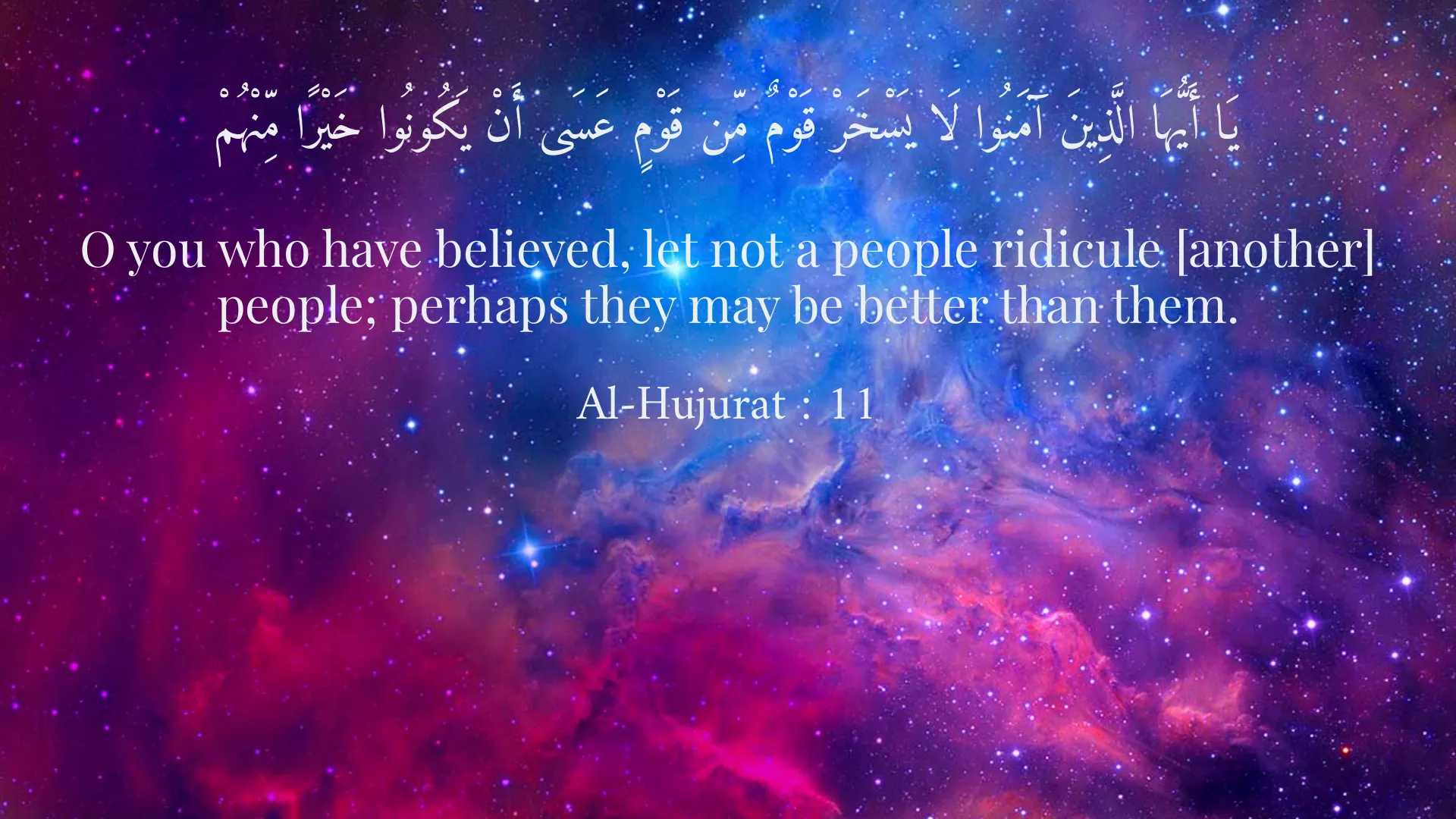
يَا أَيُّهَا الَّذِينَ آمَنُوا لَا يَسْخَرْ قَوْمٌ مِّن قَوْمٍ عَسَى أَنْ يَكُونُوا خَيْرًا مِّنْهُمْ
O you who have believed, let not a people ridicule [another] people; perhaps they may be better than them.
Al-Hujurat : 11
وَاخْفِضْ مِن صَوْتِكَ إِنَّ أَنفَسَ الْأَصْوَاتِ لَصَوْتُ الْحَمِيرِ
And be moderate in your pace and when you speak, be gentle.
Luqman : 19
Short Story
One day, in a beautiful place, there lived a wise man named Hossein. He was always in search of goodness and believed that the greatest good deed was kind words. One day, he met a poor man on the road, lamenting about his lack of food. With kindness, Hossein approached him and asked, 'Why are you sad?' The man shared his troubles and Hossein uplifted him with encouraging words. A few days later, the man came back and told Hossein how profoundly he had been impacted, demonstrating how a good word can change a life.