Quranic Answer
In the rich and profound teachings of the Holy Quran, suffering and the hardships of life are not merely meaningless calamities. Instead, they are viewed as instruments for growth, elevation, and understanding divine wisdom. The Quran teaches us that everything that happens to us in life, including difficulties and tribulations, possesses a hidden wisdom and a sublime purpose. These experiences play a crucial role in the development of the human being and in preparing them for a better future, both in this world and the hereafter. Therefore, utilizing past suffering to educate the future is not only possible but is a quintessential Quranic approach to life, demanding reflection, patience, and reliance on God. The Quran explicitly states that trials and hardships are divine tests. In Surah Al-Baqarah, verse 155, Allah says: “And We will surely test you with something of fear and hunger and a loss of wealth and lives and fruits, but give good tidings to the patient.” This verse indicates that tests are an inseparable part of human existence, and their purpose is to gauge human faith and steadfastness. Hence, past sufferings should not be seen as the end of the road, but rather as turning points for evaluation and correction of one's path. The first step in utilizing past sufferings is to accept them with patience and perseverance. The Quran places immense emphasis on patience. In Surah Al-Baqarah, verse 153, it states: “O you who have believed, seek help through patience and prayer. Indeed, Allah is with the patient.” Patience, in this context, does not mean passive resignation; rather, it is an active resistance against problems, controlling negative emotions, and maintaining hope and reliance on Allah. Prayer, too, is a fundamental pillar of seeking help and connecting with the Creator, providing peace and strength in difficult moments. Through patience and prayer, one can prevent psychological breakdown and acquire the necessary ability to think and plan for the future. The next step is profound reflection and contemplation on the 'why' and 'how' of the sufferings. The Quran consistently invites humanity to reflect and learn lessons from the narratives of past nations and natural phenomena. Every suffering we have endured holds a hidden lesson within it. Perhaps that suffering was the result of a mistake on our part, or a test to strengthen our faith, or even a prelude to a greater opening and ease. By honestly analyzing past events and the lessons learned, we can prevent repeating mistakes and choose better paths for the future. This process of reflection does not mean wallowing in the past and regretting; rather, it is about extracting 'Ibrah' (a lesson or admonition), which the Quran repeatedly emphasizes. 'Ibrah' signifies moving beyond an experience to gain new, practical knowledge for the future. This knowledge can be effective in strengthening resolve, increasing insight, and improving relationships with others and with Allah. For instance, if suffering arose due to misplaced trust or lack of planning, the lesson is to be more cautious in the future. Or, if hardships have increased our faith and reliance, this experience can be a guiding light for our future, teaching us to seek refuge in Allah in every problem. Furthermore, past sufferings can be a source for developing empathy and serving others. An individual who has experienced the pain of poverty can better understand the plight of the poor and strive to alleviate their needs. Someone who has battled illness will be more compassionate in supporting the sick. These bitter experiences, if correctly understood, can transform an individual into a more beneficial and compassionate member of society. This approach exemplifies the verse: “And cooperate in righteousness and piety” (Al-Ma'idah: 2). Ultimately, the most important lesson from past sufferings is the strengthening of reliance on Allah and hope for the future. In Surah Al-Inshirah (The Relief), the Quran states: “For indeed, with hardship [will be] ease. Indeed, with hardship [will be] ease.” These two verses promise hope and teach us that every difficulty will eventually lead to ease. This ease might manifest in the resolution of a problem, or in internal growth and spiritual tranquility that cannot be compared to any material comfort. With this perspective, past sufferings are like seeds planted in the soil of our being, which will yield fruits of wisdom, patience, reliance, and peace in the future. Educating the future through past suffering means building a resilient individual who rises stronger from every blow and extracts the sweetness of wisdom and growth from every bitter experience. This path brings one closer to perfection and equips them to face life's greater challenges, with the belief that Allah the Almighty is always with the patient, and after every hardship, there will be relief.
Related Verses
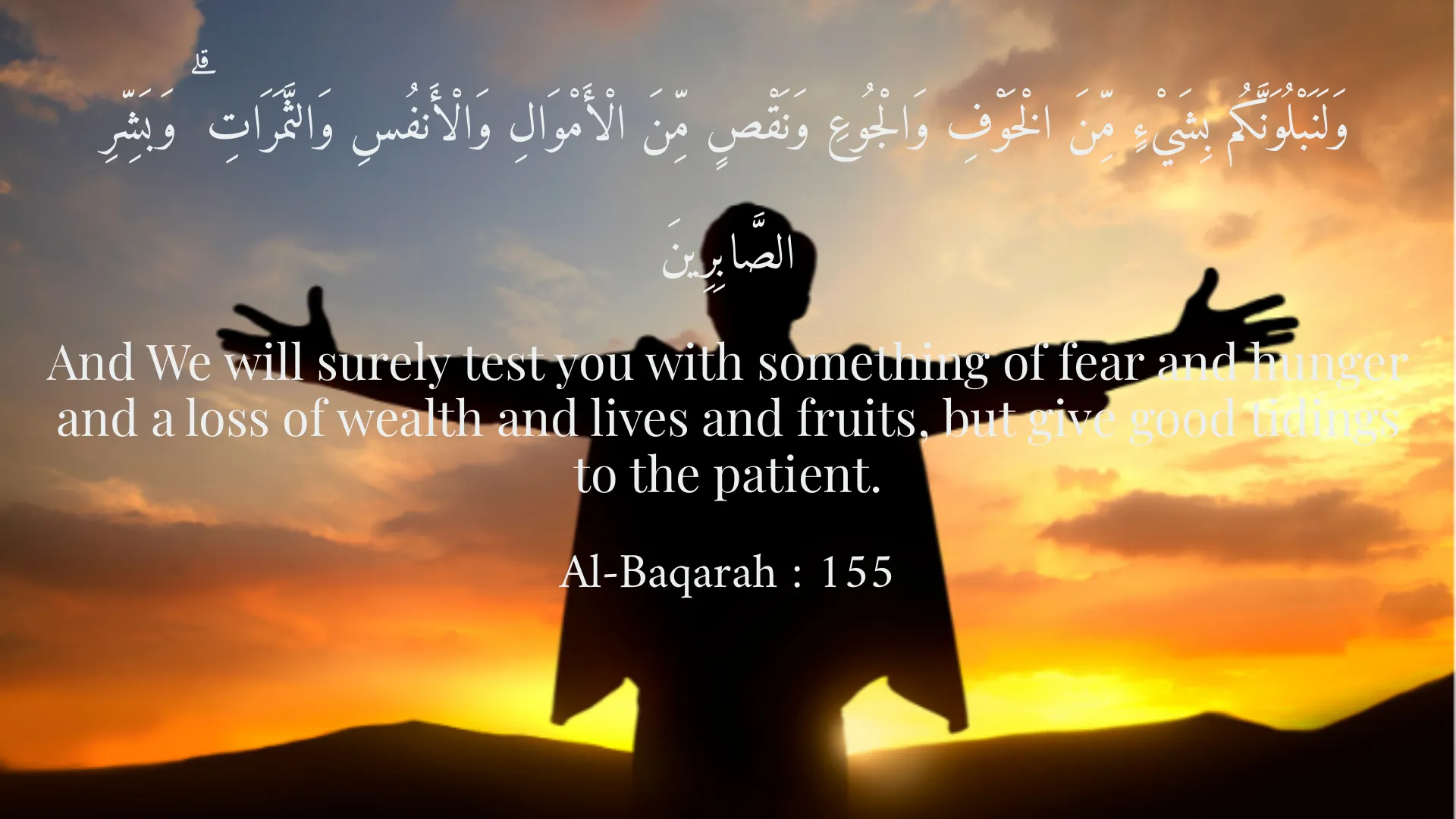
وَلَنَبْلُوَنَّكُم بِشَيْءٍ مِّنَ الْخَوْفِ وَالْجُوعِ وَنَقْصٍ مِّنَ الْأَمْوَالِ وَالْأَنفُسِ وَالثَّمَرَاتِ ۗ وَبَشِّرِ الصَّابِرِينَ
And We will surely test you with something of fear and hunger and a loss of wealth and lives and fruits, but give good tidings to the patient.
Al-Baqarah : 155
يَا أَيُّهَا الَّذِينَ آمَنُوا اسْتَعِينُوا بِالصَّبْرِ وَالصَّلَاةِ ۚ إِنَّ اللَّهَ مَعَ الصَّابِرِينَ
O you who have believed, seek help through patience and prayer. Indeed, Allah is with the patient.
Al-Baqarah : 153
فَإِنَّ مَعَ الْعُسْرِ يُسْرًا
For indeed, with hardship [will be] ease.
Al-Inshirah : 5
إِنَّ مَعَ الْعُسْرِ يُسْرًا
Indeed, with hardship [will be] ease.
Al-Inshirah : 6
Short Story
It is narrated that in ancient times, there was a wealthy merchant who lost his ships in a fierce storm, and all his possessions perished. Overwhelmed by sorrow, he became reclusive, and life became hard for him. One day, a pious dervish passed by, saw him in such a distressed state, and with a cheerful face, asked: "O man, what sorrow has brought you to your knees?" The merchant, with a deep sigh, replied: "My wealth is gone, and I am destitute." The dervish, with a smile of wisdom, responded: "Brother, you who spent a lifetime pursuing worldly wealth, have now found an opportunity to realize the value of inner peace and contentment. Perhaps this loss will open a door for you to eternal happiness that could never be attained with worldly possessions." The merchant contemplated the dervish's words and realized that his suffering was not from the loss of wealth, but from his attachment to it. From then on, he pursued wisdom and knowledge, and from that bitter experience, he learned a great lesson: that true happiness lies in contentment and connection to the Truth. He built a bridge from this suffering to a brighter future, teaching this precious lesson to his children and others: that every hardship, if viewed with insightful eyes, reveals a hidden treasure of wisdom and tranquility.