Quranic Answer
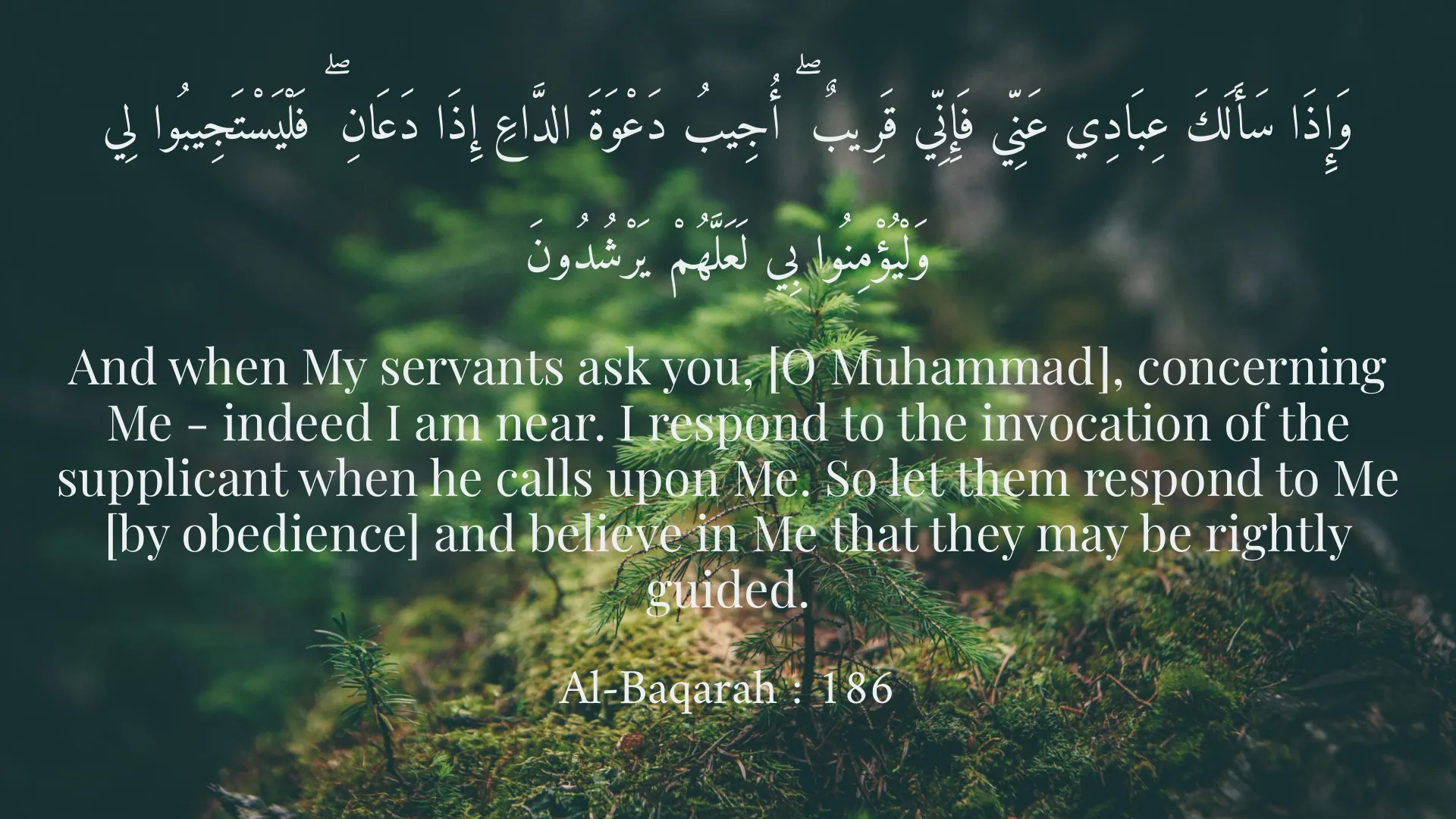
The question, "How do I know God hears me?" delves into one of the most profound and fundamental aspects of faith for any believer. It's not merely about the auditory reception of sound, but about feeling God's presence, establishing a connection, and being assured of His responsiveness to our supplications and needs. Understanding this from the perspective of the Holy Quran is crucial for achieving inner peace and strengthening one's faith. The Quran unequivocally and repeatedly addresses this question, emphasizing Allah's attribute of "Al-Sami'" (The All-Hearing). Allah (SWT) hears every word and every sigh, even if it’s not uttered aloud but merely a thought that crosses the heart. This belief is deeply rooted in the concept of Tawhid (Oneness of God) and His perfect attributes, serving as a primary pillar of the human-Creator relationship. The first and most important answer the Quran provides to this question is a direct divine promise. In Surah Al-Baqarah, verse 186, Allah states: "And when My servants ask you, [O Muhammad], concerning Me - indeed I am near. I respond to the invocation of the supplicant when he calls upon Me. So let them respond to Me [by obedience] and believe in Me that they may be rightly guided." This verse explicitly declares that Allah not only hears our voices but is also exceedingly close to us and answers our prayers. No intermediary is needed, and no distance exists. This in itself provides immense reassurance and comfort, allowing a person to converse with their Lord at any moment and in any place, confident that their call is heard. This verse establishes an unparalleled sense of closeness and intimacy between the servant and God, serving as an invitation for direct, unmediated communication with the Creator. In another powerful verse, Allah says in Surah Ghafir, verse 60: "And your Lord says, 'Call upon Me; I will respond to you.' Indeed, those who disdain My worship will enter Hell [rendered] contemptible." This verse further confirms that Allah hears and responds to supplications. It emphasizes that calling upon Allah is in itself an act of worship, and neglecting it demonstrates arrogance. These two verses alone are sufficient to assure us that Allah hears our voices and responds to them, as this is a direct and definitive promise from the One and Only Creator. However, it's crucial to understand that Allah's "hearing" is not limited to mere auditory perception. Allah is "All-Knowing of what is in the breasts" (Alimun bi dhatis-sudur); He is aware of what passes through our hearts and minds. In Surah Qaf, verse 16, we read: "And We have already created man and know what his soul whispers to him, and We are closer to him than his jugular vein." This verse illustrates that Allah knows not only our spoken words but also our innermost whispers, hidden thoughts, and even unexpressed intentions. How then could a supplication that arises from the heart possibly fail to reach Him? This closeness is beyond our comprehension and signifies Allah's complete encompassment of our being. This absolute knowledge and perpetual closeness guarantee that no need, no pain, and no desire remains hidden from divine sight and hearing. How to discern Allah's response: Allah's response to a supplication is not always immediate or exactly as we desired. This is where many individuals misunderstand and assume their prayers have not been heard. Allah's answer can manifest in several ways, each embodying divine wisdom and mercy, and ultimately serving the best interest of the supplicant: 1. Direct Granting: The most expected form of response, where what we asked for is given to us directly. This reinforces faith and demonstrates Allah's power and benevolence. 2. Something Better: Allah may grant us something superior or more suitable than what we requested. Initially, we might not comprehend its wisdom, but with time, its greater benefit becomes apparent, leading to gratitude for Allah’s perfect choice for us. 3. Averting Harm: Our prayer might prevent an impending calamity or harm that would have otherwise befallen us. This type of response is often invisible, yet profoundly valuable, safeguarding us from unseen dangers and showcasing Allah’s hidden grace and protection. 4. Stored for the Hereafter: Allah may save our supplication as a greater reward for the Day of Judgment. This is the highest and most enduring form of recompense, leading to eternal bliss, as rewards in the Hereafter are infinite and untouched by worldly imperfections. 5. Delayed Response: Sometimes, it is in our best interest for the prayer to be answered at a later time. The appropriate moment might not have arrived, or there might be divine wisdom in the delay, such as fostering patience, increasing our devotion, or preparing us for a greater blessing. This delay can also be a test of our unwavering trust and reliance on Him. Signs of Allah hearing your prayer: How can we "feel" that Allah hears our voices? This feeling often comes through internal signs and positive changes in life, each indicating divine attention and response: * Inner Peace and Tranquility: After making a supplication, you might experience a profound sense of calm and lightness, even if the problem remains unsolved. This is a sign of divine presence and grace bringing serenity to your heart and dissipating anxiety. * Reduced Anxiety and Worry: By entrusting your affairs to Allah, you feel a significant burden lifted, and your worries diminish. This genuine reliance is itself a result of confidence in Allah's hearing and responsiveness. * Guidance and Clarity: Sometimes, Allah's response comes as an inspiration, guidance, or clarification of a path that was previously ambiguous. Solutions might suddenly come to mind, or circumstances and individuals might be guided towards you to resolve issues. * Increased Patience and Resilience: Even if the problem persists, your capacity to endure and remain steadfast against it increases. This inner strength is a great blessing and a sign of spiritual reinforcement from Allah. * Enhanced Closeness to Allah: The more you pray and wait for a response, the deeper your relationship with Allah becomes. This spiritual intimacy is often the most valuable response, fostering a profound sense of connection with the Creator. * Unexpected Openings and Solutions: Sometimes, solutions emerge from unforeseen sources or circumstances. These breakthroughs can be subtle signs that Allah has responded in ways you hadn't anticipated, demonstrating His will prevails over all things. Conditions that make supplication more effective: While Allah always hears, the Quran and Sunnah mention certain conditions that make prayers more effective and facilitate their acceptance: * Sincerity (Ikhlas): The prayer must be solely for Allah, with pure intention, not for show or purely worldly motives. Sincerity is the very soul of supplication. * Certainty (Yaqin): One must have unwavering certainty that Allah is capable and All-Hearing, and that He will answer. Doubt diminishes the prayer's efficacy and hinders its acceptance. * Lawful Sustenance (Halal Rizq): Consuming lawful and pure food, drink, and earning through permissible means significantly impacts the acceptance of prayer. Unlawful sustenance can create a barrier between the servant and divine acceptance. * Fulfilling Obligations and Avoiding Prohibitions: A person who fulfills religious duties and avoids sins generally has a purer heart, making their prayers more illuminated and readily accepted. Piety is the guiding light for acceptance. * Praying at Special Times: Specific times, such as Laylatul Qadr (Night of Power), between Adhan and Iqamah (call to prayer and its commencement), during rainfall, and after obligatory prayers, are considered more opportune for supplication. * Praise and Salutations (Durood/Salawat): Beginning the prayer with praise and glorification of Allah and sending blessings upon Prophet Muhammad (PBUH) and his family, and concluding with the same, are etiquette that aid in the acceptance of prayer and adorn it. Ultimately, understanding that Allah hears our voice is less about needing "external proof" and more about an "internal certainty" that springs from the depths of faith. This assurance empowers us to turn to Him in every situation, whether in joy or sorrow, and converse with Him, knowing that He is near, He hears, and He responds in the best way and at the most opportune time. This continuous, heartfelt connection with the Lord is the pinnacle of tranquility and success, assuring us that every call, every sigh, and every whispered plea from the heart does not go unanswered. This certainty forms a steadfast pillar for a person's spiritual and psychological life.
Related Verses
وَإِذَا سَأَلَكَ عِبَادِي عَنِّي فَإِنِّي قَرِيبٌ ۖ أُجِيبُ دَعْوَةَ الدَّاعِ إِذَا دَعَانِ ۖ فَلْيَسْتَجِيبُوا لِي وَلْيُؤْمِنُوا بِي لَعَلَّهُمْ يَرْشُدُونَ
And when My servants ask you, [O Muhammad], concerning Me - indeed I am near. I respond to the invocation of the supplicant when he calls upon Me. So let them respond to Me [by obedience] and believe in Me that they may be rightly guided.
Al-Baqarah : 186
وَقَالَ رَبُّكُمُ ادْعُونِي أَسْتَجِبْ لَكُمْ ۚ إِنَّ الَّذِينَ يَسْتَكْبِرُونَ عَنْ عِبَادَتِي سَيَدْخُلُونَ جَهَنَّمَ دَاخِرِينَ
And your Lord says, 'Call upon Me; I will respond to you.' Indeed, those who disdain My worship will enter Hell [rendered] contemptible.
Ghafir : 60
وَلَقَدْ خَلَقْنَا الْإِنسَانَ وَنَعْلَمُ مَا تُوَسْوِسُ بِهِ نَفْسُهُ ۖ وَنَحْنُ أَقْرَبُ إِلَيْهِ مِنْ حَبْلِ الْوَرِيدِ
And We have already created man and know what his soul whispers to him, and We are closer to him than his jugular vein.
Qaf : 16
Short Story
In a bygone era, a devout and pure-hearted dervish endured great hardships in the vast plain of poverty and destitution. Finding no recourse but to seek refuge in the Self-Sufficient Lord, he prostrated himself in a secluded corner. With a heart full of need and eyes brimming with tears, he sighed from the depths of his being and whispered, "O Generous Lord, You are the Listener of hidden and manifest secrets, and the Knower of distressed hearts. Free me from this abyss of hardship, for there is no refuge but You." He spoke from his heart with such sincerity that it was as if he saw the pure essence of the Divine before him. No sooner had an hour passed than a wealthy merchant, without having heard the dervish's lament, passed by that very path. When his gaze fell upon the dervish's worn countenance, his heart was involuntarily moved with compassion. Without knowing the full extent of the dervish's inner turmoil, he cast a handful of gold towards him from his purse and continued on his way. The dervish, bewildered, picked up the gold and said to himself, "How wondrous! Perhaps the ears of people are deaf to the lament of the poor, but the ear of the Lord is never deaf. He not only hears the manifest voice but is also aware of the hidden whispers of hearts, and in a manner He alone knows, He responds and unties the knots of those who are bound." And thus, the dervish understood that the lament of every broken heart reaches the Throne.