Quranic Answer
Understanding whether we are true servants of God is an ongoing, internal journey measured by key Quranic indicators. Servitude (Ubudiyyah) in Islam is not merely passive obedience, but a profound relationship of love, trust, heartfelt submission, and gratitude that manifests in all aspects of human life. The Holy Quran, our ultimate guide, clearly outlines the characteristics of a true servant. These signs are reflected not only in acts of worship but also in our ethics, behavior, and even our intentions. Firstly, and perhaps most importantly, is "Taqwa," which encompasses God-consciousness and piety. Taqwa is not simply fear of God, but rather a vigilant awareness and mindfulness of His presence in every moment of life – understanding that He is constantly observing our actions, thoughts, and intentions. It is about guarding oneself against displeasing Him by adhering to His commands and abstaining from His prohibitions. Taqwa drives an individual towards doing good and refraining from evil, helping them remain steadfast on the path of truth. Allah states in Surah Al Imran, verse 102: "O you who have believed, fear Allah as He should be feared and do not die except as Muslims." This verse emphasizes that Taqwa should be present in every moment of our lives, and living in this manner brings us closer to true servitude. A true servant always considers divine pleasure in their daily choices, speech, business dealings, and interactions with family and society, shunning all forms of injustice, deception, and wrongdoing. Secondly, a crucial characteristic is "Ikhlas" or sincerity. Ikhlas means purifying one's intentions for God in all actions and acts of worship. A true servant does not perform deeds to be seen by people or to gain worldly praise, but solely aims to attain Allah's pleasure and closeness. Prayer (Salah), fasting (Sawm), charity (Sadaqah), and every other righteous deed must be performed with pure intention for the sake of Allah. In Surah Az-Zumar, verse 2, Allah says: "So worship Allah, [being] sincere to Him in religion." And in the subsequent verse, He adds: "Unquestionably, for Allah is the pure religion." These verses underscore that the quality of our actions is more important than their quantity, and this quality stems from the purity of intention. Ikhlas purifies the human heart from hypocrisy and ostentation, ensuring that one's deeds are accepted by Allah. Thirdly, "Dhikr" or constant remembrance of God is essential. A true servant of God never forgets Allah, whether in comfort or hardship. This remembrance includes not only verbal glorification (Tasbeeh and Tahleel) but also contemplation of His signs in creation and a conscious awareness of His innumerable blessings. The remembrance of God brings peace to hearts and keeps individuals away from heedlessness and emptiness. Allah says in Surah Ar-Ra'd, verse 28: "Those who have believed and whose hearts are assured by the remembrance of Allah. Unquestionably, by the remembrance of Allah hearts are assured." This inner peace is the result of a deep and continuous connection with the Creator, making the true servant patient in the face of difficulties and grateful for blessings. Fourthly, "Sabr" (patience) and "Tawakkul" (trust in God) are vital. Life is full of challenges and tests. A true servant does not become impatient in the face of difficulties but relies on Allah with patience and perseverance, knowing that everything is in His hands and every event has a divine wisdom. Patience is not merely endurance but steadfastness on the path of truth and never despairing of Allah's mercy. Tawakkul means complete reliance on God's plan and will after exhausting all possible efforts. In Surah Al-Baqarah, verse 153, it is stated: "O you who have believed, seek help through patience and prayer. Indeed, Allah is with the patient." This verse illustrates that patience and prayer (which itself is a manifestation of Dhikr and Tawakkul) are the two wings of true servitude. Fifth, "Amal Salih" (righteous deeds) and "Akhlaq Hasanah" (good character) are indispensable. Faith without righteous deeds is incomplete. A true servant of God strives not only to fulfill their devotional duties but also to exhibit the best character in their social interactions. Upholding the rights of others, helping the needy, truthfulness, trustworthiness, justice, and kindness towards all creation are prominent features of a true servant. The Holy Quran frequently pairs faith with righteous deeds. In Surah Al-Baqarah, verse 277, we read: "Indeed, those who believe and do righteous deeds and establish prayer and give zakat will have their reward with their Lord, and there will be no fear concerning them, nor will they grieve." This shows that true servitude is not confined to the mosque or prayer mat but flows through the marketplace, society, and every moment of human life. Finally, a true servant of God is constantly engaged in "Muhasabah" (self-accountability) and self-improvement. They continuously review their actions, intentions, and behaviors, repent for their shortcomings, and strive to better themselves. This self-reflection keeps them away from pride and arrogance and aids their spiritual growth. This journey of servitude has no end; it continues until one's last breath. The goal is not to achieve absolute perfection but to make sincere efforts to draw closer to Allah and gain His pleasure. The more these characteristics are evident in our lives, the more confident we can be in our true servitude, experiencing true peace and success in this world and the hereafter. It is a beautiful and blessed path that begins with small, consistent steps and leads towards the light of divine guidance.
Related Verses
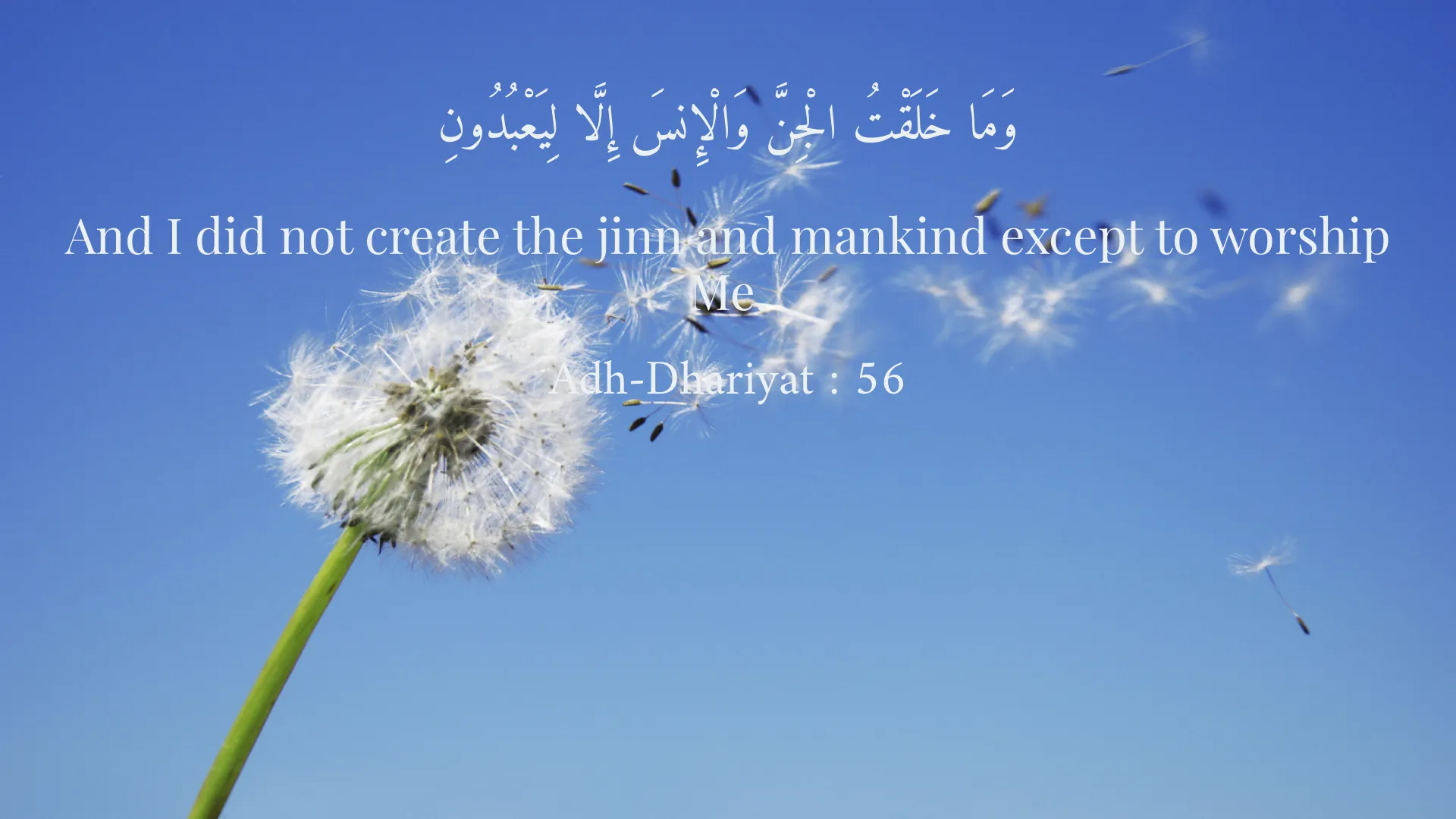
وَمَا خَلَقْتُ الْجِنَّ وَالْإِنسَ إِلَّا لِيَعْبُدُونِ
And I did not create the jinn and mankind except to worship Me.
Adh-Dhariyat : 56
يَاأَيُّهَا الَّذِينَ آمَنُوا اسْتَعِينُوا بِالصَّبْرِ وَالصَّلَاةِ ۚ إِنَّ اللَّهَ مَعَ الصَّابِرِينَ
O you who have believed, seek help through patience and prayer. Indeed, Allah is with the patient.
Al-Baqarah : 153
يَا أَيُّهَا الَّذِينَ آمَنُوا اتَّقُوا اللَّهَ حَقَّ تُقَاتِهِ وَلَا تَمُوتُنَّ إِلَّا وَأَنتُم مُّسْلِمُونَ
O you who have believed, fear Allah as He should be feared and do not die except as Muslims.
Al-Imran : 102
Short Story
In Sa'di's Gulistan, it is related that there were two men: one was an ascetic and worshipper, clad in woolen garments, constantly engaged in devotion; the other was a merchant who earned a lawful living in the bazaar and treated people with kindness. People praised the ascetic for his appearance and blamed the merchant for his worldly engagements. One day, a gnostic passed by them. He was asked: "Which of these two is a true servant of God?" The gnostic smiled and said: "He who acts justly in his earnings and whose heart is free from hypocrisy is truly a servant of God, not merely one who wears the garb of asceticism while his heart is bound by fame and reputation. God looks at hearts, not at appearances. True servitude lies in sincerity of intention and good conduct, not in outward adornment." This tale teaches us that the criterion for true servitude is not in outward show, but in the purity of intention and good deeds, which manifest in all aspects of life.