Quranic Answer
This is a profoundly important and self-reflective question that delves into the spiritual impact of sins on the human soul. In Islamic teachings, particularly within the Holy Quran, the concept of "Qaswat al-Qalb" (hardening of the heart) is presented as one of the most perilous spiritual ailments. A hardened heart signifies a state where the human heart becomes resistant to accepting truth, loses its softness, compassion, and responsiveness to divine signs and admonitions, ultimately reaching a state of spiritual insensitivity and indifference. The Quran repeatedly alludes to this phenomenon, identifying it as a direct consequence of disbelief, hypocrisy, and, significantly, persistent engagement in sins. In Islam, the heart is not merely a physical organ; it is the core of understanding, faith, perception, and the center of human spiritual and moral decisions. When the heart becomes ill, the entire human being is affected, and their connection to spiritual realities weakens. To discern whether a particular sin has contributed to the hardening of one's heart, one must attentively observe the signs and symptoms of this spiritual malady within oneself. While the Quran does not explicitly list these symptoms in a direct, bullet-point format, a contemplative study of its various verses offers a profound understanding of this condition. Indeed, the Quran paints a comprehensive picture of a sound heart (Qalb-e-Saleem) versus an ailing heart, thereby providing criteria against which we can evaluate our own spiritual state. These signs act as warning lights, alerting us to a serious spiritual problem and providing an opportunity for return and rectification. Signs of a Hardened Heart from a Quranic and Islamic Perspective: 1. Indifference to Divine Verses and Signs of God: One of the most prominent indicators of a hardened heart is an unresponsiveness to the verses of the Quran and the manifestations of divine power and wisdom in the universe. The Quran frequently recounts the stories of nations who, despite witnessing miracles and hearing divine messages, stubbornly persisted in their disbelief and denial. A heart that has become hardened loses its spiritual insight, rendering the individual incapable of perceiving God's magnificence in every corner of creation. If, when we listen to the recitation of the Quran or reflect upon its meanings, no tremor, humility, or emotional impact is generated within our hearts, this could serve as a significant warning sign. In Surah Al-Hadid (57:16), Allah asks: "Has the time not come for those who have believed that their hearts should become humbly submissive at the remembrance of Allah and what has descended of the truth...?" This rhetorical question seems to express a concern about spiritual hardening among believers. If our sins have distanced us from this humility, it is a clear sign that our hearts are becoming hardened. A hard-hearted person may even hear divine threats and feel no fear, or hear promises of paradise and feel no yearning. This state is the result of the rust that sins have formed on the mirror of the heart, just like a mirror that is dusty and can no longer reflect images properly. 2. Absence of Remorse and Guilt: A healthy and vigilant heart experiences feelings of regret and remorse after committing a sin. This remorse acts as the driving force for repentance (Tawbah) and returning to Allah. However, when a sin hardens the heart, this sense of regret diminishes or even vanishes. The individual might trivialise the sin, justify it, or even grow accustomed to it. This insensitivity to the gravity of sin is a definitive sign of a hardened heart. The Holy Quran repeatedly emphasizes the importance of repentance and returning to God. If one finds themselves unable or unwilling to repent, it is often due to the heavy burden of sins that have covered and hardened their heart. In Surah Al-Mutaffifin (83:14), it states: "No! Rather, that which they used to earn has covered their hearts." This "Ran" (covering or rust) gradually removes the heart from its state of softness and tenderness, making it hard and dark. Ignoring this feeling of remorse and persisting in sin accelerates the process of heart hardening. 3. Increased Indifference Towards Acts of Worship and Religious Obligations: A hardened heart fails to appreciate the joy of intimate communion with Allah, the sweetness of prayer (Salah), and the tranquility of remembrance (Dhikr). Acts of worship, instead of being sources of spiritual energy and peace, transform into dry burdens or mere tasks performed out of obligation. The Quran advises believers to be steadfast in prayer, remembrance, and the glorification of Allah; these are essential tools for purifying the heart. If we perceive our prayers as lifeless, or lack the inclination for Dhikr and supplication, or even neglect our religious duties, these can be signs of the negative impact of sins on our hearts. This state gradually leads to the abandonment of worship and distancing oneself from the divine path, plunging the individual into deeper heedlessness. The pleasure of worship is a sign of a living heart, and losing it is a sign of illness and weakness. 4. Cruelty and Lack of Compassion Towards Others: A heart that has hardened loses its capacity for love, empathy, and compassion towards others. A hard-hearted person might be indifferent to the pain and suffering of others, or even derive pleasure from injustice and oppression. The Quran strongly emphasizes the importance of kindness, forgiveness, and benevolence towards others. If sins have led us to become unkind or harsh towards parents, relatives, the poor, and the needy, this is another indication of a hardened heart. In Surah Al-Baqarah (2:74), Allah states: "...Then your hearts became hardened after that, being like stones or even harder..." This simile to stones signifies the utmost spiritual insensitivity and lifelessness. Someone whose heart has hardened might easily harm others, backbite, lie, and be indifferent to people's rights. 5. Persistence in Sin and Lack of Fear of its Consequences: When a sin hardens the heart, the individual loses fear of the worldly and otherworldly consequences of their transgressions. They might approach sins with greater audacity and even take pride in them. This state indicates the extinguishment of the light of faith and the veiling of the heart. The Quran repeatedly warns against those who persist in sin and deny divine revelations. This persistence in sin, and even pride in it, represents the final stage of heart hardening, where a person seems to have deviated from the path of guidance and sees no way back, unless divine mercy encompasses them and awakens them. Allah says in Surah Al-Baqarah (2:7): "Allah has set a seal upon their hearts and upon their hearing, and over their vision is a veil. And for them is a great punishment." This sealing and veiling are the natural consequences of a person's deeds and sins. Quranic Remedies for Combating Heart Hardening: The Holy Quran not only points out the symptoms of heart hardening but also provides effective remedies and preventive measures: * Sincere Repentance (Tawbah Nasooh): The most crucial and initial step is genuine remorse for sins and a firm resolve to abandon them and rectify past wrongdoings. The Quran, in numerous verses, highlights the paramount importance of repentance. Tawbah serves as a spiritual cleansing agent for the heart, purifying it from the impurities of sins and being the primary condition for the return of light to the heart. * Frequent Remembrance of Allah (Dhikrullah): The remembrance of Allah in any form (Quranic recitation, supplication, glorification, seeking forgiveness) softens and refines the heart and removes the rust of sins. "Unquestionably, by the remembrance of Allah hearts are assured." (Ar-Ra'd: 28). Dhikr is the nourishment of the soul that keeps the heart alive. * Recitation and Reflection on the Quran: The Quran is a healing for the hearts. Reflecting on its meanings and messages awakens and illuminates the heart, removing the rust of sins. Listening and reading with contemplation remove the veils from the heart. * Performing Good Deeds and Charity: Being kind to others, assisting the needy, and engaging in charitable acts refine the human spirit and protect the heart from hardening. Giving charity, in particular, purifies the heart from miserliness and selfishness, which are factors contributing to hardness. * Associating with the Righteous and Pious: Spending time with individuals whose hearts are alive with faith and piety can have a profoundly positive influence on one's own soul and heart. Avoiding sinful environments and associating with heedless people is very effective in maintaining the heart's tenderness. * Supplication and Humility: Ask Allah Almighty to soften your heart and save it from hardness. The prayers of prophets and saints are also helpful in this regard. In conclusion, diagnosing a hardened heart requires self-awareness, honesty with oneself, and adherence to Quranic and Islamic criteria. If you find the aforementioned signs within yourself, be aware that your sins have begun to impact your heart. However, one should never despair, for the door of repentance is always open, and Allah is far more Merciful than to reject His repentant servants. The crucial aspect is to act promptly and earnestly embark on the path of spiritual purification and removing the rust from one's heart. This path is continuous, demanding constant vigilance and self-refinement, ensuring the heart remains illuminated and receptive to the truth and guides us towards human perfection.
Related Verses
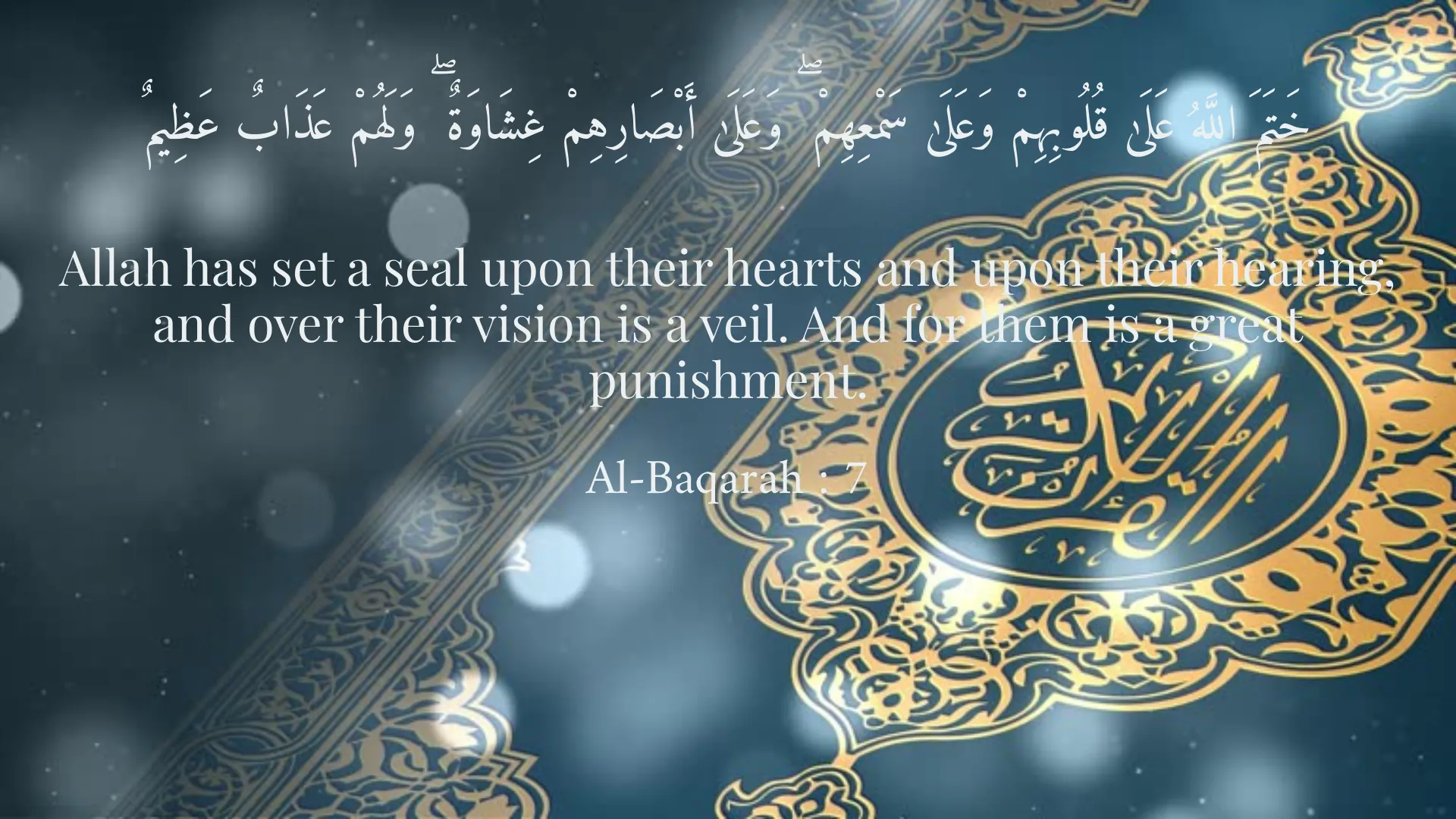
خَتَمَ اللَّهُ عَلَىٰ قُلُوبِهِمْ وَعَلَىٰ سَمْعِهِمْ ۖ وَعَلَىٰ أَبْصَارِهِمْ غِشَاوَةٌ ۖ وَلَهُمْ عَذَابٌ عَظِيمٌ
Allah has set a seal upon their hearts and upon their hearing, and over their vision is a veil. And for them is a great punishment.
Al-Baqarah : 7
ثُمَّ قَسَتْ قُلُوبُكُم مِّن بَعْدِ ذَٰلِكَ فَهِيَ كَالْحِجَارَةِ أَوْ أَشَدُّ قَسْوَةً ۚ وَإِنَّ مِنَ الْحِجَارَةِ لَمَا يَتَفَجَّرُ مِنْهُ الْأَنْهَارُ ۚ وَإِنَّ مِنْهَا لَمَا يَشَّقَّقُ فَيَخْرُجُ مِنْهُ الْمَاءُ ۚ وَإِنَّ مِنْهَا لَمَا يَهْبِطُ مِنْ خَشْيَةِ اللَّهِ ۗ وَمَا اللَّهُ بِغَافِلٍ عَمَّا تَعْمَلُونَ
Then your hearts became hardened after that, being like stones or even harder. For indeed, there are stones from which rivers burst forth, and there are some of them that split open and water comes out, and there are some of them that fall down for fear of Allah. And Allah is not unaware of what you do.
Al-Baqarah : 74
كَلَّا بَلْ ۜ رَانَ عَلَىٰ قُلُوبِهِم مَّا كَانُوا يَكْسِبُونَ
No! Rather, that which they used to earn has covered their hearts.
Al-Mutaffifin : 14
Short Story
Once there was a pious man who was a devoted worshiper, rising for night prayers. Whenever he committed a minor sin, he would immediately feel remorse and shed tears of regret. He used to say, "These tears and this inner burning are signs of the life still remaining in my heart. I fear the day will come when I commit a sin, and my heart will not tremble, nor will my eyes moisten, for on that day my heart will have hardened." However, time passed, and the man gradually became engrossed in worldly affairs. He repeated small sins one after another, without feeling the same remorse as before. Initially, he would feel a slight discomfort, but gradually this discomfort faded and turned into indifference. One day, he awoke to find that he no longer felt moved by the recitation of the Quran, his heart found no peace in the remembrance of God, and even when he helped the needy, he lacked the former joy and enthusiasm. Then he recalled his old words and regretfully said, "Alas, that fated day has arrived. Consecutive sins have hardened my heart like a stone. I no longer tremble from the fear of punishment, nor do I shed tears from the yearning for mercy. This is the sign of a hardened heart, which begins with indifference towards small sins and leads to complete numbness." From that day forward, he strived with all his might to wipe away the dust of sin from the mirror of his heart and to regain his former softness and purity.