Quranic Answer
Understanding how God answers our prayers is a profound and central aspect of a believer's relationship with the Almighty. The Holy Quran, as divine revelation, unequivocally asserts that God hears all supplications and never abandons His servants. However, the 'answer' to a prayer is not always a direct, immediate fulfillment of what was requested. Instead, God responds in myriad ways, guided by His infinite wisdom and knowledge, always for the ultimate good of the supplicant, even if it's not immediately apparent to us. One of the most foundational verses regarding prayer is Surah Al-Baqarah (2:186): "And when My servants ask you, [O Muhammad], concerning Me - indeed I am near. I respond to the invocation of the supplicant when he calls upon Me. So let them respond to Me [by obedience] and believe in Me that they may be rightly guided." This verse explicitly states God's closeness and His promise to respond to every sincere invocation. It reassures believers of a direct and intimate connection with their Creator. Nevertheless, it is crucial to understand that 'responding' does not exclusively mean 'granting the exact wish.' Sometimes, an answer manifests as God averting a harm from the supplicant that they were unaware of. In reality, we might ask for something that, in God's infinite wisdom, is not truly beneficial for us, and out of His grace and knowledge, He withholds it, substituting it with a greater good. For instance, a person might pray for immense wealth, but God, knowing that such wealth would lead them astray, might instead grant them contentment and inner peace, which is infinitely more beneficial for their spiritual and worldly well-being. At other times, the answer comes in the form of a better and superior alternative. God may give us something different from what we requested, something that proves to be more advantageous and beneficial for us in the long run or on a broader scale. This demonstrates God's complete comprehension of every aspect of our lives and futures, whereas we can only perceive a tiny fraction. A significant form of prayer acceptance is its deferral for the Hereafter. A prayer might not be answered in this world, but its reward and recompense are bestowed upon the servant in the afterlife in ways they could not have imagined. This form of response underscores God's boundless justice and grace, ensuring that no good deed goes unrewarded. Therefore, one of the most crucial signs of an answered prayer is the sense of peace and tranquility that settles within the individual after supplication, even if the external circumstances remain unchanged. This tranquility is a testament to one's trust in God and submission to His wisdom. When the heart is assured that God has heard its plea and desires what is best, anxieties and worries dissipate. Furthermore, being guided toward good deeds, an increase in patience and reliance on God (Tawakkul), and a strengthening of faith can all be indirect signs of an answered prayer. Sometimes, in response to a prayer, God opens new pathways for an individual, presents solutions they hadn't considered before, or places people in their lives who assist in resolving their problems. These are all manifestations of divine answers. For our prayers to have the highest chance of acceptance, the Quran and Sunnah emphasize certain conditions. These include sincerity in intention, lawful earnings, persistence in supplication, and avoiding haste and despair. God Almighty states in Surah Ghafir (40:60): "And your Lord says, 'Call upon Me; I will respond to you. Indeed, those who disdain My worship will enter Hell [rendered] contemptible.'" This verse not only promises a response but also condemns arrogance in not supplicating. So, when we pray, it should be with complete humility and with the conviction that God is All-Powerful and knows what is best for us better than we do ourselves. Ultimately, understanding prayer acceptance transcends merely receiving what was requested. It is a spiritual journey wherein the servant connects with their Creator through supplication, trusts in His wisdom, and finds contentment and closeness to the Lord in all circumstances, whether their request is granted or not. This inner sense of satisfaction and peace is perhaps the greatest sign of an answered prayer. Let us remember that God is too Merciful to leave His servant's prayer unheard, and too Wise to respond with anything but what is ultimately good for them. Sometimes, the trials and afflictions that are averted from us through prayer are far greater than the wishes that are granted, and we remain unaware of the hidden wisdom behind them. Thus, the best approach is to present our requests to God with a confident heart and a supplicating tongue, leaving the outcome to Him, with the certainty that whatever comes from Him is nothing but wisdom and goodness. This insight leads us to true tranquility and deepens our relationship with God. In this journey, patience and gratitude also play essential roles: patience for what has not been granted and gratitude for existing blessings and hidden answers.
Related Verses
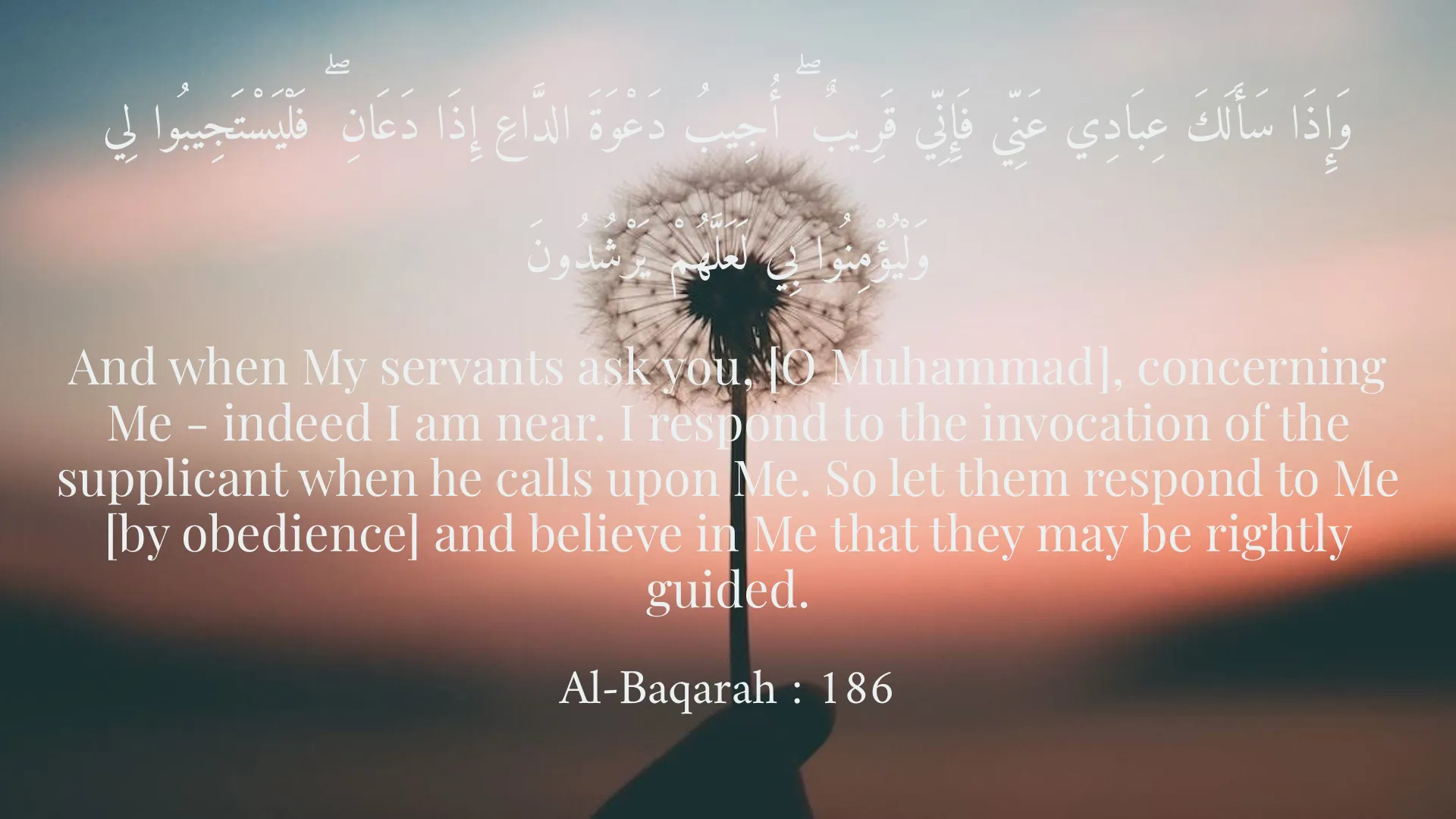
وَإِذَا سَأَلَكَ عِبَادِي عَنِّي فَإِنِّي قَرِيبٌ ۖ أُجِيبُ دَعْوَةَ الدَّاعِ إِذَا دَعَانِ ۖ فَلْيَسْتَجِيبُوا لِي وَلْيُؤْمِنُوا بِي لَعَلَّهُمْ يَرْشُدُونَ
And when My servants ask you, [O Muhammad], concerning Me - indeed I am near. I respond to the invocation of the supplicant when he calls upon Me. So let them respond to Me [by obedience] and believe in Me that they may be rightly guided.
Al-Baqarah : 186
وَقَالَ رَبُّكُمُ ادْعُونِي أَسْتَجِبْ لَكُمْ ۚ إِنَّ الَّذِينَ يَسْتَكْبِرُونَ عَنْ عِبَادَتِي سَيَدْخُلُونَ جَهَنَّمَ دَاخِرِينَ
And your Lord says, "Call upon Me; I will respond to you." Indeed, those who disdain My worship will enter Hell [rendered] contemptible.
Ghafir : 60
يَاأَيُّهَا الَّذِينَ آمَنُوا اسْتَعِينُوا بِالصَّبْرِ وَالصَّلَاةِ ۚ إِنَّ اللَّهَ مَعَ الصَّابِرِينَ
O you who have believed, seek help through patience and prayer. Indeed, Allah is with the patient.
Al-Baqarah : 153
Short Story
It is narrated that in ancient times, a devout and virtuous man lived in solitude, dedicating his heart to God. Every day, he would pray for relief from poverty. Years passed, and he remained poor, possessing nothing in the world but a piece of dry bread. One day, a guest arrived, and the pious man felt ashamed of his destitution. He silently mused, “O Lord, I have called upon You for years, asking for ease, yet alas, I see no answer.” Suddenly, a voice echoed within his heart: “O Our servant, did you only ask Us for wealth? We made you so content and satisfied that with a mere piece of dry bread, you rejoice more than kings on their thrones. Is this not an answer, that We cleansed your heart of greed and bestowed upon you the treasure of contentment? Its worth is greater than any worldly possession.” The pious man then understood divine wisdom and realized that God’s answer sometimes lies not in granting the exact request, but in bestowing tranquility and fulfilling hidden needs of the heart, which are far more precious than any material desire.