Quranic Answer
Dear friend, recognizing the deception of Satan is one of the most crucial challenges on the path of spiritual growth and devotion to God. The Holy Quran clearly identifies Satan as a sworn enemy of humanity and reveals his methods of deception so that we can escape his traps. This is a continuous journey of self-awareness and connection with the Almighty. The first and perhaps most common sign of Satan's deception is 'whispers' (waswas). Waswas refers to the hidden, insidious suggestions that creep into one's mind, leading to evil, sin, or even doubt in faith. The Quran, in Surah An-Nas, explicitly speaks of 'Al-Waswas Al-Khannas' (the retreating whisperer) who whispers into the breasts of mankind. These whispers can include delaying good deeds, instilling negative and discouraging thoughts, or creating skepticism and doubt in religious beliefs. For instance, when it's time for prayer and you suddenly feel an intense laziness or tell yourself, 'There's still plenty of time,' this could be a satanic whisper attempting to divert you from worship. Satan also strives to make evil and undesirable acts appear 'beautiful' or appealing to humans. He trivializes sin, making it seem easy and inconsequential, and downplays its consequences. In Surah An-Nur, verse 21, the Quran states: 'And whoever follows the footsteps of Satan - indeed, he enjoins immorality and wrongdoing.' If you find that committing a wrong act has become attractive to you, or you start rationalizing your sins, this is a clear sign of his deception. Satan might also delude individuals with false promises and prolonged hopes, distracting them from realities. He promises unlimited wealth, boundless power, or fleeting pleasures to draw people towards sin and the forgetfulness of the afterlife. These promises are usually empty and baseless, leading to nothing but regret. Consider someone who compromises ethical and human principles to acquire worldly possessions; this is exactly the satanic deception that beautifies the world for them, distancing them from the truth. Furthermore, Satan seeks to sow 'discord and enmity' among believers. He incites anger, jealousy, and suspicion, thereby destroying human relationships. In Surah Al-Ma'idah, verse 91, we read that Satan intends to cast animosity and hatred among you through intoxicants and gambling, and to avert you from the remembrance of Allah and from prayer. Therefore, if you find yourself engaging in spreading rumors, backbiting, or harboring undue grudges against others, you might have fallen into Satan's trap. Moreover, 'heedlessness of the remembrance of God and worship' is one of Satan's greatest victories. He exerts all his efforts to distance humanity from dhikr (remembrance), supplication (dua), prayer (salat), and recitation of the Quran. When you feel sluggish about performing acts of worship or find no time for Quranic study, these could be his whispers aiming to separate you from the ultimate source of power and tranquility, which is Allah. Satan also casts 'unwarranted fear and anxiety' into the human heart. He frightens people with poverty, illness, or failure to deter them from performing good deeds or relying on God. For example, if you decide to help someone in need, and Satan suddenly whispers that you yourself will become needy and poor, this is a temptation to prevent you from doing good. To recognize and counteract Satan's deception, several Quranic strategies are available. First and foremost is 'Istia'dha' or seeking refuge in Allah. Whenever you feel a whisper, seek Allah's help by saying 'A'udhu billahi minash-shaytanir-rajeem' (I seek refuge in Allah from the accursed Satan). The Quran states in Surah An-Nahl, verse 98: 'So when you recite the Qur'an, [first] seek refuge in Allah from Satan, the expelled [from His mercy].' Second, 'constant remembrance of Allah' (Dhikr) is crucial. Satan hates the remembrance of God, and his power diminishes with dhikr. Prayer, Quranic recitation, and any form of verbal or heartfelt remembrance serve as a strong shield against whispers. Third, 'self-awareness and accountability' (Muhasabah) are vital. Regularly review your intentions, thoughts, and actions. Is your intention pure? Does your action align with divine teachings? This introspection helps distinguish satanic inclinations from divine inspirations. Fourth, 'acquiring religious knowledge' is paramount. The more you know about the Quran and Sunnah, the easier it becomes to discern truth from falsehood, and the better you will recognize Satan's traps. Fifth, 'avoiding inappropriate environments and bad company' is essential. Satan finds it easier to infiltrate through bad friends and corrupt environments. Avoiding these factors blocks his path. Sixth, 'complete reliance on Allah' (Tawakkul) is your ultimate strength. Know that Satan has no authority over those who believe and rely upon their Lord. In Surah An-Nahl, verse 99, we read: 'Indeed, there is for him no authority over those who have believed and rely upon their Lord.' This reliance empowers you. Ultimately, human life is an arena for continuous struggle against the commanding self (nafs al-ammarah) and satanic whispers. Through vigilance, seeking forgiveness (istighfar), and repeatedly returning to Allah, we can protect ourselves from his deceptions. Whenever you feel inclined towards sin or unethical actions that you previously disliked, or if you inexplicably refrain from doing good deeds, this is a red flag indicating that Satan might be whispering to you. Always remember that Allah is the Most Gracious, the Most Merciful, and He has always left the door of repentance open for His servants. By seeking His assistance and treading the path of guidance, one can emerge victorious from this great test.
Related Verses
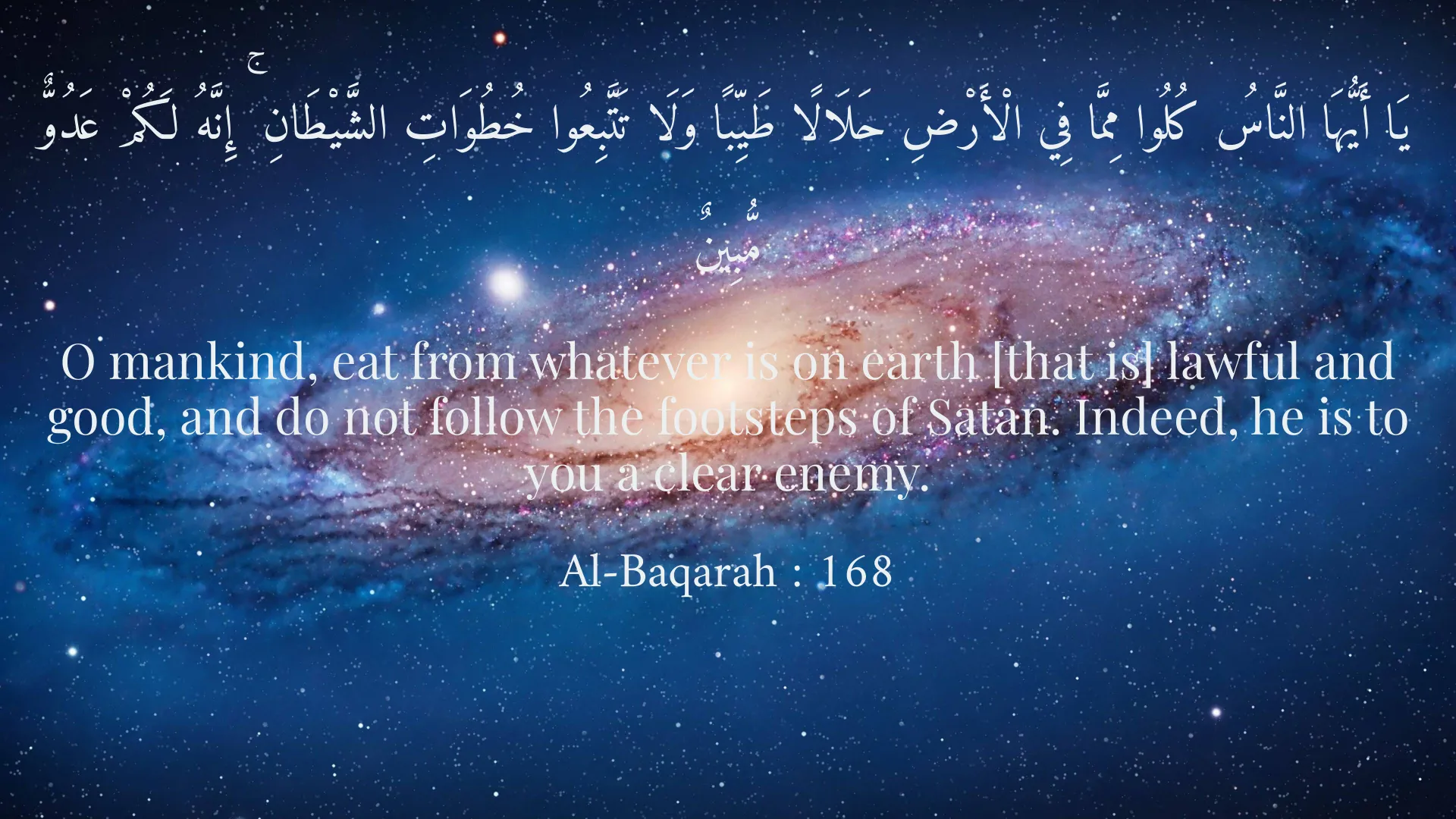
يَا أَيُّهَا النَّاسُ كُلُوا مِمَّا فِي الْأَرْضِ حَلَالًا طَيِّبًا وَلَا تَتَّبِعُوا خُطُوَاتِ الشَّيْطَانِ ۚ إِنَّهُ لَكُمْ عَدُوٌّ مُّبِينٌ
O mankind, eat from whatever is on earth [that is] lawful and good, and do not follow the footsteps of Satan. Indeed, he is to you a clear enemy.
Al-Baqarah : 168
يَا أَيُّهَا الَّذِينَ آمَنُوا لَا تَتَّبِعُوا خُطُوَاتِ الشَّيْطَانِ ۚ وَمَن يَتَّبِعْ خُطُوَاتِ الشَّيْطَانِ فَإِنَّهُ يَأْمُرُ بِالْفَحْشَاءِ وَالْمُنكَرِ ۚ وَلَوْلَا فَضْلُ اللَّهِ عَلَيْكُمْ وَرَحْمَتُهُ مَا زَكَىٰ مِنكُم مِّنْ أَحَدٍ أَبَدًا وَلَٰكِنَّ اللَّهَ يُزَكِّي مَن يَشَاءُ ۗ وَاللَّهُ سَمِيعٌ عَلِيمٌ
O you who have believed, do not follow the footsteps of Satan. And whoever follows the footsteps of Satan - indeed, he enjoins immorality and wrongdoing. And if not for the favor of Allah upon you and His mercy, not one of you would have been pure ever, but Allah purifies whom He wills, and Allah is Hearing and Knowing.
An-Nur : 21
فَإِذَا قَرَأْتَ الْقُرْآنَ فَاسْتَعِذْ بِاللَّهِ مِنَ الشَّيْطَانِ الرَّجِيمِ
So when you recite the Qur'an, [first] seek refuge in Allah from Satan, the expelled [from His mercy].
An-Nahl : 98
إِنَّهُ لَيْسَ لَهُ سُلْطَانٌ عَلَى الَّذِينَ آمَنُوا وَعَلَىٰ رَبِّهِمْ يَتَوَكَّلُونَ
Indeed, there is for him no authority over those who have believed and rely upon their Lord.
An-Nahl : 99
Short Story
In Sa'di's Bustan, it is narrated that a just king had a wise vizier who always advised him on contentment and avoiding excessive desires. One day, the king asked his vizier, "Why do you, with all your knowledge, lead a simple life and not seek more wealth and status?" The vizier replied, "O King, the comfort of the heart lies in contentment, and restlessness in covetousness. Satan constantly gives false promises to man, leading him towards greed and avarice, so that he distances himself from the remembrance of God and true peace. One whose heart is attached to the world will never find rest, for whatever he gains, he remains entrapped by the deception of carnal desires and satanic whispers. But he who is content with what he has is free and liberated." The king took heed of this counsel and understood how the deception of the world and Satan's promises distance man from truth and peace. This story teaches us that the inclination towards greed and avarice is itself a form of satanic temptation and deception, from which one can be freed through contentment and appreciating what one possesses.