Quranic Answer
One of the deepest and most recurring questions that arises in a person's life is how to discern, when facing hardships and difficulties, whether these sufferings are divine tests or a consequence and punishment for one's actions and mistakes. This question not only has psychological and emotional dimensions but also deeply rooted implications in our understanding of divine justice, God's mercy, and His wisdom in managing the affairs of His servants. To find a comprehensive and reassuring answer, we must turn to the source of guidance, the Holy Quran, which provides the necessary insight in this regard. The Holy Quran explicitly states that worldly life is a stage for trials and tests. No human being is exempt from this rule; all of us are subjected to various forms of trials, whether in the form of blessings and prosperity or in the form of calamities and hardships. In Surah Al-Baqarah, verse 155, Allah says: "And We will surely test you with something of fear and hunger and a loss of wealth and lives and fruits, but give good tidings to the patient." This verse clearly indicates that various problems and hardships, including fear, hunger, and financial and personal losses, are tools for testing His servants. The purpose of these tests is to measure the extent of faith, patience, gratitude, and steadfastness of individuals on the path of truth. Trials are opportunities for growth, perfection, and purification from sins. Just as metals lose their impurities and become purer when heated, humans are refined in the crucible of events and calamities, attaining higher spiritual ranks. Tests not only reveal our weaknesses so that we can correct them, but they also bring forth our hidden capacities, helping us discover our strengths and talents. On the other hand, the Holy Quran also explicitly addresses the issue of "consequences of actions" and "punishment." In Surah Ash-Shura, verse 30, it states: "And whatever disaster strikes you - it is because of what your hands have earned, and He pardons much." This verse articulates a key principle: many of the misfortunes that befall us are a direct result of our own actions. This can include sins, oppression of others, neglect of duties, or disobedience to divine commands. In such cases, hardships are not merely a test but a wake-up call and a warning from Allah. This "punishment" is, in fact, a hidden mercy that Allah sends to His servant to deter them from continuing on a wrong path and to guide them towards repentance and return. The aim of such punishments is not annihilation or eradication, but rather correction and discipline. Allah is just and wise, and He never punishes anyone without reason and wisdom. Now, the fundamental question is, how do we distinguish between these two concepts? The answer lies within ourselves and in our reaction to hardships. 1. Intention and Heartfelt State: If a calamity befalls you and your first reaction is remorse for sins, turning to repentance, increasing prayers and supplications, and showing patience and gratitude, this is a sign that you are undergoing a divine test aimed at your growth and purification. Your heart turns towards Allah, and you feel a greater closeness to Him every moment, even amidst physical or spiritual pain. In this state, you act upon the decree of "Indeed we belong to Allah, and indeed to Him we will return" (Al-Baqarah: 156), entrusting all matters to God. 2. Reaction and Behavior: If, when facing hardships, instead of patience and repentance, you are overcome by anger, disbelief, despair, complaining against God and His creation, and further immersing yourself in sins and disobedience, this could be a sign that this hardship is a result of your actions, and Allah intends to awaken you. In this state, the calamity distances you further from God, and you might experience increasing restlessness, anxiety, and despair. 3. Review of Actions: A practical way to distinguish is to engage in self-accountability in solitude with yourself and your God. Have you violated any rights? Have you committed a major sin and not repented? Have you neglected your obligations? If the answer is yes, then this problem is likely a reminder and an opportunity for correction. But if, outwardly, you consider yourself committed to religious and moral duties and cannot recall any specific sin, yet you face hardship, then the likelihood of a divine test is stronger, meant to assess the degree of your faith and patience. 4. Increase in Piety and Knowledge: Divine tests usually lead to an increase in piety, knowledge, and deeper insight into this world and the hereafter. After successfully passing a trial, a person feels greater spiritual growth and proximity to Allah. However, if hardships only lead to increased heedlessness and deviation from the right path, then one should pay more attention to its punitive and warning aspect. Ultimately, it doesn't matter whether you precisely identify which it is, because in both cases, the path to salvation and the way out is the same: returning to Allah with sincere repentance, beautiful patience, gratitude, and increased effort in servitude. Every hardship, whether a test or a punishment, is an opportunity for self-correction and strengthening one's connection with the Creator. Allah is far too merciful to inflict unnecessary suffering upon His servants. His wisdom is embedded in every occurrence, and the ultimate goal is always to guide us towards eternal felicity. Therefore, instead of overly worrying about precisely categorizing the tribulation, focus on the quality of your response to it: Does it draw you closer to Allah or further away? This response will be your best guide.
Related Verses
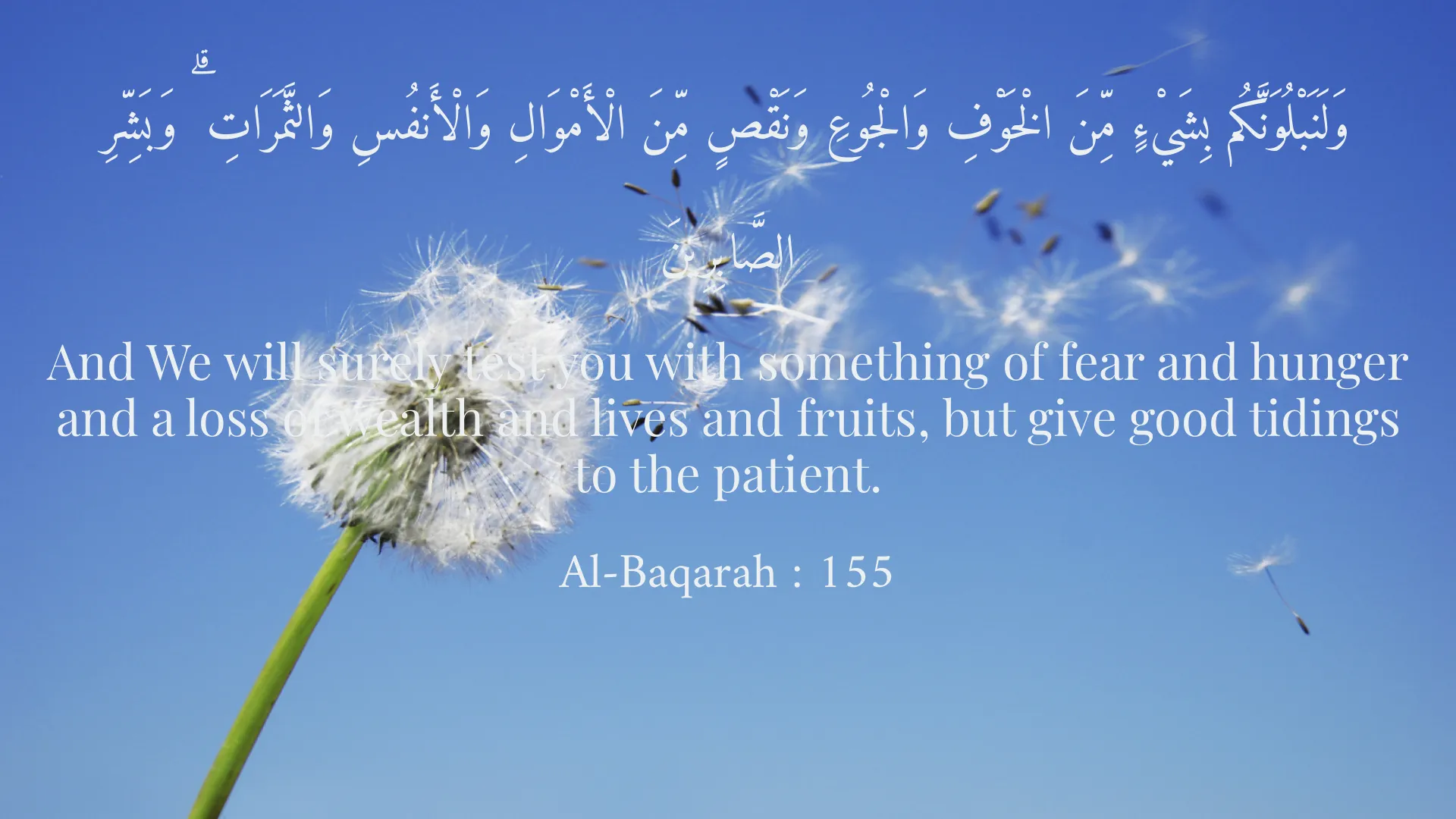
وَلَنَبْلُوَنَّكُم بِشَيْءٍ مِّنَ الْخَوْفِ وَالْجُوعِ وَنَقْصٍ مِّنَ الْأَمْوَالِ وَالْأَنفُسِ وَالثَّمَرَاتِ ۗ وَبَشِّرِ الصَّابِرِينَ
And We will surely test you with something of fear and hunger and a loss of wealth and lives and fruits, but give good tidings to the patient.
Al-Baqarah : 155
أَحَسِبَ النَّاسُ أَن يُتْرَكُوا أَن يَقُولُوا آمَنَّا وَهُمْ لَا يُفْتَنُونَ
Do people think that they will be left alone because they say, 'We believe,' and will not be tried?
Al-Ankabut : 2
وَمَا أَصَابَكُم مِّن مُّصِيبَةٍ فَبِمَا كَسَبَتْ أَيْدِيكُمْ وَيَعْفُو عَن كَثِيرٍ
And whatever disaster strikes you - it is because of what your hands have earned, and He pardons much.
Ash-Shura : 30
Short Story
It is said there was once a king, harsh and heedless of his subjects' welfare. He possessed immense wealth and great power but had turned away from justice and fairness. One day, he was suddenly afflicted with an ailment that no physician could cure. Pain and suffering robbed him of sleep and peace. A wise dervish, renowned for his spiritual insight, was summoned to his service. After a moment of contemplation, the dervish said: "O King, this suffering that has befallen you is not merely a pain of the body but of the soul. Your heedlessness towards the rights of your subjects and your distance from the Creator have manifested in this pain. This is a calamity, like a divine admonition, calling you back to the path of justice and mercy." The king, overwhelmed by pain and the dervish's truthful words, admitted his shortcomings and repented. He distributed his wealth among the needy and established justice throughout his kingdom. Gradually, his pain subsided, and a peace settled in his heart, superior to any worldly kingdom. He realized that sometimes, adversities are mirrors reflecting our deeds, a call to return to the right path, guiding us towards a better self and a deeper connection with the Creator.