Quranic Answer
The question, "How do I know if I am dependent on worship or dependent on God?", probes a crucial spiritual discernment for every believer. It challenges us to look beyond the mere performance of religious rituals and delve into the true object of our devotion and reliance. The Holy Quran provides profound insights and clear indicators to help us understand where our heart truly lies. At the heart of Islamic teaching is the principle of Ikhlas (sincerity), meaning that all acts of worship must be performed purely for the sake of Allah, without any desire for worldly praise, recognition, or any purpose other than His pleasure. Allah explicitly states in Surah Al-Bayyinah (98:5), "And they were not commanded except to worship Allah, [being] sincere to Him in religion, inclining to truth, and to establish prayer and to give zakah. And that is the correct religion." This verse serves as a fundamental criterion: if our worship is truly dependent on God, it will be characterized by profound sincerity, an inner commitment that transcends outward display. If our dependence is on the act of worship itself, we might find ourselves preoccupied with its outward form, checking off boxes, or seeking validation from others for our perceived piety. The true worshipper seeks acceptance from Allah alone, understanding that only He sees and rewards the innermost intentions. A key differentiator lies in the concept of Tawakkul (reliance on God). True dependence on Allah means placing one's complete trust, hope, and reliance in Him for all matters, knowing that ultimate power, wisdom, and provision rest solely with Him. When a person is dependent on God, their acts of worship become a means to express this profound trust and surrender. For instance, when they supplicate, they do so with the conviction that Allah is All-Hearing and All-Capable, and that His timing and decree are perfect. Their peace comes from having entrusted their affairs to the Divine, not merely from the act of supplication itself. Allah emphasizes in Surah Al-Ma'idah (5:23), "...And upon Allah rely, if you should be believers." This verse intrinsically links true faith with genuine reliance on God. Conversely, if one is dependent on the act of worship rather than on God, they might experience anxiety or frustration if their prayers don't seem to yield immediate results, or if they miss a specific ritual. Their peace might be fragile, tied to the successful completion of a prescribed form, rather than the boundless peace found in connecting with the Ever-Living, the Sustainer. The Quran also teaches us that Allah values the purity of intention and the state of the heart far more than the mere outward performance of rituals. A powerful illustration of this is found in Surah Al-Hajj (22:37), concerning the ritual of sacrifice: "Their meat will not reach Allah, nor will their blood, but what reaches Him is piety from you." This verse profoundly highlights that the essence of worship is taqwa (God-consciousness, piety) – the inner awe, love, and fear of Allah. It’s not about the physical offering, but the spiritual submission behind it. If a person's dependence is on God, their focus will be on cultivating this inner piety, ensuring their heart is present and attentive during worship, and that their actions are driven by genuine reverence. If their dependence is on the act of worship, they might perform it mechanically, without true presence of heart, fulfilling a duty but missing its transformative spiritual impact. Furthermore, how one responds to life's challenges can reveal the true nature of their dependence. When difficulties arise, does one falter in their worship, feeling that their efforts are futile because their immediate problems aren't solved? Or do they cling even more firmly to their worship, seeing it as their lifeline and ultimate source of strength from Allah? If one's dependence is on God, adversity deepens their resolve to worship, for they understand that only Allah can provide comfort, guidance, and relief. Their worship becomes a testament to their unwavering faith, a means of seeking solace directly from the Divine, rather than a conditional agreement based on immediate outcomes. A person dependent on worship might lose hope or even abandon it if their expectations from the ritual are not met, showing that their reliance was on the perceived power of the act itself, not the boundless power of Allah. Finally, the true measure of dependence on God is reflected in the holistic transformation of one's character and life. Worship that is truly connected to Allah should naturally lead to moral uprightness, ethical behavior, and a greater sense of responsibility towards oneself, others, and society. Allah states in Surah Al-Ankabut (29:45), "Indeed, prayer prohibits immorality and wrongdoing." If prayer is merely a ritual performed out of habit, it might not have this profound effect. However, if one's worship stems from a deep dependence on God, it will inspire them to embody His attributes of mercy, justice, and compassion, guiding their interactions and decisions in all spheres of life. Their entire existence becomes an act of worship, driven by a desire to please Allah, manifesting in their honesty, patience, generosity, and kindness. This integrated approach to life, where every action is viewed through the lens of divine purpose and accountability, is a hallmark of true dependence on God, far surpassing a mere adherence to religious formalities.
Related Verses
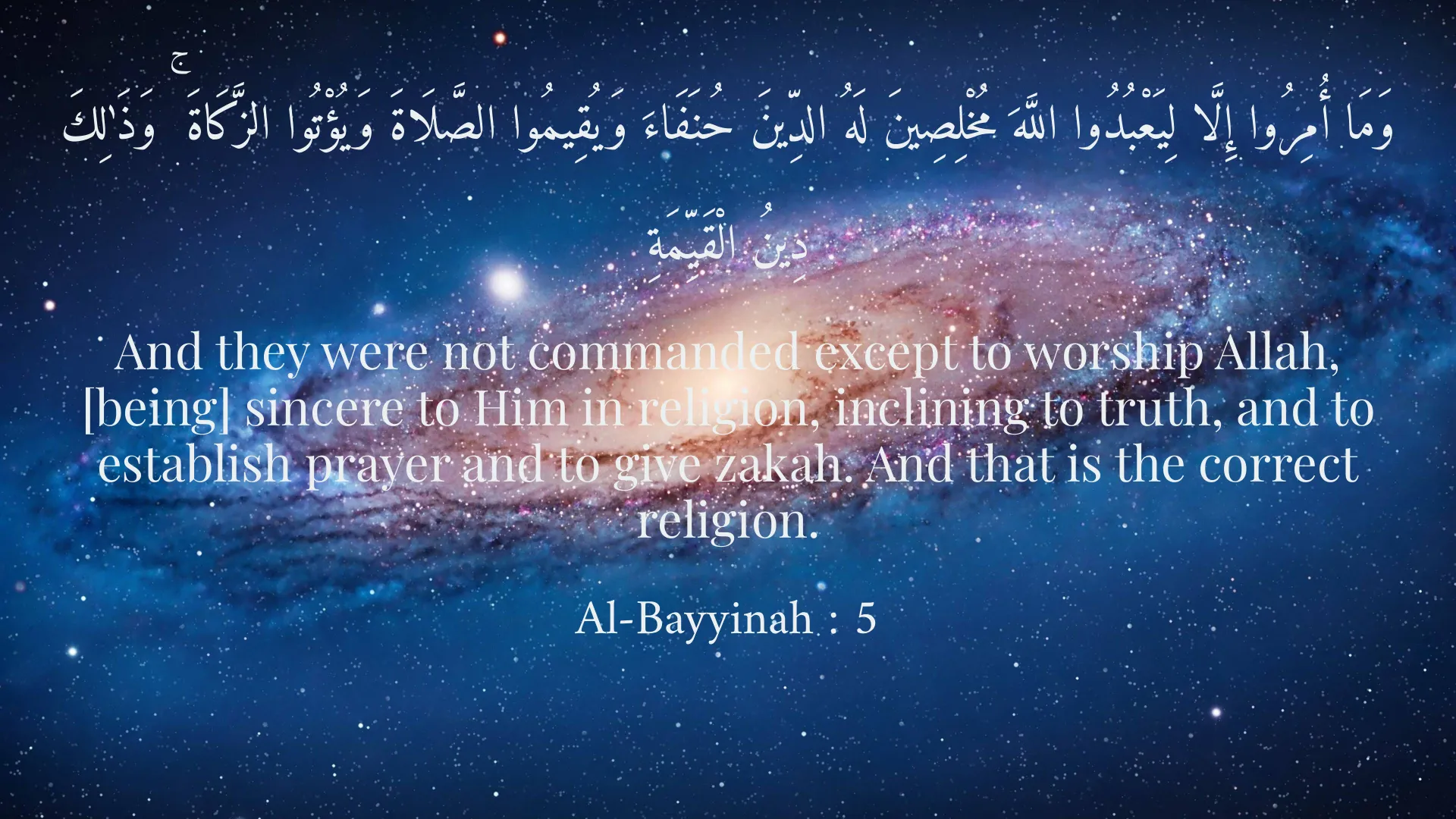
وَمَا أُمِرُوا إِلَّا لِيَعْبُدُوا اللَّهَ مُخْلِصِينَ لَهُ الدِّينَ حُنَفَاءَ وَيُقِيمُوا الصَّلَاةَ وَيُؤْتُوا الزَّكَاةَ ۚ وَذَٰلِكَ دِينُ الْقَيِّمَةِ
And they were not commanded except to worship Allah, [being] sincere to Him in religion, inclining to truth, and to establish prayer and to give zakah. And that is the correct religion.
Al-Bayyinah : 5
لَن يَنَالَ اللَّهَ لُحُومُهَا وَلَا دِمَاؤُهَا وَلَٰكِن يَنَالُهُ التَّقْوَىٰ مِنكُمْ ۚ كَذَٰلِكَ سَخَّرْنَاهَا لَكُمْ لِتُكَبِّرُوا اللَّهَ عَلَىٰ مَا هَدَاكُمْ ۗ وَبَشِّرِ الْمُحْسِنِينَ
Their meat will not reach Allah, nor will their blood, but what reaches Him is piety from you. Thus have We subjected them to you that you may glorify Allah for that which He has guided you; and give good tidings to the doers of good.
Al-Hajj : 37
قَالَ رَجُلَانِ مِنَ الَّذِينَ يَخَافُونَ أَنْعَمَ اللَّهُ عَلَيْهِمَا ادْخُلُوا عَلَيْهِمُ الْبَابَ فَإِذَا دَخَلْتُمُوهُ فَإِنَّكُمْ غَالِبُونَ ۚ وَعَلَى اللَّهِ فَتَوَكَّلُوا إِن كُنتُم مُّؤْمِنِينَ
Two men from those who feared [Allah and] upon whom Allah had bestowed favor said, 'Enter upon them through the gate, for when you have entered it, you will be predominant. And upon Allah rely, if you should be believers.'
Al-Ma'idah : 23
Short Story
It is narrated that in ancient times, there was an ascetic devoted to worship day and night; his prayers were never missed, and his fasts never abandoned. People recognized him for his piety, and he himself rejoiced in the abundance of his worship. One day, a wise old man asked him, "O young man, tell me, if one day there were no mosque, or no water for ablution, how would your heart fare? Would you still find peace, or would agitation overcome you?" The ascetic pondered for a moment and looked within himself. He realized that his heart was more attached to the performance of outward acts than truly connected to God. The old man smiled and said, "Worship is a ladder to connect with the Beloved, not the Beloved Himself. If your heart is dependent on the Beloved, then in every state and every place, your peace comes from Him, and your worship is merely a way to express this love and reliance. But if the heart becomes dependent on the ladder, then without the ladder, connection seems impossible." The ascetic was awakened by these words, and from then on, he not only adhered to outward worship but also turned his heart purely towards God, feeling His presence in every breath, whether in the mosque or in his solitude.