Quranic Answer
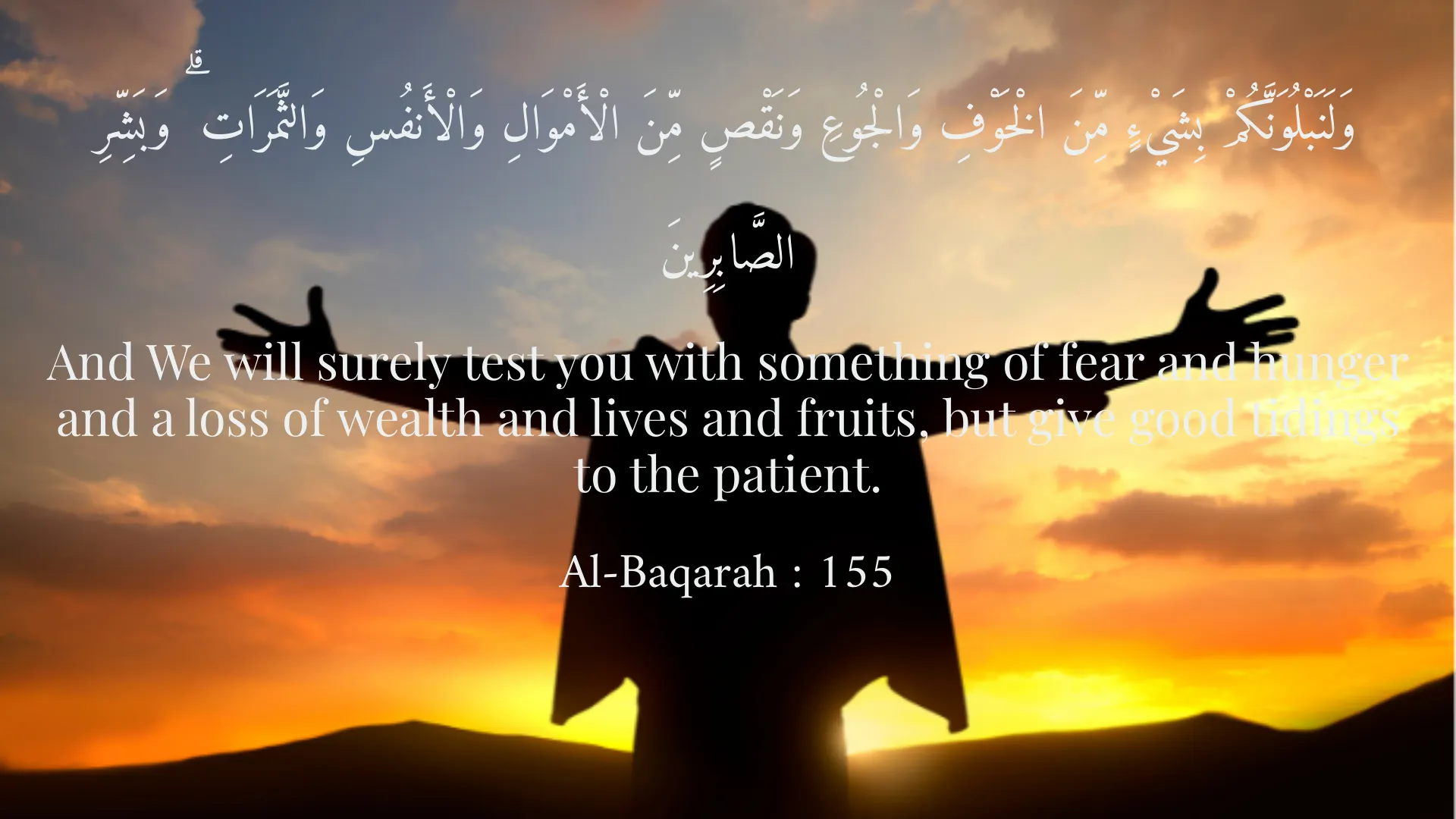
Dear brothers and sisters, this is a profound and crucial question that many individuals face on their journey through life. To understand the distinction between a divine test and a punishment, we must turn to the Holy Quran and Islamic teachings, which, with their infinite wisdom, illuminate this path for us. Life, from an Islamic perspective, is fundamentally a testing ground. Allah Almighty repeatedly states in the Quran that the purpose of human creation is to test humanity, to gauge their faith, patience, and gratitude, and to determine their standing with their Lord. Every event, whether seemingly good or bad, can serve as a means for this test. In the Holy Quran, we read: "And We will surely test you with something of fear and hunger and a loss of wealth and lives and fruits, but give good tidings to the patient" (Al-Baqarah, 2:155). This verse clearly states that we will indeed be tested with things such as fear, hunger, and deficits in wealth, lives, and harvests. The purpose of these trials is not to punish, but rather to purify, grow, and elevate the spiritual status of the human being. These are opportunities for us to draw closer to God, increase our reliance on Him, practice patience, and become stronger from within. When an individual, in such circumstances, turns towards God instead of complaining, practices patience, engages in more prayer and supplication, and performs good deeds, this is a sign that they are on a divine test, and Allah intends to bring them to perfection or cleanse their sins through this means. Conversely, punishment or retribution is a direct consequence and natural outcome of our own actions and sins. Allah states in the Quran: "And whatever calamity strikes you, it is because of what your hands have earned, and He pardons much" (Ash-Shura, 42:30). This verse explicitly states that every calamity that befalls you is due to what you have earned, and Allah forgives much. This means that sometimes, the problems and hardships we face are the result of our own misdeeds, injustices, negligence, or sins. These punishments are not necessarily eternal torment, but can be a warning from the Lord, a jolt to awaken us from heedlessness and guide us back to the straight path. These are opportunities for repentance and rectification, before greater consequences await. So, how can we distinguish between the two? The main key is "self-awareness" and "reflecting on our reactions." First, look within yourself. Are you continuously engaged in a particular sin in your life? Are you violating the rights of others? Are you disobeying divine commands? If the answer is yes, then these problems are likely a result of your actions, and Allah intends to make you aware of your mistakes. Second, observe your reaction to the calamity. If, when facing hardships, instead of patience and seeking refuge in God, you become more heedless, angry, despairing, or even turn to more sins, this could be a sign that your problem is a result of punishment or a serious warning, and you should quickly repent and change your path. However, if in the midst of hardships, despite the pain and suffering, you feel that you have drawn closer to God, your patience has increased, you have learned spiritual lessons, and you have engaged in self-correction, then this is most likely a divine test that Allah has set for your growth and elevation. In this case, you are being purified, and Allah loves you and wants to raise your status. Finally, always remember that Allah's mercy is boundless. Even if a hardship is a result of our sins, it is still a door of mercy and an opportunity for repentance and return. Allah's ultimate goal is the guidance and well-being of His servants. No calamity is without wisdom, and there is always a path to salvation, whether through patience in a trial or through repentance from sins. Therefore, whatever hardship you encounter, the first step should be to look within, seek forgiveness from Allah, and with reliance on Him, try to show the best reaction. With this approach, every challenge can become a bridge to perfection and greater closeness to Allah Almighty. This perspective not only brings peace to your heart but also transforms every difficulty into a golden opportunity for growth and progress.
Related Verses
وَلَنَبْلُوَنَّكُمْ بِشَيْءٍ مِّنَ الْخَوْفِ وَالْجُوعِ وَنَقْصٍ مِّنَ الْأَمْوَالِ وَالْأَنفُسِ وَالثَّمَرَاتِ ۗ وَبَشِّرِ الصَّابِرِينَ
And We will surely test you with something of fear and hunger and a loss of wealth and lives and fruits, but give good tidings to the patient.
Al-Baqarah : 155
أَحَسِبَ النَّاسُ أَن يُتْرَكُوا أَن يَقُولُوا آمَنَّا وَهُمْ لَا يُفْتَنُونَ
Do people think that they will be left alone because they say, "We believe," and will not be tested?
Al-Ankabut : 2
وَمَا أَصَابَكُم مِّن مُّصِيبَةٍ فَبِمَا كَسَبَتْ أَيْدِيكُمْ وَيَعْفُو عَن كَثِيرٍ
And whatever calamity strikes you, it is because of what your hands have earned, and He pardons much.
Ash-Shura : 30
Short Story
In Saadi's Golestan, it is recounted that a pious young man, disheartened by the loss of his wealth and a severe illness, approached a wise old man. He said with sadness, "O wise one, I do not know if this calamity that has befallen me is a test from the Lord to measure my patience, or a punishment for my hidden sins?"<br>The old man replied with a gentle smile: "My son, look within yourself. If this hardship has drawn you closer to your Creator, if it has emptied your heart of arrogance and led you towards repentance and humility, and if in every pain you have seen His wisdom and mercy, then know that this is a divine test for the purification and elevation of your soul. But if this affliction has distanced you from the remembrance of God, filled your heart with anger and despair, and instead of patience, you have resorted to complaint and grievance, and have learned no lesson from your past deeds, then this is a warning to awaken, a nudge to return to the straight path, before heedlessness drags you into deeper valleys. The difference lies not in the suffering itself, but in the effect that suffering leaves on your heart and soul." The young man took the old man's advice to heart, reflected upon himself, repented, practiced patience, and peace returned to his heart.