Quranic Answer
Understanding whether one is still on the path of servitude to God is a fundamental concern for every believer. This assessment goes beyond mere outward actions, delving into one's inner state, intentions, and the overall direction of one's life. The Holy Quran, through its numerous verses, provides clear criteria for evaluating this path, serving as our guide. Servitude (ibadah) in Islam is not limited to performing religious rituals; rather, it is a comprehensive way of life that encompasses all dimensions of human existence, from thoughts and emotions to speech and behavior. Firstly, and most importantly, a primary indicator of being on the path of servitude is "Taqwa"—God-consciousness and piety. Taqwa signifies a continuous awareness and presence of God in all moments of life; an awareness that compels a person, consciously or unconsciously, to remember God's commands and prohibitions in every situation. In Surah Al-Baqarah, verse 197, Allah states: "And take provisions, but indeed, the best provision is righteousness (taqwa)." This verse clearly shows that taqwa is the foundation of every correct step on the path of servitude. A person with taqwa consistently strives to avoid what God has forbidden and to fulfill what He has commanded. This effort is reflected in their speech, actions, even in their gaze and intentions. They abstain from lying, backbiting, slander, oppression, and anything that displeases God, turning instead towards truthfulness, justice, kindness, and compassion. Secondly, the quality and depth of one's "worship" (ibadah) serve as a crucial sign. Are our prayers (Salat), fasting, remembrance (Dhikr), and recitation of the Quran merely lifeless movements and words, or do they emanate from the depths of our souls, bringing peace and tranquility to our hearts? In Surah Al-Ankabut, verse 45, Allah says: "Indeed, prayer prohibits immorality and wrongdoing, and the remembrance of Allah is greater." If our prayers do not deter us from sins and the remembrance of God does not bring true serenity to our hearts, then we must reflect on the quality of our servitude. A true servant is one who has presence of heart in their worship, not merely performing a duty. They converse with God in prayer, feel His greatness in remembrance, and live by His words when reciting the Quran. Thirdly, "character and conduct" towards others are vital criteria. Servitude to God is not solely in a person's private communion with their Lord; it also manifests in social interactions and how one treats God's creation. Do we treat our parents with kindness? (Al-Isra: 23) Do we pay attention to neighbors, orphans, the poor, and the needy? Are we honest and trustworthy in our dealings? Do we treat people with kindness, forgiveness, and justice? The Prophet Muhammad (peace be upon him) said: "The best among you are those who have the best character." A person on the path of servitude always seeks God's pleasure by serving His creation and respecting the rights of others. They possess a kind heart, abstain from stinginess and envy, and wish well for all people. Fourthly, "inner peace and discernment" are significant indicators. In Surah Ar-Ra'd, verse 28, we read: "Those who have believed and whose hearts are assured by the remembrance of Allah. Unquestionably, by the remembrance of Allah hearts are assured." If, despite life's challenges and difficulties, our hearts find tranquility in the remembrance of God and we do not succumb to severe anxiety and despair, it signifies that our connection with God is strong. Furthermore, Allah grants discernment (furqan) to those on the path of servitude, enabling them to distinguish between right and wrong, as stated in Surah Al-Anfal, verse 29: "O you who have believed, if you fear Allah, He will grant you a criterion [to judge between right and wrong]." Fifth, and perhaps most importantly, is "self-improvement and accountability (muhasabah)." A true servant is one who regularly reviews their actions and intentions. In Surah Al-Hashr, verse 18, it is stated: "O you who have believed, fear Allah. And let every soul look to what it has put forth for tomorrow - and fear Allah. Indeed, Allah is Acquainted with what you do." This verse instructs us to constantly hold ourselves accountable and to examine whether our actions are preparing good provisions for the Day of Judgment. A person on the path of servitude learns from their mistakes, repents, and returns to God with greater resolve. They never despair of God's mercy and forgiveness, and when they err, they return to the path with remorse and seeking forgiveness. Ultimately, the path of servitude is a dynamic journey. Every human being may falter, but what matters is sincere remorse, repentance, and a quick return to God. A feeling of inner contentment, joy in worship, inclination towards good deeds, avoidance of sins, and having a heart directed towards God and people are all signs that help us determine our position on the path of servitude. We should always ask God to keep us steadfast and never abandon us to ourselves, for guidance and perseverance are solely in His hands. This path is one of love, knowledge, and perfection, and with every sincere step, one draws closer to the Lord. Therefore, to understand if you are still on the path of servitude, look within yourself. Is God your priority in life? Does your heart find peace in His remembrance? Are your actions for His pleasure and not for showing off to people? Is your character good with others? And are you constantly striving for self-improvement and repentance? These are the questions whose answers will clarify your status on the path of servitude. The more positive your answers to these questions, the more it indicates that, by God's grace, you are steadfast on the path of servitude.
Related Verses
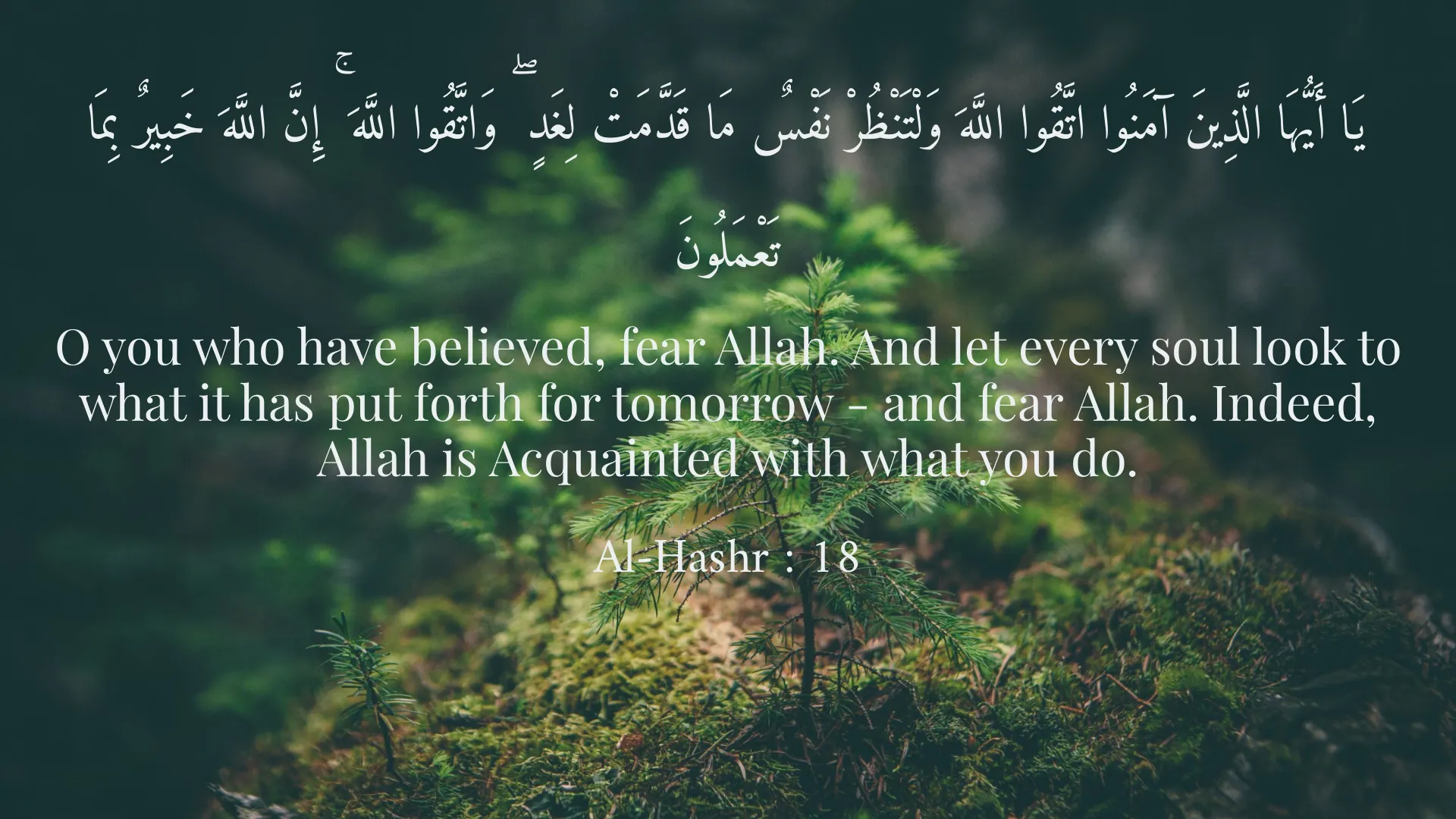
يَا أَيُّهَا الَّذِينَ آمَنُوا اتَّقُوا اللَّهَ وَلْتَنْظُرْ نَفْسٌ مَا قَدَّمَتْ لِغَدٍ ۖ وَاتَّقُوا اللَّهَ ۚ إِنَّ اللَّهَ خَبِيرٌ بِمَا تَعْمَلُونَ
O you who have believed, fear Allah. And let every soul look to what it has put forth for tomorrow - and fear Allah. Indeed, Allah is Acquainted with what you do.
Al-Hashr : 18
اتْلُ مَا أُوحِيَ إِلَيْكَ مِنَ الْكِتَابِ وَأَقِمِ الصَّلَاةَ ۖ إِنَّ الصَّلَاةَ تَنْهَىٰ عَنِ الْفَحْشَاءِ وَالْمُنْكَرِ ۗ وَلَذِكْرُ اللَّهِ أَكْبَرُ ۗ وَاللَّهُ يَعْلَمُ مَا تَصْنَعُونَ
Recite, [O Muhammad], what has been revealed to you of the Book and establish prayer. Indeed, prayer prohibits immorality and wrongdoing, and the remembrance of Allah is greater. And Allah knows that which you do.
Al-Ankabut : 45
وَالْعَصْرِ
By time,
Al-Asr : 1
إِنَّ الْإِنْسَانَ لَفِي خُسْرٍ
Indeed, mankind is in loss,
Al-Asr : 2
إِلَّا الَّذِينَ آمَنُوا وَعَمِلُوا الصَّالِحَاتِ وَتَوَاصَوْا بِالْحَقِّ وَتَوَاصَوْا بِالصَّبْرِ
Except for those who have believed and done righteous deeds and advised each other to truth and advised each other to patience.
Al-Asr : 3
Short Story
One day, a king asked a dignified dervish: "O wise elder, how can I know if I am a true servant and treading the path of righteousness?" The dervish, with a warm smile, replied: "O King, the sign of true servitude is not merely in wearing wool garments or secluding oneself, but in the state of the heart and pure intention. Whenever you find that your good deed, even if hidden and unseen by anyone, brings you inner peace, and your sin, even if no one is aware of it, disturbs your heart, then know that you are on the path of servitude and your steps are in the way of divine pleasure. For a true servant, their gaze is upon their Lord, not upon the praise of creation." Upon hearing this wise saying, the king reflected deeply within himself and understood that servitude, more than being outward, is an inner state achieved through sincerity and constant awareness of the Lord.