Quranic Answer
Recognizing whether one has deviated from the right path is one of the most crucial and deeply personal challenges that every believer faces throughout their life. This profound question has strong Quranic and Islamic roots, and the Holy Quran, with its deep insight and clear guidance, illuminates the path of self-knowledge and return. From a Quranic perspective, the 'right path' is the 'Sirat al-Mustaqim,' a path leading to God, encompassing correct belief, righteous deeds, and noble character. Deviation from this path can manifest in various ways, some of which are evident, while others are subtle and gradual. To diagnose this deviation, one must pay attention to both internal and external signs that the Quran points out. The first, and perhaps most important, sign is the feeling of 'loss of inner peace' and 'internal anxiety.' The Quran states in Surah Ar-Ra’d, verse 28: “Those who have believed and whose hearts are assured by the remembrance of Allah. Unquestionably, by the remembrance of Allah hearts are assured.” If a person’s heart becomes heedless of the remembrance of God and, instead of peace, experiences turmoil, distress, and wandering, this is a strong indicator that they have drifted away from their true course. This heedlessness can result from immersion in materialism, worldly attachments, or pursuing desires that distance one from their primary purpose of creation. The second sign is a 'change in the quality of worship and righteous deeds.' Prayer (Salat), supplication (Du'a), recitation of the Quran, and other acts of worship are the pillars of connection with God. If an individual feels that they no longer experience the former joy and presence of heart in their acts of worship, or if they neglect them entirely, or even abandon them, this is a serious warning sign. The Quran repeatedly emphasizes the establishment of prayer and spending in the way of God. Drifting away from these acts means drifting away from the source of light and guidance. Laziness in fulfilling obligatory duties and inclination towards minor sins can be a prelude to greater transgressions. The third sign is the 'rusting or tarnish of the heart.' The Quran in Surah Al-Mutaffifin, verse 14, states: “No, but that which they used to earn has rusted upon their hearts.” Continuous sins, without repentance, settle like a layer of rust on the mirror of the heart, preventing it from perceiving truths and distinguishing between good and evil. If a person becomes indifferent to sins, or even enjoys committing them, this is a sign that their heart has become ill and has lost its spiritual vision. This tarnish of the heart prevents the reception of divine light and guidance, plunging the person further into error. The fourth sign is the 'feeling of indifference towards right and wrong and unfairness in relationships.' When a person deviates from the path of truth, their moral standards may also change. Injustice, oppression of others, backbiting, lying, and suspicion are all signs that an individual has drifted away from the divine path. The Holy Quran strongly emphasizes establishing justice, respecting the rights of others, and avoiding corruption. If one observes that they are trampling on fairness and rights in their dealings with others, or are indifferent to societal issues and the needy, this is a sign of distance from divine mercy and Quranic ethics. The fifth sign is 'despair from God's mercy and fear of the future.' The Quran constantly invites believers to hope in divine mercy and reliance on God. If a person constantly experiences despair, hopelessness, and fear of the future, and feels overwhelmed by problems, this can be a sign of weak faith and distance from the secure divine refuge. Conversely, a believer who is on the straight path, even in the most difficult circumstances, does not lose their peace and hope, because they know that God is the best helper and planner. To return and correct the path, the Quran also provides practical solutions. The first step is 'self-accountability' (Muhasabah al-Nafs). Surah Al-Hashr, verse 18, states: “O you who have believed, fear Allah and let every soul look to what it has put forth for tomorrow - and fear Allah. Indeed, Allah is Acquainted with what you do.” This verse explicitly emphasizes the necessity of self-evaluation and examining one’s daily and past actions. The second step is 'repentance and seeking forgiveness' (Tawbah and Istighfar). Repentance is a sincere return to God after committing a sin. The Quran repeatedly invites people to repent and promises forgiveness. Repentance not only cleanses sins but also opens a door for returning to the right path and regaining inner peace. Surah An-Nur, verse 31, states: “And turn to Allah in repentance, all of you, O believers, that you might succeed.” The third step is 'increasing the remembrance of Allah and seeking refuge in the Quran and the Ahl al-Bayt (for Shia Muslims, or righteous companions for Sunnis).' The Quran is the word of God, and its recitation and contemplation are the best ways to enlighten the path and receive guidance. Participating in gatherings of remembrance (Dhikr), prayer, associating with the righteous, and avoiding sinful environments are also very effective in this regard. In summary, recognizing deviation from the right path requires honesty with oneself, paying attention to internal and external signs, and comparing one's current state with Quranic standards. If the heart is restless, worship has become weak, sins have become normalized, or relationships have become unjust, these are all signs that must be taken seriously. Through self-accountability, repentance, and a return to the remembrance of God and righteous deeds, one can find the path of guidance again and achieve true peace.
Related Verses
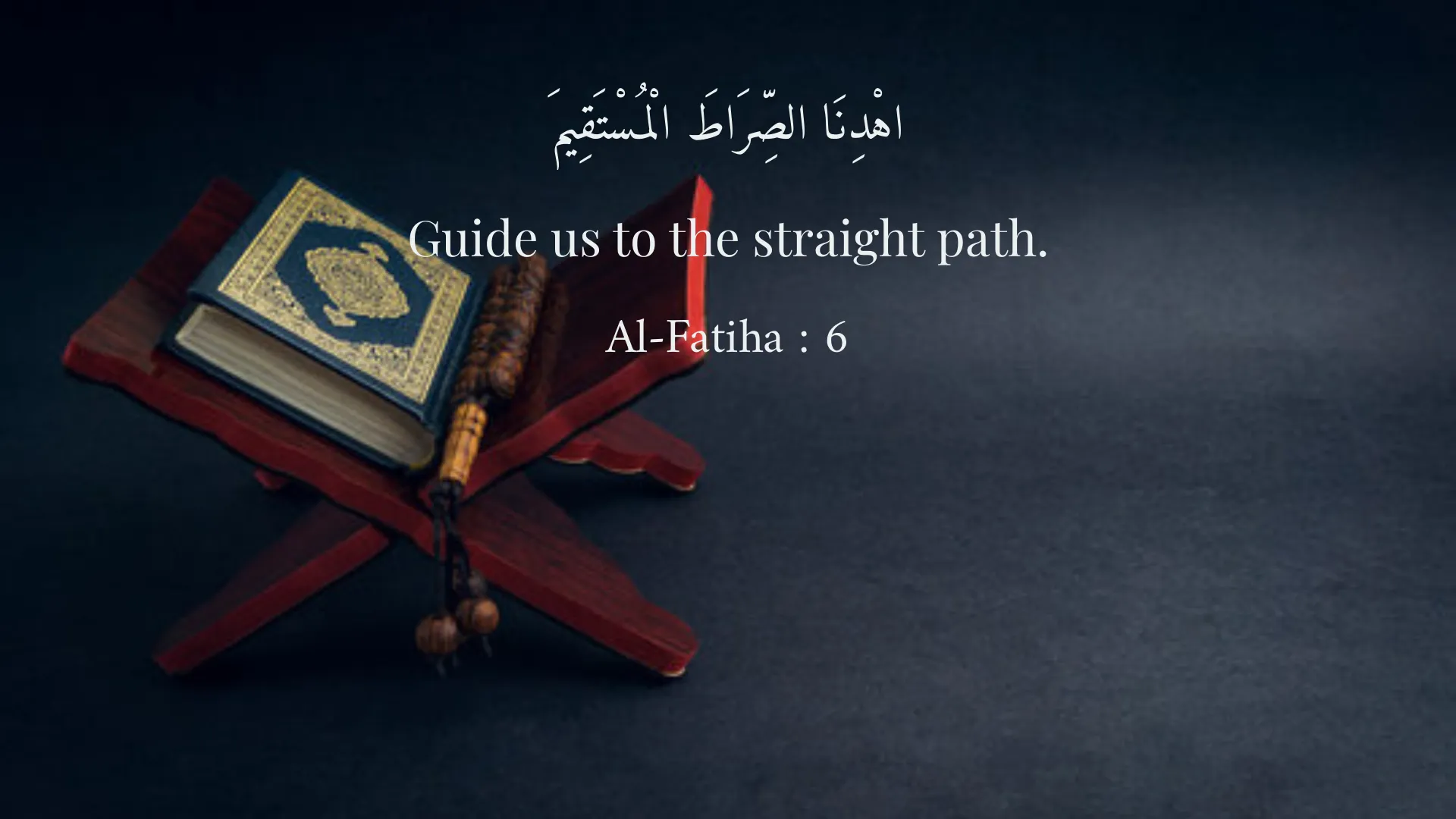
اهْدِنَا الصِّرَاطَ الْمُسْتَقِيمَ
Guide us to the straight path.
Al-Fatiha : 6
يَا أَيُّهَا الَّذِينَ آمَنُوا اتَّقُوا اللَّهَ وَلْتَنظُرْ نَفْسٌ مَّا قَدَّمَتْ لِغَدٍ ۖ وَاتَّقُوا اللَّهَ ۚ إِنَّ اللَّهَ خَبِيرٌ بِمَا تَعْمَلُونَ
O you who have believed, fear Allah and let every soul look to what it has put forth for tomorrow - and fear Allah. Indeed, Allah is Acquainted with what you do.
Al-Hashr : 18
الَّذِينَ آمَنُوا وَتَطْمَئِنُّ قُلُوبُهُم بِذِكْرِ اللَّهِ ۗ أَلَا بِذِكْرِ اللَّهِ تَطْمَئِنُّ الْقُلُوبُ
Those who have believed and whose hearts are assured by the remembrance of Allah. Unquestionably, by the remembrance of Allah hearts are assured.
Ar-Ra'd : 28
Short Story
It is narrated that a man, with great hardship, got lost in a desert and strayed far from his caravan. No matter how hard he tried, he couldn't find his way and became restless from thirst and exhaustion. In that state, he suddenly heard a cry within his heart: 'You yourself have lost the way, not that the way has lost you.' With this call, he came to his senses and, instead of searching for the caravan, paid attention to the signs he had initially overlooked. He remembered passing by a well with fresh water that had indicators of the main path. By returning to that sign, the man eventually found his way and reached his destination. Saadi, in this subtle anecdote, teaches us that sometimes, straying is not due to the path, but to our own heedlessness. If we awaken our hearts and pay attention to the signs of guidance within and around us, we can recognize the right path and return from error.