Quranic Answer
Understanding the impact of prayer in one's life is not merely a theoretical matter but a profound and transformative experience for which the Holy Quran provides clear and understandable signs. Prayer (Salah) is not just a series of physical movements or verbal recitations; it is a fundamental pillar of Islam and a believer's ascension, primarily aimed at establishing a continuous and deep connection with Allah (SWT) and disciplining the self. When we ask, "How do I know if my prayers have had an effect?", the Quran offers us criteria that indicate the effectiveness of this sublime act of worship. One of the clearest and most significant signs of prayer's impact, as mentioned in Surah Al-Ankabut (29:45), is its ability to deter indecency and evil. Allah says: "Indeed, prayer prohibits immorality and wrongdoing." This verse is the most crucial criterion for assessing the efficacy of prayer. If, after performing prayer, the worshipper finds themselves moving further away from sins and misdeeds, if their carnal desires and inclinations towards unseemly matters decrease, and if they become more resilient against satanic temptations, this is a definite sign of their prayer's effectiveness. True prayer makes a person aware of Allah's constant presence, and this awareness leads one to abstain from what Allah disapproves of. This deterrence is not achieved instantly but gradually, through consistency and attentiveness in prayer, indicating an inner transformation and spiritual growth. The deeper the prayer, the stronger this deterrent force will be. Another sign, mentioned in Surah Ta-Ha (20:14), is "for My remembrance." The purpose of establishing prayer is the constant remembrance of Allah. If prayer causes the remembrance of God to remain alive in all moments of our lives—if, in our daily tasks, transactions, speech, and silence, we perceive God as present and observant—this is a sign of prayer's profound impact. Prayer is an opportunity to disconnect from the world and connect to the infinite source of light and power. When this connection is properly established, the human heart finds tranquility in the remembrance of Allah, as stated in Surah Ar-Ra'd (13:28): "Unquestionably, by the remembrance of Allah hearts are assured." If, after prayer, you feel a sense of peace, calmness, and spiritual solace, and this tranquility permeates your daily life, these are among the blessed results of your prayer. This peace helps you to be more patient in the face of difficulties and to view matters with a broader perspective. Furthermore, the Quran, in describing the successful believers in the opening verses of Surah Al-Mu'minun, highlights the characteristic of being "humbly submissive" in prayer: "Certainly will the believers prosper, They who are in their prayer humbly submissive." (23:1-2). Khushu' (humility) is a state of the heart in which one perceives oneself as small and insignificant before the grandeur of Allah and turns wholeheartedly towards Him. If your prayer gradually leads you towards this state of khushu', if you feel a sense of presence during prayer and distractions decrease, and if this humility is reflected in your conduct and demeanor—for instance, humility towards people, avoidance of arrogance and self-admiration—this is another sign of prayer's effectiveness. A true worshipper gains humility and modesty from their prayer and manifests this virtuous quality in social interactions as well. Also, prayer is presented as a means of seeking help and assistance in life's challenges. In Surah Al-Baqarah (2:153), it states: "O you who have believed, seek help through patience and prayer. Indeed, Allah is with the patient." If, by performing prayer, you feel that you have gained greater endurance and patience in the face of hardships and calamities, if your perspective on problems has changed, and you navigate through them with greater reliance on Allah, this is a sign that prayer has endowed you with inner strength. Prayer is essentially a bridge that connects us to the boundless ocean of divine power, from which we draw the necessary strength to confront life's challenges. In summary, the impact of prayer should be sought not in sudden and external changes in the material world, but in deep spiritual and moral transformations. Effective prayer is one that illuminates the heart, purifies the soul, keeps one away from sin, instills the remembrance of Allah within one's being, and brings humility and peace. These signs are criteria by which every believer can, by reflecting inwardly and observing changes in their ethics, behavior, and feelings, ascertain the effectiveness or ineffectiveness of their prayers. This is a continuous journey, and the more sincere and committed a person is in their prayer, the more these blessed effects will manifest in their life.
Related Verses
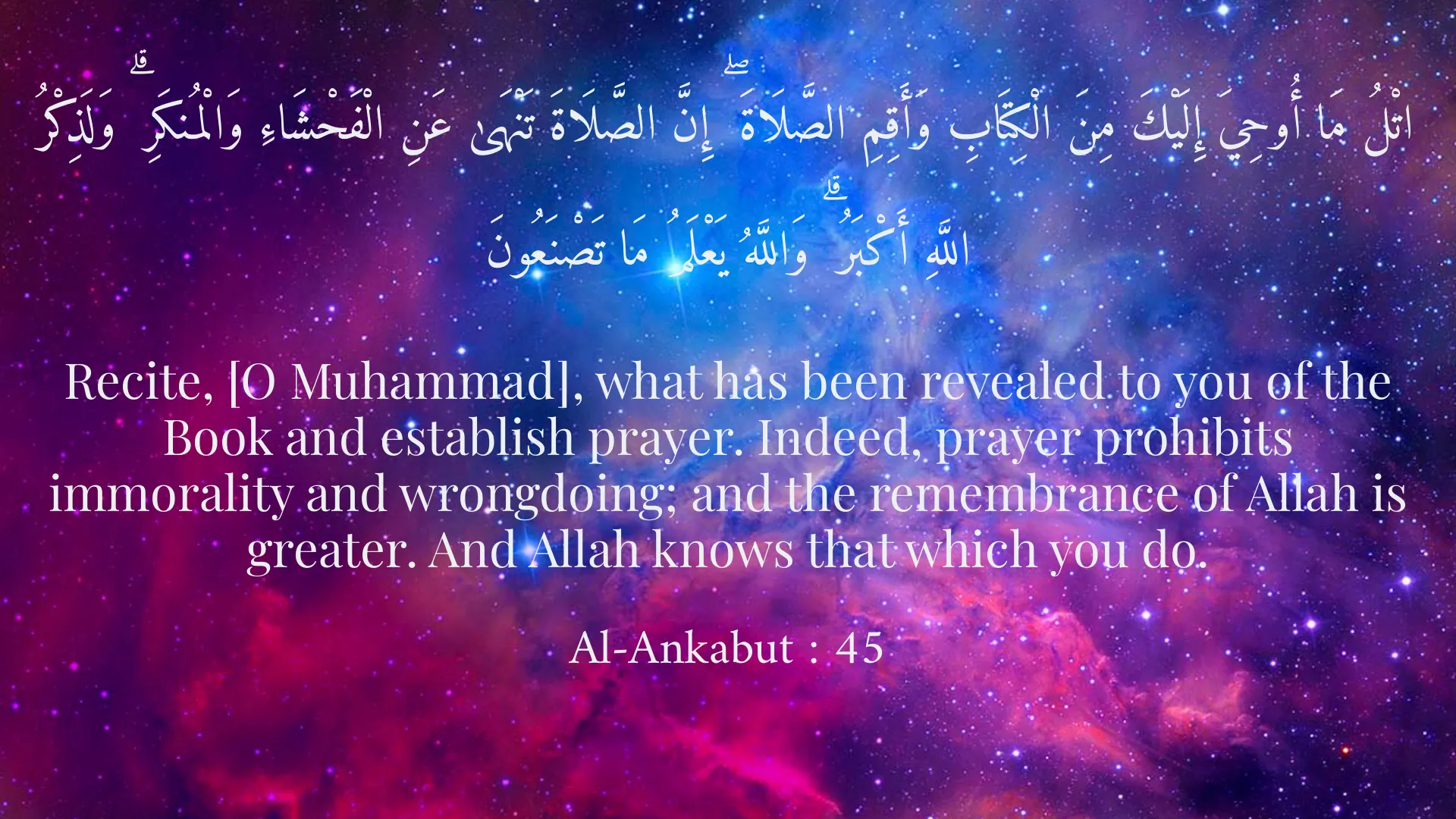
اتْلُ مَا أُوحِيَ إِلَيْكَ مِنَ الْكِتَابِ وَأَقِمِ الصَّلَاةَ ۖ إِنَّ الصَّلَاةَ تَنْهَىٰ عَنِ الْفَحْشَاءِ وَالْمُنكَرِ ۗ وَلَذِكْرُ اللَّهِ أَكْبَرُ ۗ وَاللَّهُ يَعْلَمُ مَا تَصْنَعُونَ
Recite, [O Muhammad], what has been revealed to you of the Book and establish prayer. Indeed, prayer prohibits immorality and wrongdoing; and the remembrance of Allah is greater. And Allah knows that which you do.
Al-Ankabut : 45
إِنَّنِي أَنَا اللَّهُ لَا إِلَٰهَ إِلَّا أَنَا فَاعْبُدْنِي وَأَقِمِ الصَّلَاةَ لِذِكْرِي
Indeed, I am Allah. There is no deity except Me, so worship Me and establish prayer for My remembrance.
Ta-Ha : 14
قَدْ أَفْلَحَ الْمُؤْمِنُونَ
Certainly will the believers prosper,
Al-Mu'minun : 1
الَّذِينَ هُمْ فِي صَلَاتِهِمْ خَاشِعُونَ
They who are in their prayer humbly submissive.
Al-Mu'minun : 2
Short Story
It is narrated in Saadi's Golestan that there was an ascetic dervish who would go to the mosque every day, perform his prayers, and then spend hours in supplication and communion. People considered him very pious. However, in his daily life, he sometimes uttered words that reeked of envy, or dealt a bit unfairly in his transactions. One day, a wise man told him: "O Dervish, you pray a great deal and offer long supplications, but it seems your prayer remains only in the mosque's mihrab and does not find its way to the market or your home. The true sign of an accepted prayer is that your heart and tongue become one, and your conduct among people becomes a mirror of the humility and remembrance of God you show in your prayer. If your prayer does not restrain you from backbiting and lying, and does not guide you to humility and fairness, know that its true effect has not yet settled in your heart. For true prayer is a light that illuminates a person's entire life."