Quranic Answer
Understanding the concept of blessing (Barakah) in work and life is a significant concern for many Muslims. Barakah is not merely about an increase in the quantity of wealth or apparent success; rather, it primarily signifies the quality, sustainability, tranquility, and contentment that result from an activity. It implies that, despite similar efforts, the outcomes are far deeper and more lasting. The Holy Quran does not provide a direct checklist for discerning blessings in work. Still, it outlines principles and signs that, when adhered to, lead to the acquisition of Barakah in all aspects of life, including one's occupation and earnings. These principles are divine guidance for a successful and blessed life, and by reflecting on one's situation and work, an individual can find signs of Barakah within it. One of the most crucial foundations for acquiring Barakah is 'Taqwa' – God-consciousness and piety. The Quran explicitly states that whoever fears Allah, He will make a way out for them and provide for them from where they do not expect. This concept is beautifully explained in Surah At-Talaq, verses 2 and 3: "And whoever fears Allah - He will make for him a way out * And will provide for him from where he does not expect." This Taqwa encompasses adhering to divine limits in one's business and work, including abstaining from usury (riba), fraud in transactions, deception, and acquiring wealth through unlawful means. Lawful and pure work is the fundamental basis of Barakah. Wealth obtained through illicit means, no matter how substantial it may seem, lacks Barakah and typically brings numerous problems and distress. When work is based on Taqwa and lawfulness, even if the income is modest, there is a sense of sufficiency, tranquility, and inner contentment, which is the greatest blessing itself. A person with Taqwa practices honesty, trustworthiness, and fairness in their work. These qualities not only earn Allah's pleasure but also gain people's trust, contributing to the long-term sustainability and growth of the business. The second principle is 'Shukr' or gratitude. The Quran, in Surah Ibrahim, verse 7, states: "And [remember] when your Lord proclaimed, 'If you are grateful, I will surely increase you; but if you deny, indeed, My punishment is severe.'" Gratitude manifests not only in words but also in actions and the proper utilization of blessings. When a person is thankful for the small blessings they have in their work and uses them correctly, Allah increases the Barakah in that work and its blessings. Gratitude shifts a person's focus from what they lack and lament to what they possess, allowing them to enjoy it. This positive outlook not only enhances mental well-being but also provides the necessary motivation and energy to continue working, preventing despair. Barakah often resides in a feeling of contentment and sufficiency, not merely in the volume of possessions. A grateful person feels rich even with little, and this richness of the soul is a tremendous blessing. The third factor is 'Infaq' (spending) and 'Sadaqah' (charity). The Quran repeatedly emphasizes the importance of spending in the way of Allah, promising that whoever spends for His sake, Allah will multiply their wealth many times over. Surah Al-Baqarah, verse 261, states: "The example of those who spend their wealth in the way of Allah is like a seed of grain which grows seven spikes; in each spike is a hundred grains. And Allah multiplies [His reward] for whom He wills. And Allah is all-Encompassing and Knowing." Giving charity, Zakat, Khums, and assisting the needy from one's work income purifies wealth and adds Barakah to it. This act not only strengthens the spiritual dimension of one's work but also practically brings about the flow of blessings into life. When an individual dedicates a portion of their income for Allah's pleasure, this not only helps the poor and needy but also purifies the soul and fosters a sense of social responsibility. This perspective transforms wealth from a purely material goal into a means to achieve higher objectives, leading to peace and blessings in work and life. Furthermore, having a 'right intention' in one's work plays a crucial role. If a person's sole intention in working is to accumulate worldly wealth and achieve riches, they may never feel Barakah or sufficiency. However, if their intention is to earn lawful sustenance for their family, help others, serve the community, and ultimately gain Allah's pleasure, then their work transforms into an act of worship and becomes subject to divine blessings. Similarly, 'diligence and effort' in work, coupled with 'Tawakkul' (trust in Allah), are also vital factors. Islam strongly discourages laziness and encourages individuals to strive and be active, but it attributes the ultimate outcome and blessing to Allah. By striving honestly and relying on Allah, a person feels greater inner peace and assurance in their work, and this tranquility itself is a sign of Barakah. Ultimately, the signs of Barakah in work often include a feeling of inner peace, contentment with what one has, the ability to use income wisely, having enough time for family and worship, and the flow of goodness and blessings through that work to others. These are criteria that go beyond mere financial accounting and relate to the quality of life and one's relationship with their Creator.
Related Verses
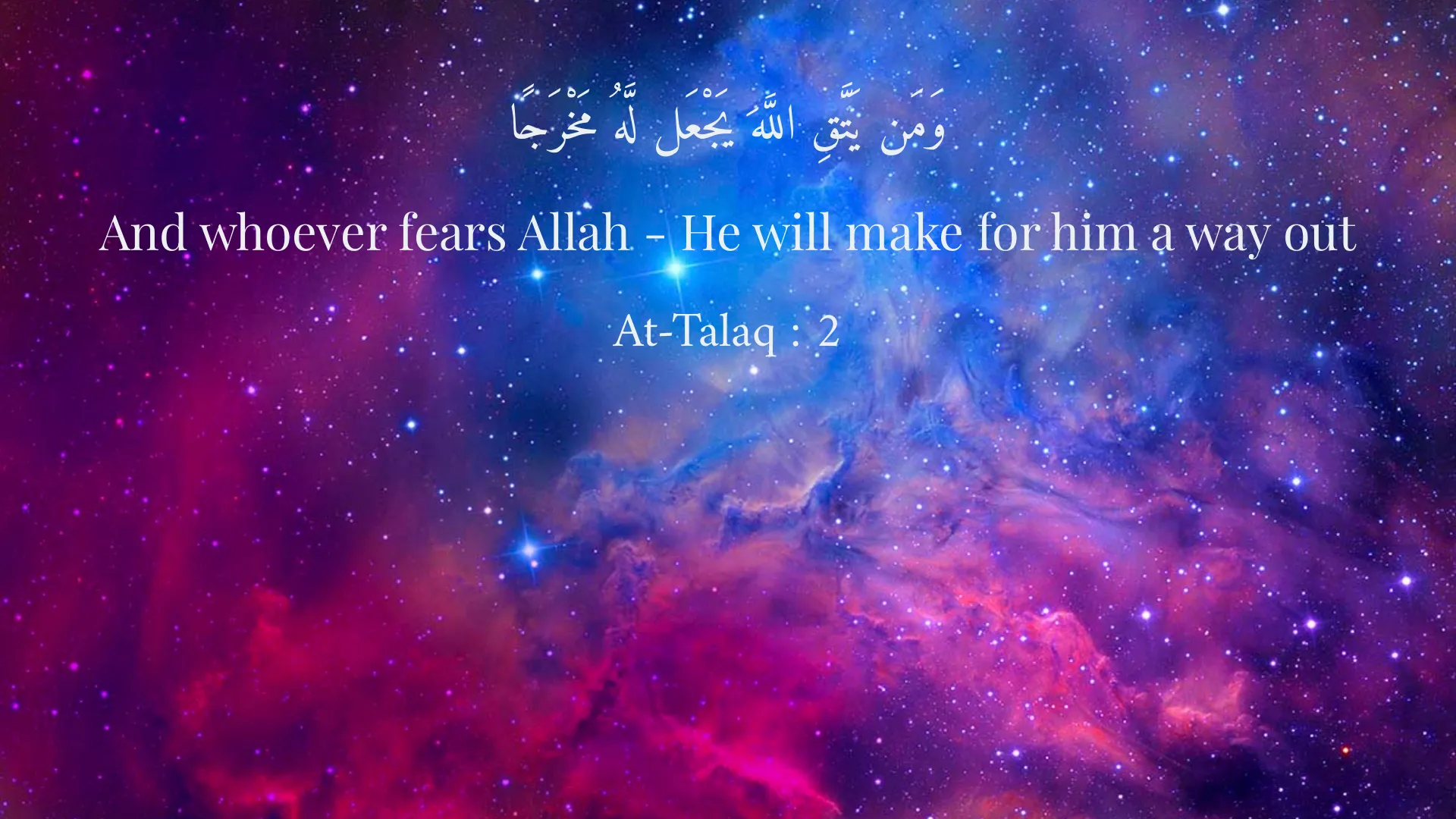
وَمَن يَتَّقِ اللَّهَ يَجْعَل لَّهُ مَخْرَجًا
And whoever fears Allah - He will make for him a way out
At-Talaq : 2
وَيَرْزُقْهُ مِنْ حَيْثُ لَا يَحْتَسِبُ ۚ وَمَن يَتَوَكَّلْ عَلَى اللَّهِ فَهُوَ حَسْبُهُ ۚ إِنَّ اللَّهَ بَالِغُ أَمْرِهِ ۚ قَدْ جَعَلَ اللَّهُ لِكُلِّ شَيْءٍ قَدْرًا
And will provide for him from where he does not expect. And whoever relies upon Allah - then He is sufficient for him. Indeed, Allah will accomplish His purpose. Allah has already set for everything a [decreed] extent.
At-Talaq : 3
وَإِذْ تَأَذَّنَ رَبُّكُمْ لَئِن شَكَرْتُمْ لَأَزِيدَنَّكُمْ ۖ وَلَئِن كَفَرْتُمْ إِنَّ عَذَابِي لَشَدِيدٌ
And [remember] when your Lord proclaimed, 'If you are grateful, I will surely increase you; but if you deny, indeed, My punishment is severe.'
Ibrahim : 7
مَّثَلُ الَّذِينَ يُنفِقُونَ أَمْوَالَهُمْ فِي سَبِيلِ اللَّهِ كَمَثَلِ حَبَّةٍ أَنبَتَتْ سَبْعَ سَنَابِلَ فِي كُلِّ سُنبُلَةٍ مِّائَةُ حَبَّةٍ ۗ وَاللَّهُ يُضَاعِفُ لِمَن يَشَاءُ ۗ وَاللَّهُ وَاسِعٌ عَلِيمٌ
The example of those who spend their wealth in the way of Allah is like a seed of grain which grows seven spikes; in each spike is a hundred grains. And Allah multiplies [His reward] for whom He wills. And Allah is all-Encompassing and Knowing.
Al-Baqarah : 261
Short Story
In Saadi's Gulistan, it is narrated that a king once asked a dervish, 'Have you ever been truly happy and content with what you possess?' The dervish replied, 'Yes, O King. I have never envied anyone, for I possess nothing that would provoke others' envy, nor does anyone possess anything that would make me envious. I am content to go to bed hungry every night and wake up happy every morning, for I am free from anyone's obligation.' The king pondered the dervish's words and understood that true blessing and tranquility lie in contentment and detachment from worldly possessions, not in the abundance of wealth. Sometimes, our work is blessed, even if it seems meager, because it brings us peace of mind and freedom, liberating us from the heavy burden of greed and endless desires.