Quranic Answer
Understanding whether our acts of worship stem from genuine devotion and a present heart, rather than mere habit, is one of the most significant spiritual challenges on the path of servitude to God. The Holy Quran repeatedly emphasizes the importance of pure intention, mindfulness, and awareness in all acts of worship. True worship transcends physical movements or the repetition of words; it is a vibrant, dynamic connection with the Almighty Creator that engages the heart and mind, with its effects manifesting in all aspects of one's life. The Quran constantly invites us to ponder, reflect, and gain a deeper understanding of God and the purposes of creation, which in turn sets the foundation for conscious and sincere worship. One of the primary indicators of worship that is not merely habitual is 'Ikhlas' (sincerity). Ikhlas means purifying one's intention from any non-divine motive, performing an act solely to gain the pleasure of Allah. In Surah Al-Bayyinah, verse 5, Allah the Almighty states: "And they were not commanded except to worship Allah, [being] sincere to Him in religion, inclining to truth, and to establish prayer and to give zakah. And that is the correct religion." This verse clearly demonstrates that the core of worship is sincerity. If worship is merely a habit, there will be no trace of sincerity in it; it will be a mechanical action devoid of spirit. Worship accompanied by sincerity strengthens one's sense of servitude, humility, and reverence, and keeps one away from arrogance and ostentation (riya'). Another sign is 'Hudhur al-Qalb' (presence of heart) during worship. This means that one's heart and mind remain focused on Allah throughout the act of worship, staying clear of worldly distractions and temptations. In prayer (Salah), presence of heart means knowing what one is saying and to Whom one is speaking. In supplication (Du'a), it means turning wholeheartedly towards Allah and sharing one's needs with Him. If worship is just a habit, the mind wanders elsewhere, and one might repeat words without paying attention to their meanings. From the Quranic perspective, true prayer is that which restrains a person from indecency and evil, as stated in Surah Al-Ankabut, verse 45: "Recite what has been revealed to you of the Book and establish prayer. Indeed, prayer prohibits immorality and wrongdoing, and the remembrance of Allah is greater. And Allah knows that which you do." This verse indicates that true prayer has an educational and preventive effect. If prayer is merely a habit, it cannot have such an effect, and the individual might think about sins during prayer or easily commit wrongdoing after it. Thirdly, the 'impact of worship on one's behavior and character' is a crucial sign. Worship accompanied by sincerity and presence of heart cannot be without effect. A true worshipper of Salah (prayer) is mindful of their actions and words throughout the day. A genuine fasting person not only abstains from food and drink but also refrains from backbiting, slander, and lies. A person who pays Zakat and gives charity not only parts with wealth but also purifies their heart from worldly attachment, strengthening their sense of empathy and altruism. In Surah Al-Mu'minun, verses 1-11, Allah enumerates the characteristics of true believers, which include humility in prayer, avoidance of idle talk, paying Zakat, guarding chastity, and fulfilling trusts and covenants. These verses reveal that worship, if performed correctly, leads to inner transformation and moral growth. If acts of worship are merely habitual, they will have no impact on improving character and behavior, and the individual might continue with the same undesirable behaviors despite outwardly performing worship. To ensure our worship is not just out of habit, we can take several practical steps. Firstly, always renew our intention before beginning any act of worship, reminding ourselves that we are performing this act solely for the pleasure of Allah and as a form of gratitude to Him. Secondly, strive to pay attention to the meanings of the words and supplications during worship and reflect upon them. For instance, in Salah, contemplate the meaning of each surah and remembrance, and recall the greatness of Allah. Thirdly, after completing each act of worship, reflect on whether we had a presence of heart during the act and whether it had any impact on our spirit and decisions. This continuous self-assessment helps us on the path of improvement. Fourthly, increase our knowledge about the philosophy and objectives of worship. The more we know about the wisdom behind Salah, fasting, Hajj, and other acts of worship, the more deeply we can connect with their essence and move away from merely routine performance. Fifthly, constantly supplicate to Allah to grant us sincerity and presence of heart in our worship, for success comes only from Him. Ultimately, recognizing that our worship is not habitual requires self-reflection, honesty with oneself, and continuous effort. Acts of worship are not merely means of connecting with Allah but also tools for spiritual growth and elevation. If our worship brings us peace, keeps us away from sin, and makes us more responsible towards the Creator and His creation, then we can be hopeful that these acts of worship are performed from the depths of our hearts with pure intentions, and not just out of habit. The ultimate goal is to reach a state where worship becomes an inseparable part of life, a spiritual delight for the heart and soul, rather than a dry, lifeless obligation.
Related Verses
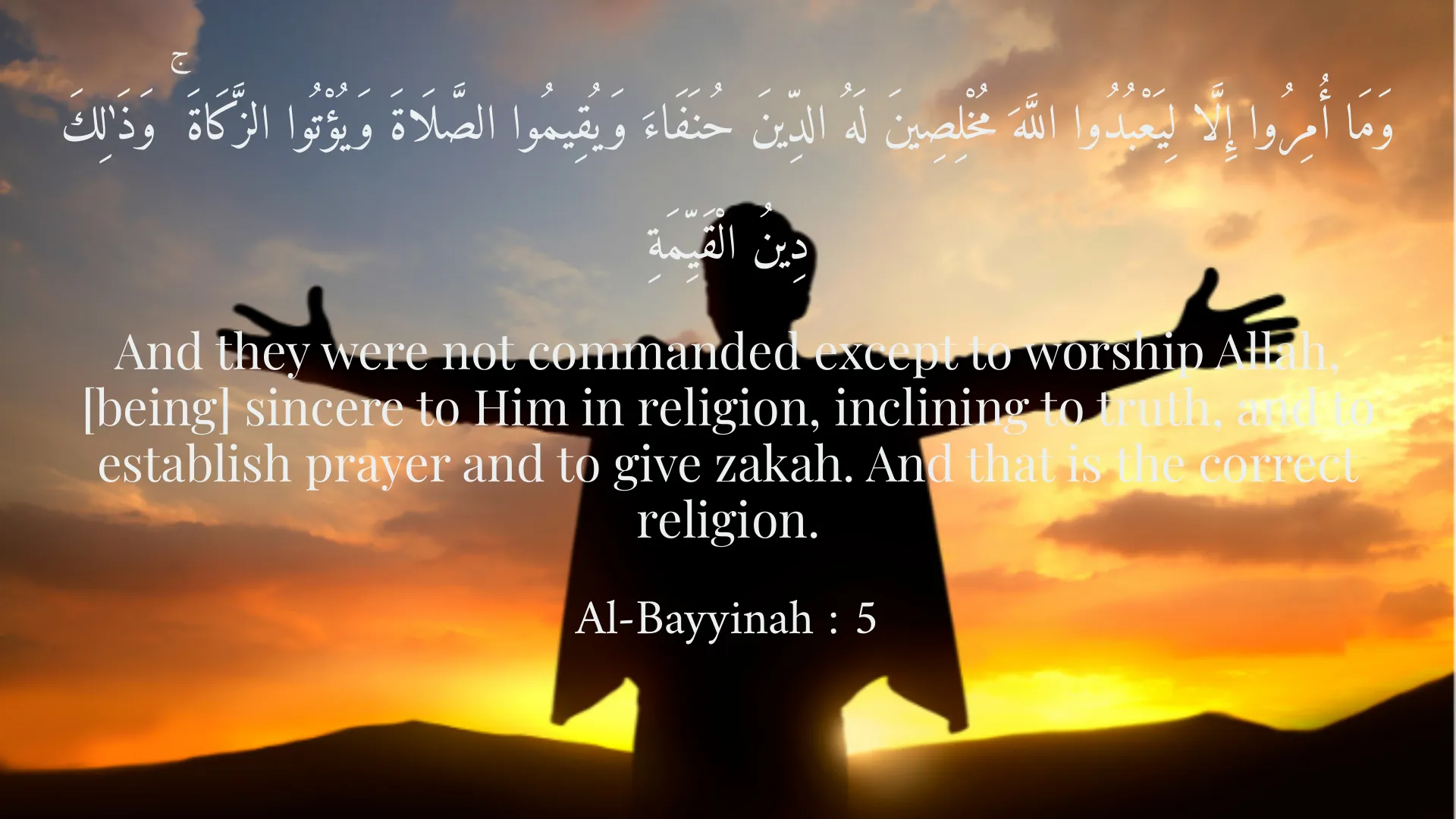
وَمَا أُمِرُوا إِلَّا لِيَعْبُدُوا اللَّهَ مُخْلِصِينَ لَهُ الدِّينَ حُنَفَاءَ وَيُقِيمُوا الصَّلَاةَ وَيُؤْتُوا الزَّكَاةَ ۚ وَذَٰلِكَ دِينُ الْقَيِّمَةِ
And they were not commanded except to worship Allah, [being] sincere to Him in religion, inclining to truth, and to establish prayer and to give zakah. And that is the correct religion.
Al-Bayyinah : 5
اتْلُ مَا أُوحِيَ إِلَيْكَ مِنَ الْكِتَابِ وَأَقِمِ الصَّلَاةَ ۖ إِنَّ الصَّلَاةَ تَنْهَىٰ عَنِ الْفَحْشَاءِ وَالْمُنْكَرِ ۗ وَلَذِكْرُ اللَّهِ أَكْبَرُ ۗ وَاللَّهُ يَعْلَمُ مَا تَصْنَعُونَ
Recite what has been revealed to you of the Book and establish prayer. Indeed, prayer prohibits immorality and wrongdoing, and the remembrance of Allah is greater. And Allah knows that which you do.
Al-Ankabut : 45
قَدْ أَفْلَحَ الْمُؤْمِنُونَ
Certainly will the believers prosper,
Al-Mu'minun : 1
الَّذِينَ هُمْ فِي صَلَاتِهِمْ خَاشِعُونَ
Those who are during their prayer humbly submissive
Al-Mu'minun : 2
Short Story
It is narrated in Saadi's Golestan that a pious and ascetic man spent many years in the corner of a mosque, engaged in worship, and people knew him for his piety and devotion. One day, a person saw him praying, and at the same time, his eyes fell upon the golden patterns of the mosque's carpet, and his heart, instead of remembering God, was busy counting the designs. The pious man noticed the person's gaze and said: "My friend, though my outward appearance is in worship, my heart and soul are sometimes entangled in worldly matters. Prayer and remembrance, if not accompanied by the presence of heart, are merely habits from which nothing but weariness is gained." This sweet story reminds us that the value of worship lies not in the number of prostrations or the repetition of incantations, but in the presence of the heart and the sincerity of intention. Worship that is done out of habit is like a lifeless body, of which only an outer form remains, but worship that springs from the soul quenches the human spirit and connects it to the source of divine light. So let us strive to transform our worship from habit into love and from repetition into reflection, and to feel the presence of the Lord in our hearts every moment.