Quranic Answer
The question, "How do I know if my faith is not false?" is one of the most profound and fundamental inquiries a believer can pose. It signifies a sincere search for inner assurance and truth. The Holy Quran, as a guide, provides clear signs and criteria to distinguish genuine faith from hollow claims and mere pretense. In Islam, faith (Iman) is not merely a verbal declaration; rather, it is a state of the heart that manifests itself in one's actions, conduct, and attitude towards this world and the Hereafter. To understand whether our faith is real or not, we must look within ourselves and examine our lives in light of Quranic teachings. One of the most prominent signs of true faith is the peace and tranquility of heart that comes through the remembrance of Allah. The Quran states in Surah Ar-Ra'd, verse 28: "Those who have believed and whose hearts are assured by the remembrance of Allah. Unquestionably, by the remembrance of Allah hearts are assured." This peace does not stem from material prosperity but from a deep connection with the Creator. A true believer maintains their tranquility even when facing difficulties and hardships, trusting in Allah, and never despairing, for they know that everything that happens is by Allah's permission and will, and there is wisdom in it. This reliance and trust (Tawakkul) are strong indicators of firm faith, enabling an individual to remain steadfast and resilient in the face of life's challenges, knowing that divine wisdom underlies all circumstances. Another sign of sincere faith is its manifestation in righteous deeds. The Quran repeatedly mentions faith alongside good deeds. True faith is never passive; rather, it is a powerful motivator for performing good deeds, helping those in need, establishing justice, and avoiding sins. In Surah Al-Asr, verses 1-3, Allah explicitly states: "By time, Indeed, mankind is in loss, Except for those who have believed and done righteous deeds and advised each other to truth and advised each other to patience." This verse clearly shows that faith is incomplete without righteous actions, and a person of faith constantly strives for individual and societal betterment. Prayer (Salat), fasting (Sawm), charity (Zakat), pilgrimage (Hajj), and other acts of worship are practical expressions of faith that a believer performs with eagerness and diligence, not out of hypocrisy or mere habit. These actions not only bring an individual closer to Allah but also empower them to play a constructive role in society and serve as a positive example for others, demonstrating the practical application of their beliefs. One of the most significant tests of faith is facing adversities and trials. The Quran in Surah Al-Ankabut, verses 2-3, says: "Do people think that they will be left to say, 'We believe' and they will not be tried? But We have certainly tried those before them, and Allah will surely make evident those who are truthful, and He will surely make evident the liars." These verses explicitly state that divine trials are an integral part of the path of faith. True faith reveals itself in the crucible of events and hardships. Do we still trust in Allah and are we content with His decree when faced with poverty, illness, loss of loved ones, or failures? Or do we show ingratitude and disbelief? Steadfastness against temptations, sins, and pressures is another sign of true faith. This patience and perseverance in the face of difficulties not only strengthen faith but also refine it, granting the individual deeper insight and resilience, allowing them to emerge stronger and more grounded in their convictions. False faith is often accompanied by hypocrisy and deceit. A hypocrite is someone who verbally declares faith but does not truly believe in Allah and His teachings in their heart, and whose actions contradict their claims. The Quran strongly condemns hypocrites and enumerates their characteristics. In Surah Al-Baqarah, verses 8-10, we read: "And among the people are some who say, 'We believe in Allah and the Last Day,' but they are not believers. They [think to] deceive Allah and those who have believed, but they deceive not except themselves and perceive [it] not. In their hearts is a disease, so Allah has increased their disease; and for them is a painful punishment because they used to lie." These verses emphasize that true faith must originate from the depths of the heart with complete sincerity. Signs of hypocrisy include inconsistency in speech and action, breaking promises, and lying. This disparity between outward appearance and inner reality distances an individual from the truth and prevents them from attaining the noble status of genuine faith. The growth of faith is also a sign of its truthfulness. Faith, like a tree, needs watering and care to flourish. A true believer constantly seeks to increase their knowledge and insight into the religion. Seeking knowledge, reflecting on the verses of the Quran, contemplating creation, and associating with righteous individuals all help strengthen faith. Furthermore, humility before Allah, gratitude in times of blessing and patience in adversity, and turning to Allah in all circumstances are characteristics of living and dynamic faith. A person of faith strives to learn from life's experiences, repent from their mistakes, and continuously move towards spiritual perfection. This path of growth is a continuous process that never ceases, offering new opportunities each day to deepen one's relationship with Allah and evolve spiritually. To discern true faith, we can ask ourselves several key questions: Am I committed to religious principles in solitude as much as in the presence of others? Does the love of Allah and His Messenger precede the love of worldly attachments? Do I perform my obligatory duties to Allah diligently and avoid prohibitions? When faced with difficulties, do I rely on Allah instead of complaining? Do I treat others with justice and fairness and uphold their rights? Honest answers to these questions can provide insight into the state of our faith and reveal our strengths and weaknesses. This continuous self-assessment is a crucial step in the purification and strengthening of one's faith, fostering spiritual integrity. Ultimately, faith is a journey, not a static destination. There may be moments when faith is stronger and moments when it weakens. The important thing is to constantly strive to strengthen and purify it. Seeking forgiveness (Istighfar), repentance (Tawbah), prayer (Du'a), and asking for guidance from Allah are tools that help us remain steadfast on this path. True faith is the fruit of a deep understanding of Allah, loving Him, and complete submission to His will, which ultimately leads to a life full of meaning, peace, and contentment in this world and the Hereafter. This faith serves as a strong pillar that keeps an individual steady amidst life's storms and guides them towards eternal bliss.
Related Verses
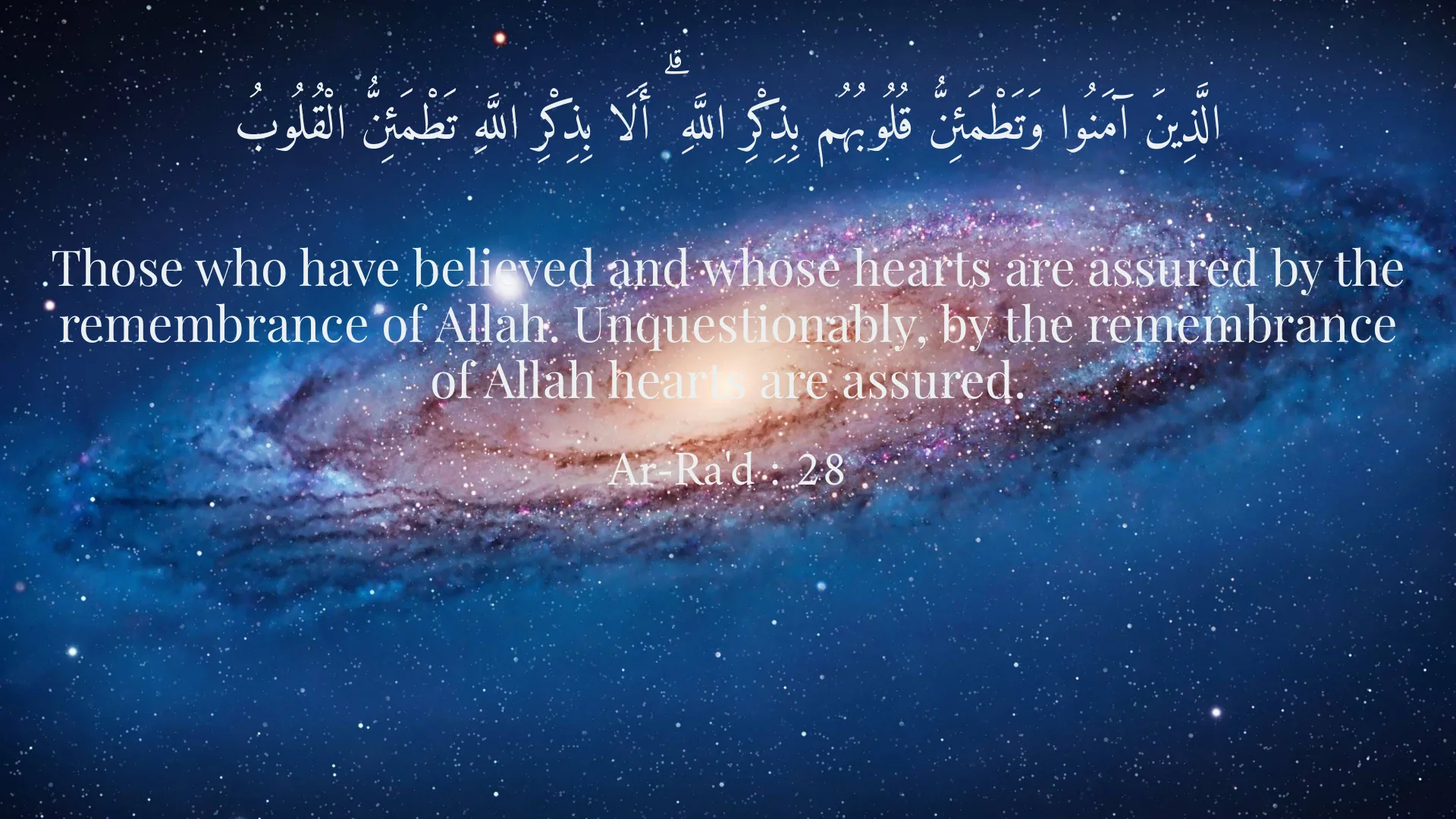
الَّذِينَ آمَنُوا وَتَطْمَئِنُّ قُلُوبُهُم بِذِكْرِ اللَّهِ ۗ أَلَا بِذِكْرِ اللَّهِ تَطْمَئِنُّ الْقُلُوبُ
Those who have believed and whose hearts are assured by the remembrance of Allah. Unquestionably, by the remembrance of Allah hearts are assured.
Ar-Ra'd : 28
أَحَسِبَ النَّاسُ أَن يُتْرَكُوا أَن يَقُولُوا آمَنَّا وَهُمْ لَا يُفْتَنُونَ
Do people think that they will be left to say, 'We believe' and they will not be tried?
Al-Ankabut : 2
وَلَقَدْ فَتَنَّا الَّذِينَ مِن قَبْلِهِمْ ۖ فَلَيَعْلَمَنَّ اللَّهُ الَّذِينَ صَدَقُوا وَلَيَعْلَمَنَّ الْكَاذِبِينَ
But We have certainly tried those before them, and Allah will surely make evident those who are truthful, and He will surely make evident the liars.
Al-Ankabut : 3
وَمِنَ النَّاسِ مَن يَقُولُ آمَنَّا بِاللَّهِ وَبِالْيَوْمِ الْآخِرِ وَمَا هُم بِمُؤْمِنِينَ
And among the people are some who say, 'We believe in Allah and the Last Day,' but they are not believers.
Al-Baqarah : 8
يُخَادِعُونَ اللَّهَ وَالَّذِينَ آمَنُوا وَمَا يَخْدَعُونَ إِلَّا أَنفُسَهُمْ وَمَا يَشْعُرُونَ
They [think to] deceive Allah and those who have believed, but they deceive not except themselves and perceive [it] not.
Al-Baqarah : 9
فِي قُلُوبِهِم مَّرَضٌ فَزَادَهُمُ اللَّهُ مَرَضًا ۖ وَلَهُمْ عَذَابٌ أَلِيمٌ بِمَا كَانُوا يَكْذِبُونَ
In their hearts is a disease, so Allah has increased their disease; and for them is a painful punishment because they used to lie.
Al-Baqarah : 10
Short Story
It is narrated that in a certain land, there lived two dervishes. One was widely known for his fervent prayers, long fasts, and constant remembrance of God. People admired his piety, and he himself often spoke of his deep faith and trust in Allah. The other dervish, however, was quiet, unassuming, and rarely spoke of his spiritual state. He performed his duties diligently, helped the poor discreetly, and faced life's challenges with a calm demeanor, never complaining. One day, a great famine struck the land. Food became scarce, and despair gripped the people. The first dervish, despite his outward piety, grew anxious and began to complain bitterly about his fate. He questioned why God would allow such hardship to befall His servants, and his grand pronouncements of faith turned to murmurs of doubt. The quiet dervish, however, remained steadfast. He shared his meager provisions with others, offered solace to the distressed, and continued his worship with patience and gratitude. He would say, "In prosperity, we thank Allah; in adversity, we trust in His wisdom. True faith is not merely in the tongue during ease, but in the heart during hardship." It was then that the people realized whose faith was truly unwavering. The one who spoke much of faith found it falter in trials, while the one whose faith was embedded in action and patience remained firm. For indeed, the truth of belief is tested not by what one says, but by what one does when faced with the crucible of life.