Quranic Answer
Understanding whether one's repentance (Tawbah) is sincere and heartfelt is a crucial concern for every Muslim striving to purify their soul and return to God. In Islam, repentance is not merely a word or a fleeting emotion; it's a profound spiritual and practical process that necessitates certain signs and requirements, as outlined in the Holy Quran and the Sunnah of the Prophet Muhammad (peace be upon him). Allah (SWT) has repeatedly commanded His servants to repent and has promised His boundless forgiveness and mercy to those who do so. This underscores the immense importance and status of repentance in our faith. The first, and perhaps most vital, step in true repentance is genuine and heartfelt remorse for the sin committed. This regret should not stem solely from fear of punishment or exposure, but rather from the realization of disobedience to divine commands and a yearning for God's pleasure. The Quran, in Surah At-Tahrim, verse 66:8, states: "O you who have believed, repent to Allah with sincere repentance (Tawbah Nasuhā)." The word "Nasuhā" here signifies pure, unadulterated, and without turning back, referring to a repentance in which there is no doubt of returning to the sin. This remorse must be so deep that a person feels shame and sorrow at any recollection of their misdeed. The second sign of true repentance is the immediate cessation of the sin. If one claims repentance yet continues to commit the sin, this repentance is not sincere. Repentance implies a firm resolve to abandon the forbidden act and distance oneself from the environments and factors that lead to sin. For instance, if someone repents from lying, they must immediately stop lying and speak truthfully in all circumstances. This abandonment must be so decisive that the person does not revert to that sin even in private. This strong will to forsake the sin is one of the primary benchmarks for assessing the sincerity of repentance. The third sign, and perhaps the most significant criterion for ensuring the validity of repentance, is a firm and practical decision not to return to the sin in the future. This means that one must commit wholeheartedly to never repeating that sin. Of course, a human being may be weak and fall into sin again, but in such a case, they must immediately repent once more. The crucial point is that at the time of repentance, the individual's intention must be not to return to the sin. Allah states in Surah Al-Furqan, verses 25:70-71: "Except for those who repent, believe and do righteous deeds. For them Allah will change their evil deeds into good deeds. And Allah is ever Forgiving, Merciful. And he who repents and does righteousness does indeed turn to Allah with [accepted] repentance." These verses illustrate that true repentance is accompanied by faith and righteous deeds, leading to the transformation of bad deeds into good ones, which is a great sign of accepted repentance. The fourth sign involves making amends for the rights of others (Huquq al-Nas) and redressing injustices. If the sin committed involved infringing upon the rights of others or oppressing them, genuine repentance includes compensating for that right and seeking forgiveness from the aggrieved party. For example, if one has wrongfully taken someone's property, they must return it; or if they have backbitten, they should seek forgiveness from that person if it doesn't lead to a greater mischief. This aspect of repentance demonstrates the individual's seriousness in purifying the past and reforming human relationships. Until the rights of people are fulfilled, repentance remains incomplete. The fifth sign is an increase in good deeds and a change in life's direction towards divine pleasure. After repenting, the individual should strive to compensate for their past by performing righteous acts, such as prayer, fasting, charity, helping the needy, and upholding good manners. This positive transformation in behavior and lifestyle is a clear indicator of heartfelt repentance. The repenting person no longer thinks about committing sins but is constantly seeking to perform acts that please Allah. The sixth sign is an inner peace and a feeling of closeness to God. When a person performs sincere and genuine repentance, the heavy burden of sin is lifted from their shoulders, and they feel light and at peace. This inner tranquility is a gift from Allah bestowed upon His repenting servants, assuring them that their repentance has been accepted. This feeling of calm and spiritual serenity is an undeniable sign of divine mercy and the acceptance of repentance. Finally, it is crucial to remember that Allah is "At-Tawwab" (the Accepter of Repentance) and "Ar-Rahim" (the Merciful). Whenever a servant turns to Him, He accepts them with mercy. If you observe these signs within yourself, you can be hopeful about the authenticity of your repentance. However, this does not imply arrogance or heedlessness; rather, one must continuously maintain themselves on the path of seeking forgiveness and servitude, and strive to avoid returning to sin. Repentance is a journey, not a final destination; a path that constantly leads humanity towards perfection and divine pleasure. Every slip can be compensated with renewed and sincere repentance, for the door of divine mercy is always open.
Related Verses
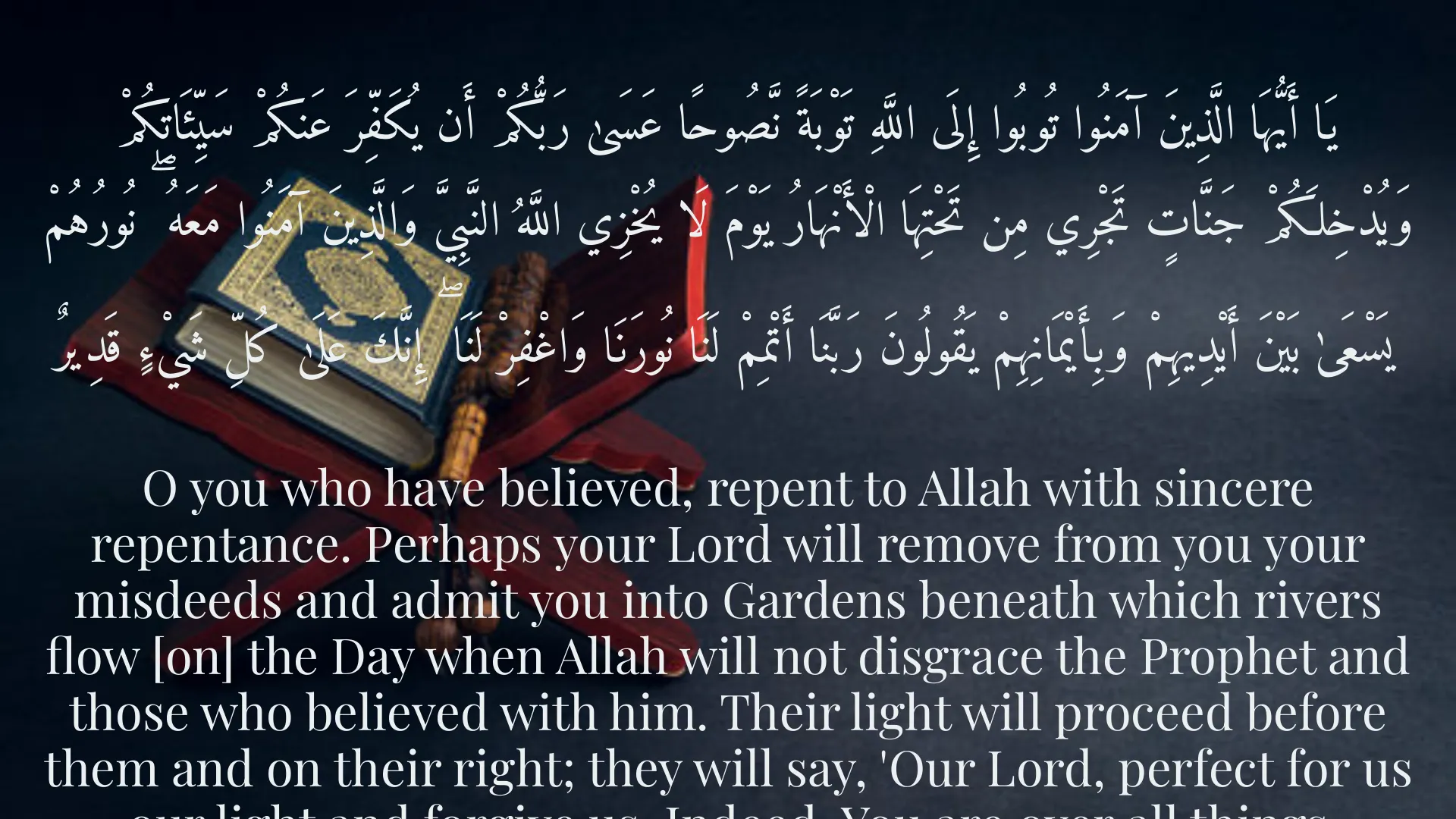
يَا أَيُّهَا الَّذِينَ آمَنُوا تُوبُوا إِلَى اللَّهِ تَوْبَةً نَّصُوحًا عَسَىٰ رَبُّكُمْ أَن يُكَفِّرَ عَنكُمْ سَيِّئَاتِكُمْ وَيُدْخِلَكُمْ جَنَّاتٍ تَجْرِي مِن تَحْتِهَا الْأَنْهَارُ يَوْمَ لَا يُخْزِي اللَّهُ النَّبِيَّ وَالَّذِينَ آمَنُوا مَعَهُ ۖ نُورُهُمْ يَسْعَىٰ بَيْنَ أَيْدِيهِمْ وَبِأَيْمَانِهِمْ يَقُولُونَ رَبَّنَا أَتْمِمْ لَنَا نُورَنَا وَاغْفِرْ لَنَا ۖ إِنَّكَ عَلَىٰ كُلِّ شَيْءٍ قَدِيرٌ
O you who have believed, repent to Allah with sincere repentance. Perhaps your Lord will remove from you your misdeeds and admit you into Gardens beneath which rivers flow [on] the Day when Allah will not disgrace the Prophet and those who believed with him. Their light will proceed before them and on their right; they will say, 'Our Lord, perfect for us our light and forgive us. Indeed, You are over all things competent.'
At-Tahrim : 8
إِلَّا مَن تَابَ وَآمَنَ وَعَمِلَ عَمَلًا صَالِحًا فَأُولَٰئِكَ يُبَدِّلُ اللَّهُ سَيِّئَاتِهِمْ حَسَنَاتٍ ۗ وَكَانَ اللَّهُ غَفُورًا رَّحِيمًا
Except for those who repent, believe and do righteous deeds. For them Allah will change their evil deeds into good deeds. And Allah is ever Forgiving, Merciful.
Al-Furqan : 70
وَمَن تَابَ وَعَمِلَ صَالِحًا فَإِنَّهُ يَتُوبُ إِلَى اللَّهِ مَتَابًا
And he who repents and does righteousness does indeed turn to Allah with [accepted] repentance.
Al-Furqan : 71
Short Story
It is said that in ancient times, there was a merchant who, in his dealings, rarely inclined towards fairness, and by cunning and deceit, he would wrongfully acquire people's wealth. One day, he reflected in his solitude and became remorseful for his unpleasant deeds. His heart trembled, and he sought forgiveness from God. But his repentance was not merely in words. From that day, whenever he sold merchandise, he would reduce his profit to ensure customer satisfaction. And whatever he had unjustly taken, he returned to its rightful owners by any means, even if years had passed. When people witnessed this transformation in him, they knew his repentance was from the depths of his heart, and that God had accepted his repentance, for the sweet scent of honesty and trustworthiness emanated from him. Thus, he became known as the 'Trustworthy of the Age' from being the 'Deceiver of the Market', and his heart filled with peace.