Quranic Answer
Making mistakes is an inherent part of the human condition, an undeniable aspect of our journey through life. Few can claim to have never erred. However, what truly matters is not merely the act of erring, but rather how one confronts these errors and the extent to which one learns from past experiences to avoid repeating them. The Holy Quran, as a guiding light for humanity, offers profound and practical solutions for this very purpose. These solutions not only help individuals prevent falling into the same pitfalls repeatedly but also pave the way for spiritual growth, self-discovery, and a closer relationship with God. One of the most central concepts in the Quran for learning from mistakes is "Tawbah" (repentance). Tawbah is not merely a verbal expression of regret; rather, it is a comprehensive and deep spiritual process that encompasses acknowledging the sin, feeling sincere remorse for what has transpired, making a firm resolve not to return to that mistake in the future, and striving to make amends (if possible). Allah, in numerous verses, invites His servants to repentance and promises forgiveness and mercy. For instance, in Surah An-Nisa, verse 17, Allah states: "Indeed, repentance with Allah is only for those who do wrong out of ignorance and then repent soon after. It is those to whom Allah will turn in forgiveness, and Allah is ever Knowing and Wise." This verse clearly indicates Allah's immense forgiveness and that the door of repentance is always open. True repentance is inherently a learning process; as an individual repents, they realize the depth of their mistake and understand its consequences, which in turn acts as a powerful barrier against its repetition. In addition to Tawbah, "Istighfar" (seeking forgiveness from Allah) plays a crucial role. Continuous Istighfar purifies the human soul from impurities and strengthens the bond with the Creator. When an individual regularly seeks forgiveness from Allah, they acknowledge responsibility for their actions, and this sense of accountability encourages greater caution in their behavior. In Surah Aal-Imran, verse 135, we read: "And those who, when they commit an indecency or wrong themselves, remember Allah and ask forgiveness for their sins — and who can forgive sins except Allah? — and do not persist in what they have done while they know." This verse explicitly states that a characteristic of true servants is that after making a mistake, they not only immediately remember Allah and seek forgiveness but also do not persist in their sin. Non-persistence in sin is precisely the essence of learning from errors and avoiding repetition. "Tadabbur" (reflection and contemplation) on divine verses and historical events is another Quranic method for drawing lessons. The Quran is replete with stories of past nations, prophets, and communities who faced divine punishment due to their actions or achieved salvation through obedience and steadfastness. These stories are not merely historical narratives but lessons for the present and future. In Surah Yusuf, verse 111, Allah says: "There was certainly in their stories a lesson for those of understanding." By pondering these narratives, one can comprehend the reasons for the downfall and degradation of previous societies and avoid behavioral patterns that lead to error. This type of learning encompasses not only individual mistakes but also collective and historical ones. For example, the stories of the people of 'Aad and Thamud, the people of Lut, and Pharaoh all serve as warnings for anyone who treads the path of oppression, arrogance, or corruption. "Taqwa" (God-consciousness or piety) is also a potent factor in preventing the repetition of mistakes. Taqwa signifies self-restraint and abstaining from what Allah has forbidden, rooted in the knowledge and love of God. When a person is aware of Allah's majesty and knows that He is always observant of their actions, they become more cautious in committing errors. Taqwa creates an internal warning system that alerts an individual to the consequences of a mistake before it is committed. In Surah At-Talaq, verses 2-3, it is stated: "And whoever fears Allah – He will make for him a way out and will provide for him from where he does not expect." This verse refers to the blessings of Taqwa, which include ease in affairs and a way out of difficulties, and one of the greatest difficulties is the repetition of mistakes. Furthermore, "Sabr" (patience) and "Istiqamah" (steadfastness) are of immense importance in the process of learning from mistakes and changing behavior. Abandoning undesirable habits and establishing correct behaviors require time and perseverance. An individual might try many times and stumble again, but the Quran encourages Muslims to be steadfast and not despair. Allah is with the patient, and He aids those who persevere in their self-improvement journey (Surah Al-Baqarah: 153). Finally, "Muhasabah an-Nafs" (self-accountability or self-assessment) is a method that can be utilized to identify the root causes of mistakes and prevent their recurrence. Every night, or at regular intervals, an individual can review their actions, identify strengths and weaknesses, and plan for correction. This, combined with "consultation with people of knowledge and wisdom," which is also a Quranic teaching, can guide an individual on the path of self-purification. In summary, learning from mistakes from a Quranic perspective is a multifaceted process that begins with Tawbah and Istighfar, continues with reflection and contemplation on verses and history, and culminates in Taqwa, patience, and self-assessment. This path not only prevents individuals from repeating errors but also grants them deeper insight into themselves and the world, aiding them in their true servitude and spiritual growth. It is crucial not to despair and always remain hopeful of Allah's boundless mercy, for He is the Acceptor of repentance and the Most Merciful, always extending His helping hand to His servants as long as they desire reform and return to Him.
Related Verses
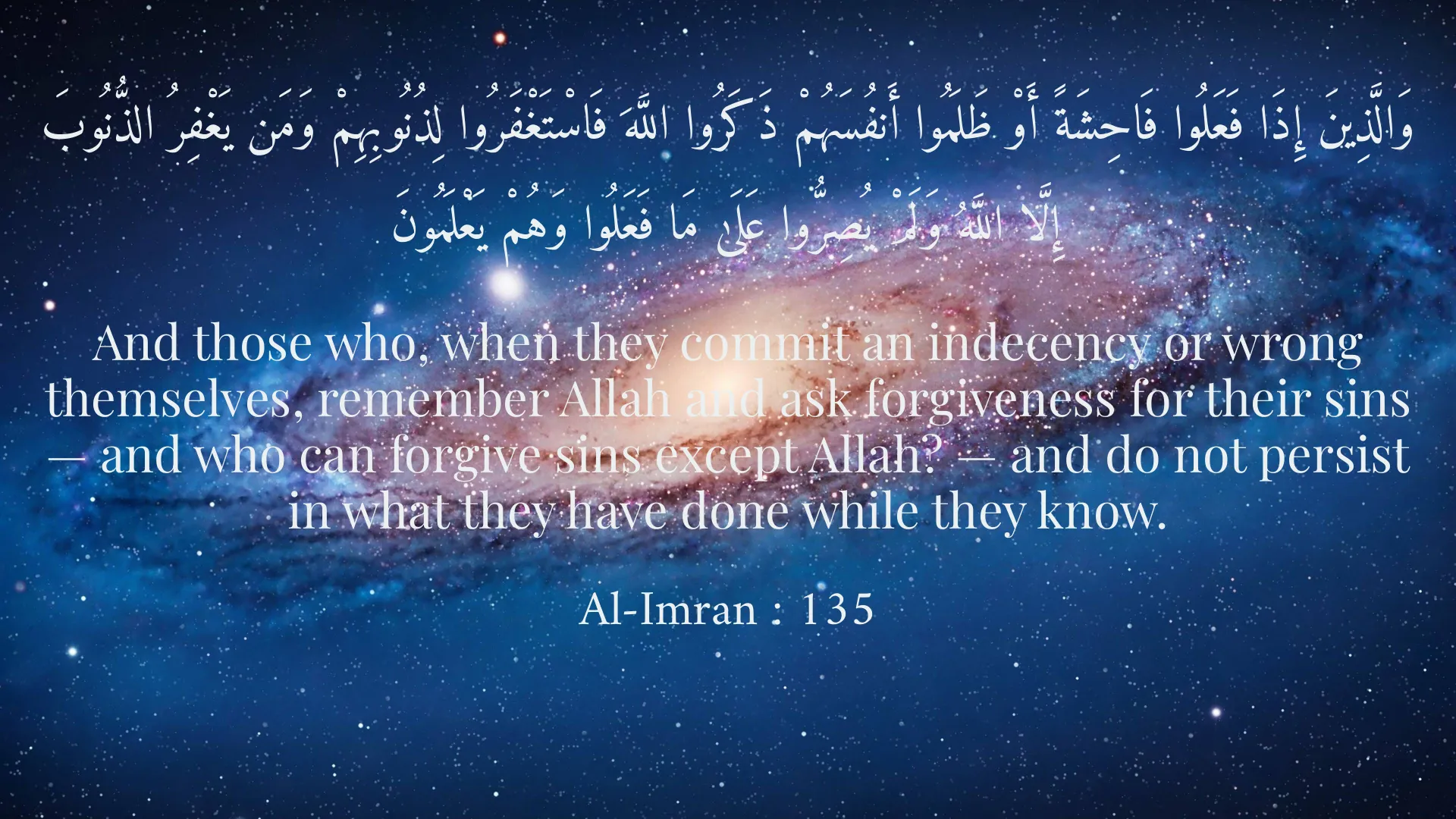
وَالَّذِينَ إِذَا فَعَلُوا فَاحِشَةً أَوْ ظَلَمُوا أَنفُسَهُمْ ذَكَرُوا اللَّهَ فَاسْتَغْفَرُوا لِذُنُوبِهِمْ وَمَن يَغْفِرُ الذُّنُوبَ إِلَّا اللَّهُ وَلَمْ يُصِرُّوا عَلَىٰ مَا فَعَلُوا وَهُمْ يَعْلَمُونَ
And those who, when they commit an indecency or wrong themselves, remember Allah and ask forgiveness for their sins — and who can forgive sins except Allah? — and do not persist in what they have done while they know.
Al-Imran : 135
لَقَدْ كَانَ فِي قَصَصِهِمْ عِبْرَةٌ لِّأُولِي الْأَلْبَابِ ۗ
There was certainly in their stories a lesson for those of understanding.
Yusuf : 111
فَاعْتَبِرُوا يَا أُولِي الْأَبْصَارِ
So take warning, O people of vision!
Al-Hashr : 2
Short Story
It is said that in ancient times, a simple-minded man, whenever he passed by a beehive, would put his hand into it to retrieve honey, oblivious to the fact that the bees would sting him. Each time, he would cry out in pain and vow never to do it again, but the next time he saw the hive, he would be tempted and repeat the same mistake. Nearby, a wise sage was sitting and observing him. One of his disciples asked, "O Master, why does this man keep repeating the same mistake?" The sage smiled and said, "Because he only feels the pain of the sting, but he does not understand the reason for being stung, nor does he learn from his experience. The truly wise person is one who not only learns from their own mistakes but also takes heed from the errors of others, thereby safeguarding themselves from the agony of repetition."