Quranic Answer
Repentance, or turning back to God (Tawbah in Arabic), is one of the most beautiful and hopeful concepts in Islamic teachings and the Holy Quran. Allah Almighty repeatedly emphasizes His boundless mercy and forgiveness in the Quran, calling His servants to repentance and sincere turning to Him. Heartfelt repentance, known in the Quran as 'Tawbah Nasuha' (sincere repentance), means a pure and irreversible return from sin towards obedience and servitude to Allah. This concept is not merely a verbal act; rather, it is a profound and transformative process that encompasses every aspect of a person's being, from their heart and mind to their actions and behavior. To perform sincere and heartfelt repentance, several fundamental pillars, all rooted in Quranic teachings, must be observed, demonstrating the individual's honesty in this return. The first and perhaps most crucial step in Tawbah Nasuha is a feeling of deep regret and genuine remorse for the sin committed. This regret should not be superficial or fleeting; rather, it must arise from the depths of one's being and cause internal anguish. The Holy Quran, in numerous verses, emphasizes the importance of this feeling of remorse, because without it, no real transformation can occur within a person. Genuine regret is the starting point for change and the awakening of conscience. The individual must reflect on how they have wronged themselves and others (if the sin involved human rights) by disobeying divine commands. This remorse should be so profound that it feels as if one's heart is broken and aching from the sin committed. The second step is the immediate cessation of the sin. Heartfelt repentance means completely abandoning the action that was divinely prohibited. A person who claims to repent but continues to commit the same sin, or is ready to commit it again, does not have sincere repentance. This abandonment must be decisive and without any delay. The Quran requires us that when we return to the path of truth, this return must be firm. For example, if a person repents from backbiting, they must immediately stop backbiting and not return to it. This abandonment of sin is a practical sign of regret and the individual's determination to change. The third pillar is a strong and firm resolve not to return to the sin in the future. This resolve must be so strong that the individual is able to resist temptation even if the circumstances for committing the sin arise. This stage requires strengthening one's will and adhering to moral and religious principles. The Quran repeatedly calls on humanity to be patient and steadfast on the path of truth, and this steadfastness is manifested in the resolve not to return to sin. This is a covenant and promise with Allah that we will not repeat that mistake. The fourth and very important step is to rectify the rights of others (if applicable). If the sin committed infringed upon the rights of others – whether financial, reputational, or physical – repentance to Allah without compensating those rights is incomplete. Allah Almighty considers the rights of people (Huquq al-Nas) very important and makes their forgiveness conditional on the satisfaction of the right-holders. This includes returning stolen property, seeking forgiveness from those who were backbitten, and compensating for damages caused. This action demonstrates responsibility and seriousness in the individual's complete return to the path of righteousness, and the Quran's emphasis on this matter is very strong. Without this restitution, the burden of the sin will remain on the individual. The fifth pillar is seeking forgiveness and pardon from Allah Almighty. After feeling remorse, abandoning sin, and resolving not to return to it, it is time to ask for Allah's forgiveness and pardon. This seeking of forgiveness must be done with humility and submission, acknowledging the sin and one's weakness in the face of temptations. The Holy Quran states that Allah is the Accepter of Repentance and the Most Merciful, and He loves those who turn back to Him. This supplication for forgiveness is a direct and heartfelt connection with Allah, showing trust in His mercy and grace. Praising and remembering Allah (Dhikr), and praying for forgiveness are among the best ways to seek His pardon. "Our Lord, we have wronged ourselves, and if You do not forgive us and have mercy upon us, we will surely be among the losers" (Al-A'raf: 23). The sixth aspect of Tawbah Nasuha is a practical change in behavior and a tendency to perform good deeds. The Holy Quran emphasizes that performing good deeds after committing sins can erase their negative effects and lead to greater closeness to Allah. This means filling the void created by sin with righteous actions. Prayer, charity, helping the needy, reciting the Quran, and any good deed that brings Allah's pleasure can be part of this process. This change in approach not only helps in purifying sins but also leads to spiritual growth and strengthening one's faith. True repentance is not merely abandoning evil, but turning towards absolute good. The repentant person should also strive to guide their living environment towards purity. In summary, heartfelt repentance is a comprehensive and complete commitment to change. This commitment includes inner remorse, decisive abandonment of sin, firm resolve not to repeat it, restitution of violated rights, sincere supplication for forgiveness, and turning towards righteous deeds. Allah Almighty awaits the return of His servants with open arms and has promised forgiveness and mercy to sincere repenters. This path is a way to find inner peace and attain closeness to Allah, living under the light of His satisfaction. The Quran teaches us that whenever we deviate from the path, we still have the opportunity to return and reform, and this itself is a sign of Allah's infinite mercy and love. Tawbah Nasuha not only purifies past sins but also paves the way for a brighter future and a life full of meaning and purpose. Therefore, repentance is not an end point, but the beginning of a new journey, full of hope and blessings.
Related Verses
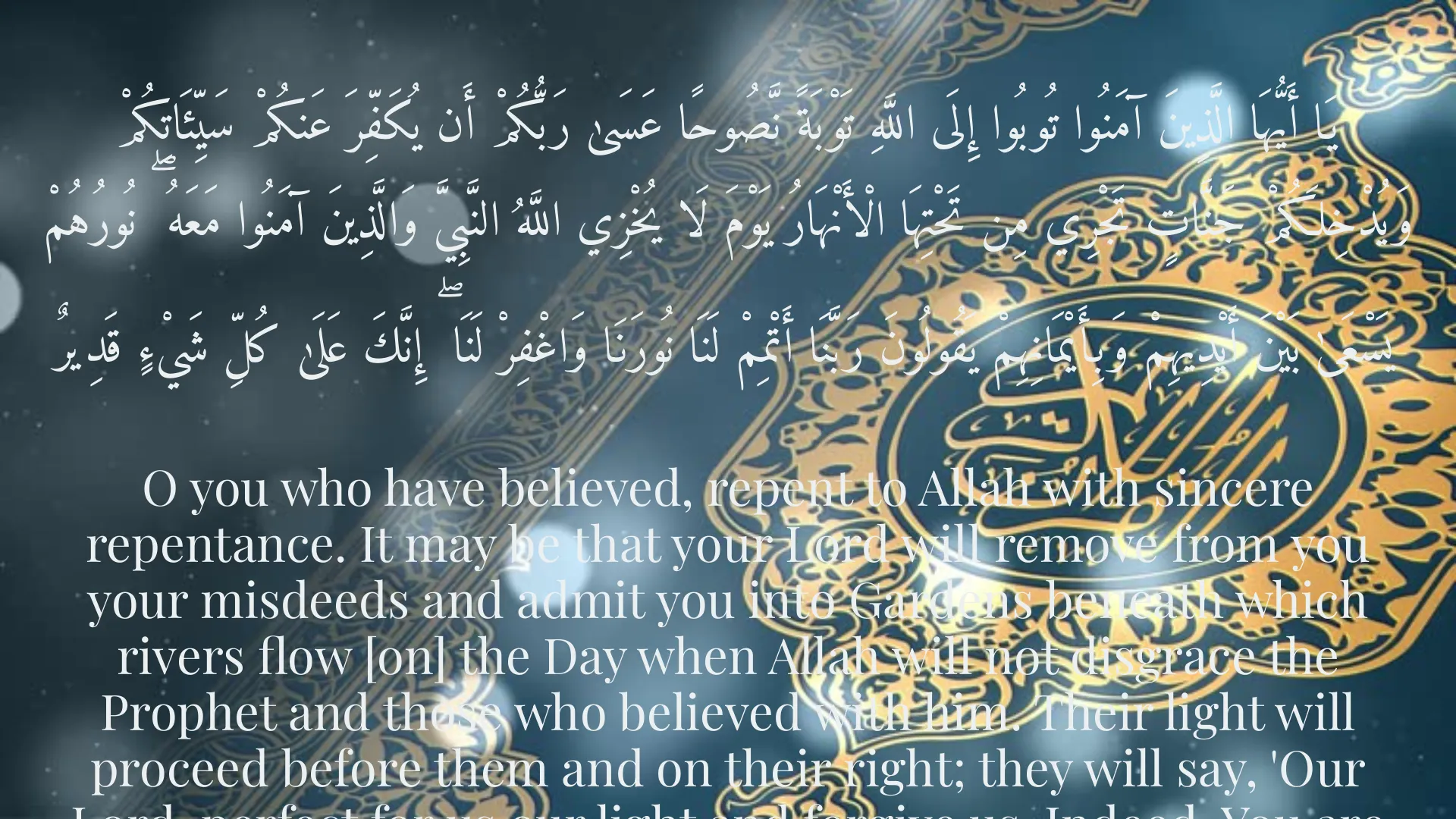
يَا أَيُّهَا الَّذِينَ آمَنُوا تُوبُوا إِلَى اللَّهِ تَوْبَةً نَّصُوحًا عَسَىٰ رَبُّكُمْ أَن يُكَفِّرَ عَنكُمْ سَيِّئَاتِكُمْ وَيُدْخِلَكُمْ جَنَّاتٍ تَجْرِي مِن تَحْتِهَا الْأَنْهَارُ يَوْمَ لَا يُخْزِي اللَّهُ النَّبِيَّ وَالَّذِينَ آمَنُوا مَعَهُ ۖ نُورُهُمْ يَسْعَىٰ بَيْنَ أَيْدِيهِمْ وَبِأَيْمَانِهِمْ يَقُولُونَ رَبَّنَا أَتْمِمْ لَنَا نُورَنَا وَاغْفِرْ لَنَا ۖ إِنَّكَ عَلَىٰ كُلِّ شَيْءٍ قَدِيرٌ
O you who have believed, repent to Allah with sincere repentance. It may be that your Lord will remove from you your misdeeds and admit you into Gardens beneath which rivers flow [on] the Day when Allah will not disgrace the Prophet and those who believed with him. Their light will proceed before them and on their right; they will say, 'Our Lord, perfect for us our light and forgive us. Indeed, You are over all things competent.'
At-Tahrim : 8
إِنَّمَا التَّوْبَةُ عَلَى اللَّهِ لِلَّذِينَ يَعْمَلُونَ السُّوءَ بِجَهَالَةٍ ثُمَّ يَتُوبُونَ مِن قَرِيبٍ فَأُولَٰئِكَ يَتُوبُ اللَّهُ عَلَيْهِمْ ۗ وَكَانَ اللَّهُ عَلِيمًا حَكِيمًا
The acceptance of repentance by Allah is only for those who do wrong in ignorance [or carelessness] and then repent soon after. It is those to whom Allah will turn in forgiveness, and Allah is ever Knowing and Wise.
An-Nisa : 17
وَأَنِ اسْتَغْفِرُوا رَبَّكُمْ ثُمَّ تُوبُوا إِلَيْهِ يُمَتِّعْكُم مَّتَاعًا حَسَنًا إِلَىٰ أَجَلٍ مُّسَمًّى وَيُؤْتِ كُلَّ ذِي فَضْلٍ فَضْلَهُ ۖ وَإِن تَوَلَّوْا فَإِنِّي أَخَافُ عَلَيْكُمْ عَذَابَ يَوْمٍ كَبِيرٍ
And [saying], "Seek forgiveness of your Lord and then repent to Him, [and] He will let you enjoy a good provision for a specified term and give every possessor of grace his due grace. But if you turn away, then indeed, I fear for you the punishment of a great Day."
Hud : 3
Short Story
In Saadi's Gulistan, it is recounted that a powerful king one day became deeply remorseful for his past deeds, which were filled with pride and injustice. He spent sleepless nights tormented by regret over his sins. A voice within his heart whispered: 'O King, true power lies in conquering hearts, not lands!' So, the king decided to repent wholeheartedly. He commanded that the rights of everyone he had wronged unjustly be restored, and he sought forgiveness from anyone he had harmed. He abandoned his royal throne and spent some time in seclusion, in worship and remembrance of God. The people were astonished by this transformation, seeing that the king, who was once a symbol of might, had now become an example of humility and justice. Through this sincere repentance, he found an inner peace that no kingdom had ever given him, and his good name lived on in hearts forever.