Quranic Answer
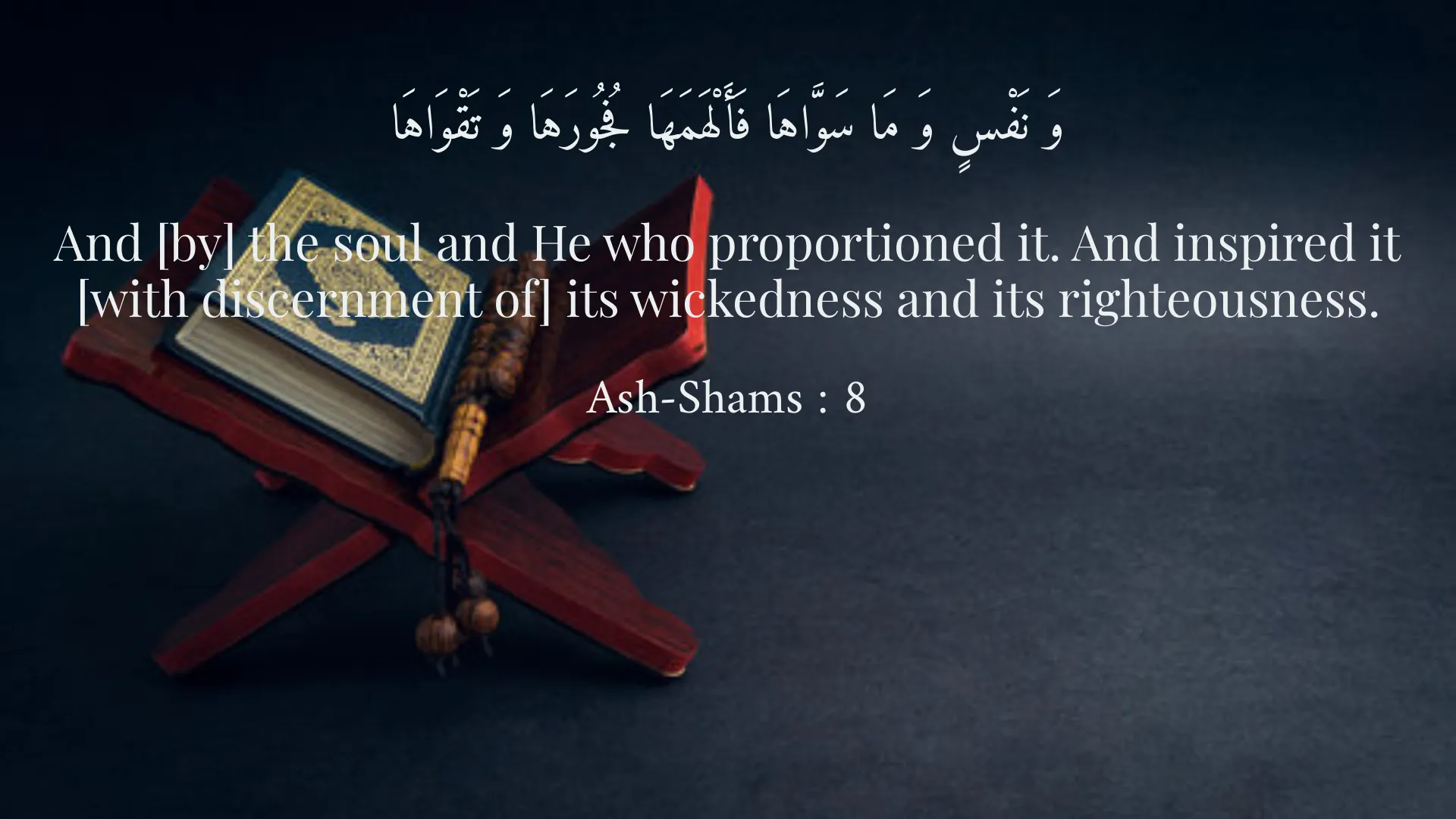
Self-awareness and God-consciousness are two intertwined concepts deeply emphasized in the Islamic faith and particularly in the Holy Quran. Understanding the significance of these concepts leads individuals on a transformative journey of self-discovery and spiritual growth. When individuals achieve self-awareness, they not only develop a better understanding of themselves but also gain insight into their beliefs, emotions, and life goals. The Quran highlights this journey of self-awareness and its connection to understanding God through various verses that encourage reflection and contemplation. In Surah Ash-Shams, verse 8, it is mentioned, 'And [by] the soul and He who proportioned it. And inspired it [with discernment of] its wickedness and its righteousness.' This poignant verse serves as a reminder that understanding oneself is a pivotal step in grasping the divine reality of God. The insightful words of this verse imply significant truths about the human condition and our innate abilities to discern between right and wrong. In essence, it indicates that the self is inherently endowed with an understanding of righteousness and wickedness, which is foundational for moral development. The process of gaining self-awareness involves a deep introspection into one’s motives, thoughts, and feelings, thus allowing individuals to recognize and confront their moral and ethical dilemmas. Without this self-reflection, individuals may find themselves straying from their true path and losing sight of their ultimate purpose: to seek a meaningful relationship with Allah. When one recognizes themselves, they simultaneously acknowledge their weaknesses and vulnerabilities, which brings forth a realization of their need for guidance and mercy from Allah. Conversely, understanding God fosters spiritual and moral development. It assists individuals in realizing their place in the grand design of existence and encourages devotion and submission to the divine will. In Surah Al-Baqarah, verse 164, it states: 'Indeed, in the creation of the heavens and the earth and the alternation of the night and the day are signs for those of understanding.' This verse emphasizes the importance of contemplating the signs of God's creation in order to grasp the essence of God's supremacy and wisdom. Reflecting on nature, the cosmos, and the variations in our surroundings cultivates a profound sense of appreciation for the Creator. Moreover, the process of self-awareness serves as a pathway to God-consciousness. To become truly conscious of God (Taqwa), individuals must embark on a journey of self-discovery. This journey encompasses the exploration of one's inner thoughts and feelings, leading to personal growth, transparency, and integrity. Taqwa invites individuals to act with righteousness, guided by a profound understanding of God’s attributes, His mercy, and His justice. It inspires individuals to align their personal ambitions with their spiritual goals, ultimately leading to a harmonious existence. The interplay between self-awareness and God-consciousness can further be illustrated through countless examples in the Quran and the lives of the Prophets. Prophets such as Moses, Jesus, and Muhammad (peace be upon them all) demonstrated profound self-awareness, leading to their conscious relationship with God. Their stories embody the journey of self-discovery that culminates in unwavering faith and reliance on the divine. Each Prophet faced trials that required them to scrutinize their beliefs and affirm their trust in Allah, ultimately leading to a deeper understanding of divine purposes and the importance of adhering to divine guidance. Furthermore, numerous narrations and hadith of the Prophet Muhammad (peace be upon him) discuss the significance of ‘knowing oneself’ as an essential aspect of faith. For example, the Prophet stated, 'He who knows himself knows his Lord.' This saying reiterates the necessity of self-awareness as a precursor to recognizing and serving God. Individuals who lack insight into their own character and fail to reflect upon their actions are less likely to perceive God's signs and fulfill their purpose as His servants. In a modern context, achieving self-awareness may become even more challenging due to the distractions posed by technology and the fast pace of life. Nonetheless, self-reflection remains crucial and can be nurtured through practices such as prayer, meditation, and contemplation of natural phenomena—all of which are encouraged within Islamic teachings. By dedicating time to engage in these practices, individuals nurture both their self-awareness and their relationship with God. In today's world, where existential questions and doubts arise frequently due to societal pressures, individuals must strive towards this essence of self-awareness and God-consciousness simultaneously. Engaging with the Holy Quran regularly fosters an environment where individuals can continuously reflect on their life’s purpose and connect it back to their spiritual journey. The divine verses act as a guiding torch, illuminating the path amidst the darkness of confusion and doubt. Ultimately, cultivating both self-awareness and God-consciousness leads to a more profound understanding of the Creator and one’s role in this world. This intertwined relationship encourages personal growth and accountability towards our actions, while fostering a deep sense of gratitude and humility in the face of divine mercy. In conclusion, the rich interplay between self-awareness and God-consciousness, as highlighted by the Quran, emphasizes the importance of understanding oneself as a foundation for understanding God. As we embark on this lifelong journey of self-exploration and spiritual awakening, let us embrace reflection and responsibility as integral aspects of our lives. Through this dual pursuit, we can hope to establish a deeper relationship with Allah, ultimately cultivating a life aligned with His divine purpose.
Related Verses
وَ نَفْسٍ وَ مَا سَوَّاهَا فَأَلْهَمَهَا فُجُورَهَا وَ تَقْوَاهَا
And [by] the soul and He who proportioned it. And inspired it [with discernment of] its wickedness and its righteousness.
Ash-Shams : 8
إِنَّ فِي خَلْقِ السَّمَاوَاتِ وَ الْأَرْضِ وَ اخْتِلَافِ اللَّيْلِ وَ النَّهَارِ لَآيَاتٍ لِأُولِي الْأَلْبَابِ.
Indeed, in the creation of the heavens and the earth and the alternation of the night and the day are signs for those of understanding.
Al-Baqarah : 164
Short Story
Once upon a time, a young man named Sohrab lived in a city. He was deeply seeking to understand himself as well as God. He would often sit beneath the starry sky, wishing to know where this beauty came from. One day, he met a wise elder in the mountains and asked him, 'How can I know God?' The elder replied, 'First know yourself, for the knowledge of God is hidden in understanding yourself.' After this conversation, Sohrab began to reflect on his life and his emotions, and with this newfound self-awareness, he was able to achieve a deeper understanding of God.