Quranic Answer
Feeling distant from divine mercy, or believing that our sins are too great for forgiveness, is a deeply human and sometimes painful experience. However, the Holy Quran, the word of God, repeatedly emphasizes that Allah’s mercy is boundless and encompasses everything, and no sin is so vast that it can prevent a servant’s return to Him. To reconcile oneself with God's mercy, there are key steps rooted in Quranic teachings that bring peace and assurance to the human heart. The first and most crucial step is to deeply understand and believe in the vastness of divine mercy. Allah Almighty introduces Himself in the Quran with the attributes of "Ar-Rahman" (The Most Gracious) and "Ar-Rahim" (The Most Merciful), attributes stemming from His expansive and specific mercy. In Surah Al-A'raf, verse 156, He states: "...and My mercy encompasses all things..." This verse alone is sufficient to dispel any despair from the hearts. Knowing that divine mercy precedes His wrath and that every being in existence benefits from it is the initial step in opening one’s heart to this immense mercy. We must believe that Allah not only does not despair of sinners but actively invites them to return and welcomes those who repent. The second step is sincere repentance (Tawbah) and returning to Allah. Tawbah is not merely uttering "Astaghfirullah" (I seek forgiveness from Allah); rather, it is a profound and transformative process that involves three main components: 1. Genuine regret and remorse for the sin committed, regretting what has passed and been lost. 2. Immediately abandoning the sin and cutting ties with its causes. If the sin involves the rights of others (Huquq al-Ibad), restitution must be made and their rights fulfilled. 3. A firm resolve not to return to that sin in the future. This resolve must come from the heart, even if one might stumble again later; what matters is the sincere intention at the moment of repentance. Allah says in Surah Az-Zumar, verse 53: "Say, 'O My servants who have transgressed against themselves [by sinning], do not despair of the mercy of Allah. Indeed, Allah forgives all sins. Indeed, it is He who is the Forgiving, the Merciful.'" This verse is a beacon of hope for every person who regrets their past and wishes to embark on a new path. The third step is to avoid despair and strengthen hope in divine forgiveness. Satan constantly tries to make humans despair of Allah’s mercy, whispering that their sins are unforgivable. However, despairing of Allah’s mercy is itself a grave sin and indicates a lack of proper understanding of Allah's greatness and compassion. The Quran states in Surah Yusuf, verse 87: "...and do not despair of the mercy of Allah. Indeed, no one despairs of relief from Allah except the disbelieving people." This verse emphasizes that hope in Allah’s relief and mercy is a sign of faith. The fourth step is performing good deeds and acts of charity. The Holy Quran repeatedly stresses that good deeds erase bad ones. In Surah Hud, verse 114, it is mentioned: "And establish prayer at the two ends of the day and at the approach of the night. Indeed, good deeds do away with evil deeds. That is a reminder for those who remember." This means that by performing good deeds such as prayer, charity, helping the needy, having good character, and any action that brings Allah’s pleasure, one can compensate for past transgressions and draw closer to divine mercy. These actions not only wipe away sins but also purify the human soul and heart, elevating them to higher ranks of proximity to Allah. The fifth step is continuous seeking of forgiveness (Istighfar) and remembrance (Dhikr) of Allah. Asking for Allah's forgiveness by saying "Astaghfirullah" or through other supplications is a direct path to attracting His mercy. Even if one has not committed a specific sin, Istighfar is a form of humility and an acknowledgment of one's need for Allah’s bounty, opening doors to many blessings. Remembering Allah’s names, especially "Ar-Rahman," "Ar-Rahim," "Al-Ghafur" (The Forgiving), and "At-Tawwab" (The Acceptor of Repentance), and reflecting on their meanings, helps one gain a deeper understanding of Allah’s mercy and compassion, establishing a stronger spiritual connection with Him. These remembrances are like pure water, washing away the dust of despair and sin from the heart’s mirror. The sixth step is reflection and contemplation of the Quranic verses. The Quran is full of verses that speak of Allah’s mercy, forgiveness, and acceptance of repentance. Studying these verses with contemplation can assure the heart that returning to Allah is always possible, and He never turns away any servant from His door. Reading stories of prophets, such as Prophet Yunus (peace be upon him) who was saved from darkness through repentance and remembrance, or the story of Prophet Adam (peace be upon him) who repented after his lapse and was accepted, provides great lessons about the endless divine mercy. Ultimately, reconciling with God's mercy is a spiritual journey that requires sincerity, steadfastness, and complete trust in divine promises. Allah loves a repentant sinner more than the sinner loves themselves. He awaits the return of His servants and rejoices in their repentance. So, never despair of His mercy, and return to Him with a broken yet hopeful heart, for the doors of His mercy are always open to you. This journey will not only bring you peace but also lead you to a deeper understanding of the benevolent essence of Allah, helping you live a more meaningful and fruitful life. Know that Allah is always forgiving and merciful and awaits your return every moment. He not only forgives you but also transforms your bad deeds into good ones, as stated in Surah Al-Furqan, verse 70: "Except for those who repent, believe, and do righteous deeds; for them Allah will change their evil deeds into good ones. And Allah is ever Forgiving, Most Merciful." This is the pinnacle of mercy and forgiveness: not only forgiving but transforming into good. This itself is the greatest reason to reconcile with His boundless mercy.
Related Verses
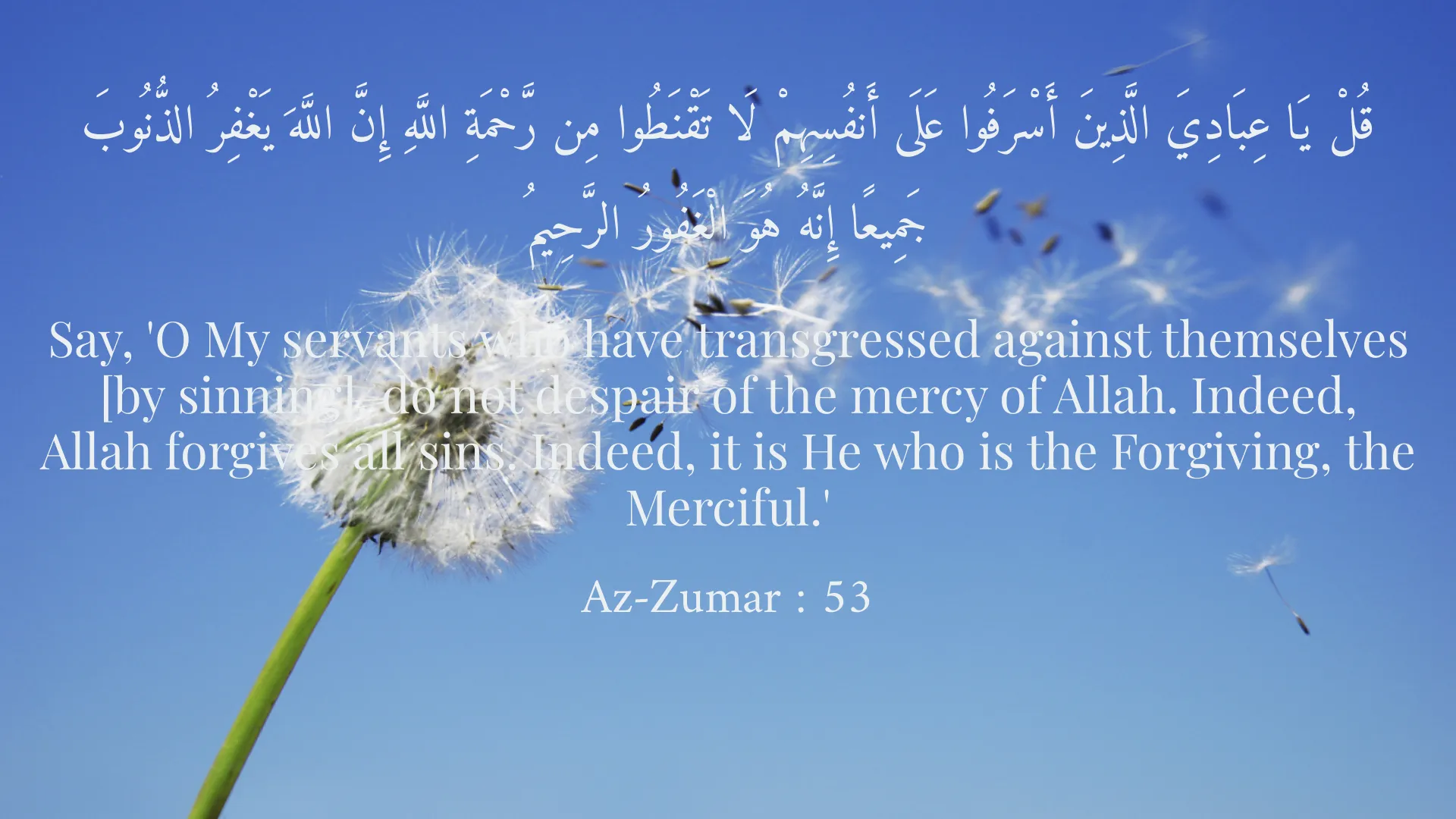
قُلْ يَا عِبَادِيَ الَّذِينَ أَسْرَفُوا عَلَى أَنفُسِهِمْ لَا تَقْنَطُوا مِن رَّحْمَةِ اللَّهِ إِنَّ اللَّهَ يَغْفِرُ الذُّنُوبَ جَمِيعًا إِنَّهُ هُوَ الْغَفُورُ الرَّحِيمُ
Say, 'O My servants who have transgressed against themselves [by sinning], do not despair of the mercy of Allah. Indeed, Allah forgives all sins. Indeed, it is He who is the Forgiving, the Merciful.'
Az-Zumar : 53
وَالَّذِينَ إِذَا فَعَلُوا فَاحِشَةً أَوْ ظَلَمُوا أَنفُسَهُمْ ذَكَرُوا اللَّهَ فَاسْتَغْفَرُوا لِذُنُوبِهِمْ وَمَن يَغْفِرُ الذُّنُوبَ إِلَّا اللَّهُ وَلَمْ يُصِرُّوا عَلَى مَا فَعَلُوا وَهُمْ يَعْلَمُونَ
And those who, when they commit an indecency or wrong themselves, remember Allah and ask forgiveness for their sins — and who can forgive sins except Allah? — and do not persist in what they have done while they know.
Al-Imran : 135
إِلَّا مَن تَابَ وَآمَنَ وَعَمِلَ عَمَلًا صَالِحًا فَأُولَئِكَ يُبَدِّلُ اللَّهُ سَيِّئَاتِهِمْ حَسَنَاتٍ وَكَانَ اللَّهُ غَفُورًا رَّحِيمًا
Except for those who repent, believe, and do righteous deeds; for them Allah will change their evil deeds into good ones. And Allah is ever Forgiving, Most Merciful.
Al-Furqan : 70
Short Story
It is narrated that in ancient times, there was a man who, in his youth, had committed many misdeeds and was deeply remorseful. He felt so engulfed by sin that his hope in divine mercy had dwindled. One day, he passed by a virtuous scholar. With great sorrow, he recounted his state, saying, "O wise one, I have sinned so much that it seems God's mercy will no longer embrace me." The scholar smiled and asked, "Young man, would the ocean's water diminish if a dog were to lap at it?" The man, astonished, replied, "No, never." The scholar continued, "Then how can the boundless mercy of God be diminished by the limited sins of an imperfect servant? God Himself has said that He accepts repentance and loves His servants to return to Him. Entrust your heart to the vastness of His ocean of mercy, and with genuine remorse, turn back. You will see that the ocean of divine mercy will embrace you, and your lost peace will return." Upon hearing these words, the man felt a new life within him, repented sincerely, and spent the rest of his life with hope and good deeds, tasting the sweet flavor of divine mercy.