Quranic Answer
Patience is often considered a virtue in many cultures and religions; however, its significance is particularly profound in the context of the Holy Quran. The Quran, which serves as a guide for Muslim believers, underscores patience as one of the most vital and beautiful human qualities that one can possess. The importance of patience is not just limited to mere endurance, but it extends to a deeper understanding of reliance on God and embracing faith during challenging times. This article will explore the concept of patience as highlighted in several verses of the Quran, emphasizing its connection with prayer, resilience, and unwavering faith. In Surah Al-Baqarah, verse 153, Allah addresses the believers, saying, 'O you who have believed, seek help through patience and prayer. Indeed, Allah is with the patient.' This profound verse serves as a reminder that when life presents us with trials and tribulations, we are encouraged to lean on both patience and prayer as fundamental tools. These two practices not only strengthen our faith but also nurture a sense of hope and stability within our hearts. The connection of prayer to patience in this verse implies that seeking help from God through communication and supplication allows us to cultivate a tranquil spirit amidst turmoil. Moreover, the Quran recognizes the emotional toll that difficulties may impose on individuals. Surah Al-Imran, verse 139 states, 'And do not weaken and do not grieve, and you will be superior if you are [true] believers.' This reassurance compels us to understand that despair should never overshadow our faith. Instead, as believers, we are urged to adopt a resilient mindset, remaining hopeful regardless of the obstacles we face. The encouragement to avoid grief serves as a powerful motivator, reminding us that our faith positions us in a superior state of existence. Thus, the verses in the Quran create a framework where patience and hope coexist, guiding believers toward a journey of mental balance. Patience, as articulated in the Quran, stretches beyond mere waiting; it signifies an active engagement in the face of adversity. A key strategy emphasized in the Quran is the invocation of God in prayer, seen as a means of developing the patience necessary to navigate life's challenges. Surah Ghafir, verse 55 reinforces this sentiment: 'So be patient. Indeed, the promise of Allah is truth. And whether we show you some of what We promise them, or We take you in death, to Us is their return.' In this verse, believers are reassured of the truthfulness of God's promises, urging them to be patient while awaiting the fulfillment of divine assurance. This concept of patience rooted in divine promise is significant as it points toward hope for better days ahead. Patience, therefore, is not a passive waiting; it is an active expectation of divine intervention that fuels our hearts even during the most trying periods. In essence, the Quran provides unparalleled insight into the indispensable quality of patience. Beyond simply suggesting endurance, it intertwines patience with spirituality, emphasizing that being patient equates to being closer to God. Furthermore, the act of prayer acts as a channel through which believers connect with Allah, transforming their trials into opportunities for spiritual growth. Thus, individuals are encouraged to view challenges not as divine punishments or tests of their worth, but as opportunities for self-reflection, character development, and deeper connectivity with their faith. In today's fast-paced world, the essence of patience can often be overshadowed by a culture that promotes immediate gratification and quick fixes. However, the teachings of the Quran insist that true contentment arises from waiting and trusting in the divine timing of God. It challenges the notion of impatience, highlighting that the troubles we face are often necessary for our overall growth and development. Furthermore, patience serves as a lesson in humility. In moments of difficulty, turning to God allows individuals to recognize their limitations and dependence on a higher power. This realization is crucial, particularly when facing problems that feel insurmountable. By acknowledging our human frailty and surrendering to divine will, we become receptive to the lessons that adversity has to offer. In conclusion, patience is woven deeply into the fabric of Islamic belief as portrayed through the Holy Quran. It is an essential quality that empowers believers to navigate the realities of life with grace and strength. The verses discussed remind us of the interdependent relationship between patience, prayer, and faith, illustrating how each aspect enriches the other. By embracing patience, we not only enhance our spiritual journey but also foster inner peace and mental equilibrium in an increasingly chaotic world. As we strive to embody this quality, let us remember that, ultimately, it is through patience and prayer that we find solace in God’s everlasting presence, transcending the struggles we encounter on our path.
Related Verses
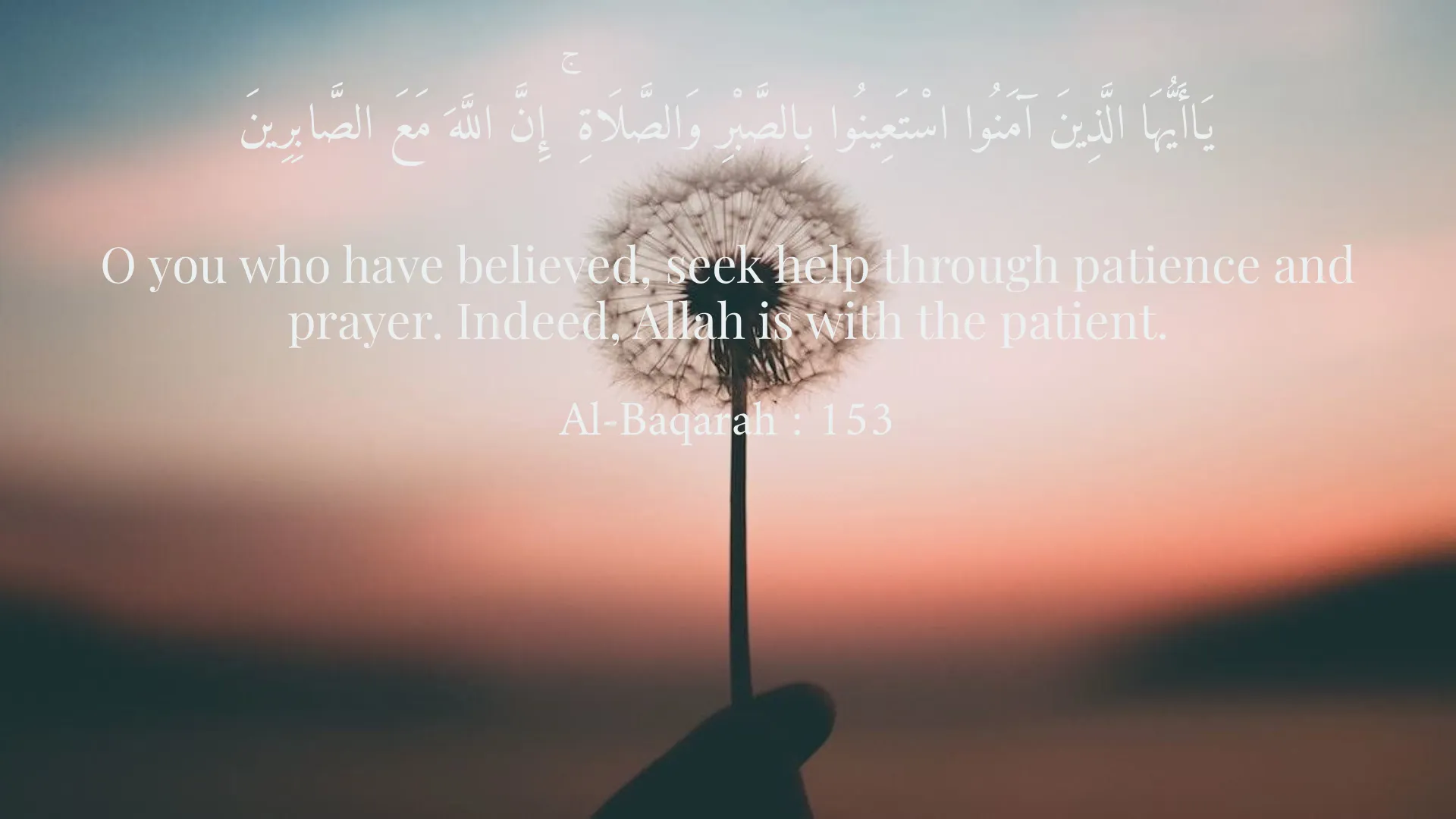
يَاأَيُّهَا الَّذِينَ آمَنُوا اسْتَعِينُوا بِالصَّبْرِ وَالصَّلَاةِ ۚ إِنَّ اللَّهَ مَعَ الصَّابِرِينَ
O you who have believed, seek help through patience and prayer. Indeed, Allah is with the patient.
Al-Baqarah : 153
وَلا تَهِنُوا وَلَا تَحْزَنْوا وَأَنتُمُ الْأَعْلَوْنَ إِن كُنتُم مُّؤْمِنِينَ
And do not weaken and do not grieve, and you will be superior if you are [true] believers.
Al-Imran : 139
فَاصْبِرْ إِنَّ وَعْدَ اللَّهِ حَقٌّ ۖ فَإِمَّا أَن تَرَىٰ بَعْضَ الَّذِي تَعَدُّونَ
So be patient. Indeed, the promise of Allah is truth. And whether we show you some of what We promise them, or We take you in death, to Us is their return.
Ghafir : 55
Short Story
Once upon a time, there was a man who faced many hardships in his life. He always remembered to be patient and to rely on God. Whenever he encountered problems, he would pray and seek help from the Almighty. Gradually, he realized that with every difficulty, ease would follow. This belief made him stronger in life and helped him overcome his challenges.