Quranic Answer
The Holy Quran addresses numerous emotions that humans experience, one of the most prevalent being jealousy. Jealousy can be defined as a complex emotion that consists of feelings ranging from insecurity, fear, anger, and resentment. It manifests itself in various forms and can affect not only the individual experiencing it but also their relationships with others. The Quran provides profound insights into understanding and cleansing the heart of this negative emotion. This paper will delve into the nature of jealousy, its impact on individuals and communities, and the Quranic guidance on overcoming it. To begin with, jealousy is often considered a natural human emotion. It can arise in response to perceived threats to personal value or self-esteem, particularly when we sense others having what we desire or are in positions that we long for. This emotion can lead to a sense of dissatisfaction and unease, impacting one's psychological state and overall wellbeing. Moreover, jealousy can breed animosity and division within communities. It can manifest as hostility towards others, damaging relationships, and fostering a culture of competition rather than collaboration. In Surah Al-Hashr, verse 10, the Quran provides a poignant reminder regarding the emotions of believers. The verse states: 'And those who came after them say, Our Lord, forgive us and our brothers who preceded us in faith and put not in our hearts any resentment toward those who have believed.' This verse serves as a call for self-reflection and forgiveness, urging individuals to identify any feelings of resentment or jealousy they may harbor. It emphasizes that believers should strive to free their hearts from ill feelings against their fellow believers. The Quran encourages personal responsibility in recognizing negative emotions and working towards eliminating them by turning to Allah for help. The spiritual aspect of cleansing the heart from jealousy lies in recognizing one's flaws and deficiencies. This is a critical step in combating jealousy, as individuals often possess an inflated sense of self that leads to negative comparisons with others. By understanding that everyone has their strengths and weaknesses, one can appropriately redirect their focus from envy and competition to personal growth and self-improvement. The Quran encourages believers to engage in self-reflection and self-awareness, making it essential to acknowledge human imperfection. In addition to self-reflection, another means of combating jealousy as suggested in the Holy Quran is to nurture a spirit of gratitude. Surah Ibrahim, verse 7 conveys: 'And remember when your Lord proclaimed: If you give thanks, I will surely increase your favor upon you.' This verse highlights the importance of appreciation for the blessings one has received. By cultivating gratitude, one can shift their attention from what others possess to the abundance they already have in their own lives. This change in perspective not only diminishes feelings of jealousy but also promotes a greater sense of contentment. Practicing gratitude can take various forms. Regularly engaging in affirmations of thankfulness, maintaining a gratitude journal, and expressing appreciation to those around us are some practical applications of this principle. When individuals concentrate on the positive aspects of their lives, they often find that feelings of jealousy begin to fade. The practice of gratitude also aligns with the Quranic principle of recognizing God's blessings and acknowledging the transient nature of worldly possessions. Moreover, the Quran emphasizes the importance of community and collective growth, which can also work against the spread of jealousy. When one approaches life with the perspective of companionship rather than competition, a supportive environment is fostered. In relationships where empathy and understanding prevail, jealousy has less room to flourish. Thus, it is vital to build and nurture relationships rooted in mutual respect and shared growth, as this paves the way for emotional wellbeing. Furthermore, mutual assistance and encouragement can be integral in alleviating feelings of jealousy within communities. By celebrating each other's successes and supporting one another in times of struggle, individuals can create a healthy dynamic that not only emphasizes personal achievements but also collective advancement. The Quran promotes a sense of brotherhood and solidarity among believers, which can help mitigate feelings of insecurity that often accompany jealousy. When one feels supported and valued by others, the need to compare and feel envious diminishes significantly. Addressing the phenomenon of jealousy through the lens of the Quran offers profound spiritual and practical insights. It calls for continuous self-assessment, reflection, and the active pursuit of a heart free of malice and envy. Furthermore, the cultivation of gratitude and the fostering of supportive relationships serve as powerful antidotes to jealousy. Such practices not only have individual benefits for the people involved but also contribute to a united and harmonious community. In summary, jealousy is a powerful emotion that can adversely affect both individual wellbeing and community relationships. However, the Quran provides a pathway to cleanse the heart from such negative feelings. Through self-awareness, reliance on God for forgiveness, and the practice of gratitude and community building, individuals can cultivate a more peaceful heart and mind. Ultimately, by embracing the teachings of the Holy Quran, one can aspire to live in a state of contentment, free from the shackles of envy and jealousy.
Related Verses
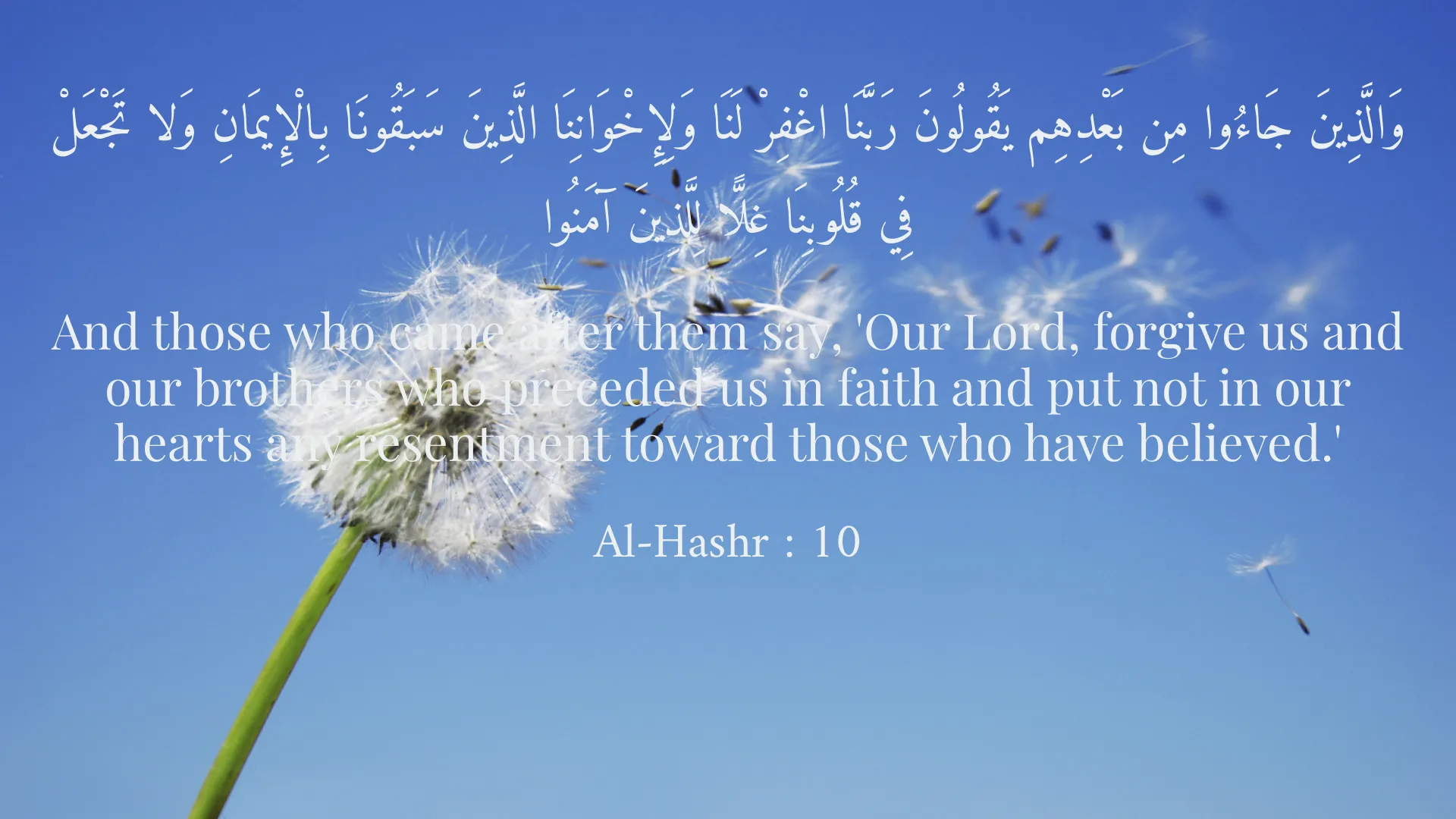
وَالَّذِينَ جَاءُوا مِن بَعْدِهِم يَقُولُونَ رَبَّنَا اغْفِرْ لَنَا وَلِإِخْوَانِنَا الَّذِينَ سَبَقُونَا بِالْإِيمَانِ وَلا تَجْعَلْ فِي قُلُوبِنَا غِلًّا لِلَّذِينَ آمَنُوا
And those who came after them say, 'Our Lord, forgive us and our brothers who preceded us in faith and put not in our hearts any resentment toward those who have believed.'
Al-Hashr : 10
وَإِذْ أَذَنتُمْ لَئِن شَكَرْتُمْ لَأَزِيدَنَّكُمْ
And remember when your Lord proclaimed: If you give thanks, I will surely increase your favor upon you.
Ibrahim : 7
Short Story
Once upon a time, there was a man named Salim who was consumed by jealousy. He always looked at his neighbor and wished to have a life like his. One day, he read a verse from the Quran that said: 'Jealousy harms a person,' and decided to let go of his jealousy. He told himself that he must focus on his blessings, and with that, he found peace.