Quranic Answer
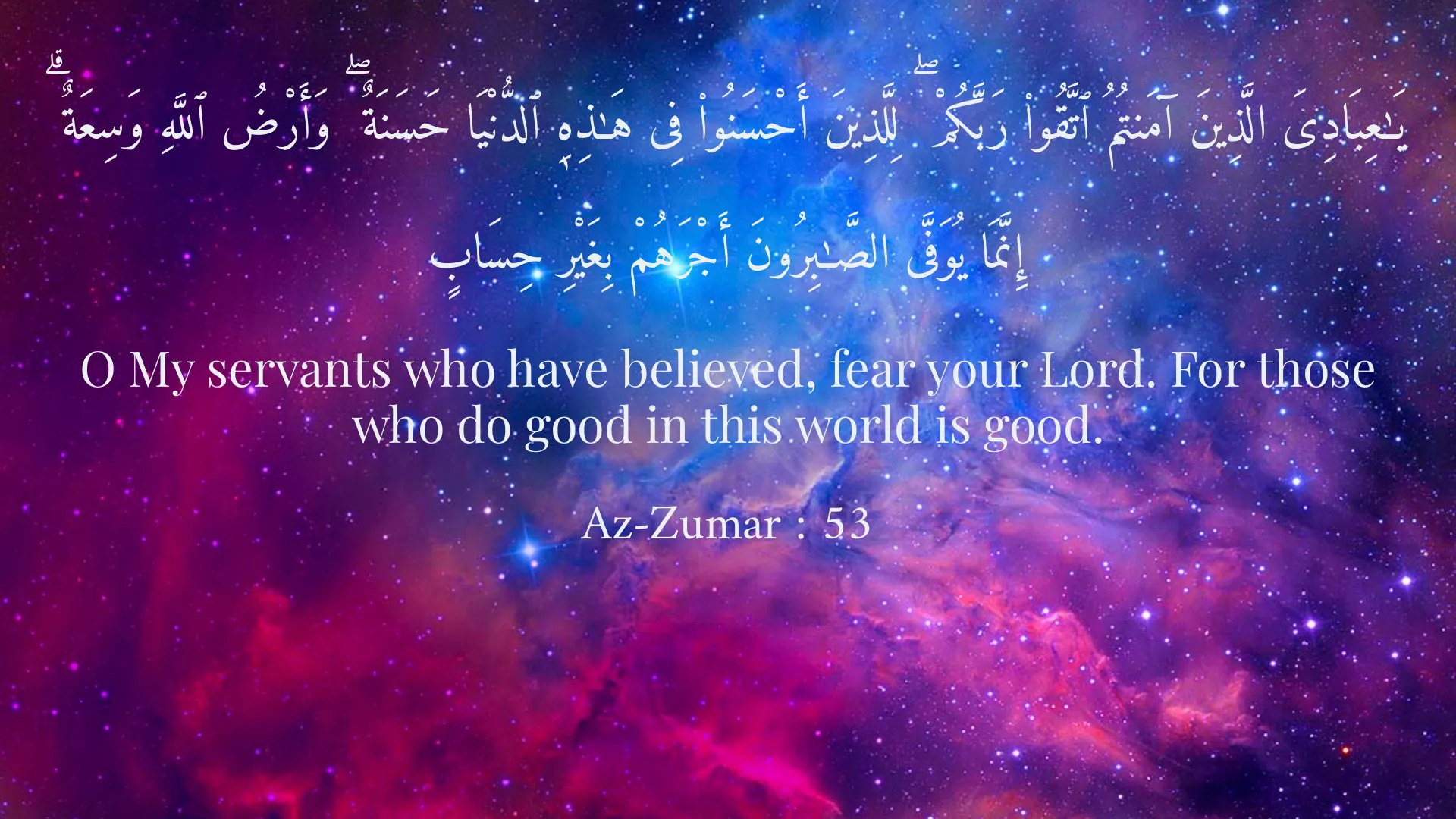
The theme of hope in God's mercy is profoundly woven throughout the verses of the Holy Quran, serving as a guiding principle for believers in navigating the intricacies of life. Among the many verses that encapsulate this theme, Surah Az-Zumar verse 53 stands out as a powerful reminder of the boundless grace of Allah and the essential nature of hope. In this verse, Allah addresses His servants with a gentle yet firm reminder: "O My servants who have believed, fear your Lord. For those who do good in this world is good, and the earth of Allah is spacious. Indeed, the patient will be given their reward without account." The simple yet profound nature of this verse encourages believers to maintain hope, suggesting that even when faced with adversity or failure during trials, one should never succumb to despair. It illustrates that God's mercy is not limited; rather, it encompasses all of creation, offering solace to those who seek it. Believers may often find themselves in challenging circumstances, whether due to personal struggles, moral failings, or unforeseen events that cause distress. In moments such as these, it is crucial to remember the expansive nature of God's mercy. The phrase "the earth of Allah is spacious" serves as a reminder that there is always an opportunity for redemption and growth, regardless of one's current state. This aspect of divine mercy invites believers to reflect on their actions and strive for improvement, reinforcing the notion that perseverance and patience will bring forth rewards. Surah Al-Imran, verse 135, provides further insight into the importance of repentance in preserving hope. The verse states: "And those who, when they commit an immorality or wrong themselves by sin, remember Allah and seek forgiveness for their sins - and who can forgive sins except Allah? - and do not persist in what they have done while they know." This highlights the dual action of acknowledging one’s mistakes and seeking forgiveness—a vital process in the journey toward spiritual fulfillment. It illustrates the compassionate nature of Allah, as He is always ready to forgive those who sincerely repent and return to Him. Repentance is not merely an act; it is a state of being that reinstates a deep connection with the Creator. When individuals recognize their shortcomings and humbly seek forgiveness, they open the door to Allah's infinite mercy. This act of returning to Allah is fundamental, suggesting that no sin is too great to forgive as long as the sinner possesses genuine remorse and the intention to amend their ways. The integration of hope into the Muslim experience not only involves seeking forgiveness but also entails a mindful commitment to living a life that reflects righteous deeds. The Quran encourages believers to keep God in their thoughts and actions, fostering a sense of consciousness regarding His presence in all aspects of life. By nurturing a relationship with God through prayer, reflection, and acts of kindness, individuals can cultivate an environment where hope flourishes. The importance of prayer as a tool for connection cannot be overstated; it serves as a lifeline, grounding believers in their faith and reinforcing their trust in God's plan. In this modern age, where uncertainty looms large, sustaining hope is crucial. Believers are often faced with trials that may lead to moments of doubt and despair. However, it is in these very moments that the reminders from Quranic verses become paramount. The guidance from the Quran can serve as a beacon of light, illuminating the path during dark times. By turning one's attention to these divine words, individuals can find strength and encouragement to persist in their struggles. The journey of maintaining hope is deeply intertwined with the believer's faith in God's omnipotence and mercy. It is essential to remember that despite life's trials, the promise of divine mercy and the assurance that it is readily available can and should inspire individuals to keep pressing forward. This hope should be viewed as a dynamic and sustaining force, enabling believers to rise above challenges with renewed energy and determination. Furthermore, living with hope requires an active engagement with the world around us. As Muslims, embodying the characteristics of mercy, compassion, and kindness as exemplified by the Prophet Muhammad (peace be upon him) allows believers to radiate positivity and hope to others, thereby creating ripples of change in their communities. Engaging in good deeds—whether small or grand—serves to uplift not only the self but also those who are around us, generating a collective spirit of hope and resilience. In conclusion, the theme of hope in God's mercy is pivotal in the life of a believer. The Quran continuously reminds us through its verses that God's mercy is vast, incorporating all aspects of life, and encourages us to maintain faith and a hopeful outlook regardless of our circumstances. Surah Az-Zumar and Surah Al-Imran encapsulate this sentiment beautifully, urging believers to seek forgiveness, to do good, and to remain patient in the face of adversity. As we navigate this journey through life's trials and tribulations, holding fast to hope and spiritual mindfulness is essential for spiritual growth and fulfillment. Each moment spent in prayer, reflection, and good deeds can cultivate an unwavering hope that lightens our burdens and connects us more profoundly with the divine mercy of Allah.
Related Verses
يَـٰعِبَادِىَ الَّذِينَ آمَنتُمُ ٱتَّقُوا۟ رَبَّكُمْ ۖ لِلَّذِينَ أَحْسَنُوا۟ فِى هَـٰذِهِٖ ٱلدُّنْيَا حَسَنَةٌ ۖ وَأَرْضُ ٱللَّهِ وَسِعَةٌ ۗ إِنَّمَا يُوَفَّى الصَّـٰبِرُونَ أَجْرَهُمْ بِغَيْرِ حِسَابٍ
O My servants who have believed, fear your Lord. For those who do good in this world is good.
Az-Zumar : 53
وَالَّذِينَ إِذَا فَعَلُوا فَاحِشَةً أَوْ ظَلَمُوا أَنفُسَهُمْ ذَكَرُوا اللَّهَ فَاسْتَغْفَرُوا لِذُنُوبِهِمْ ۖ وَمَن يَغْفِرُ الذُّنُوبَ إِلَّا اللَّهُ ۖ وَلَمْ يُصِرُّوا عَلَى مَا فَعَلُوا وَهُمْ يَعْلَمُونَ
And those who, when they commit an immorality or wrong themselves by sin, remember Allah and seek forgiveness for their sins - and who can forgive sins except Allah?
Al-Imran : 135
Short Story
Once upon a time, a man whose life was filled with challenges and struggles felt despair in his heart. One day he remembered the verses of the Quran and God's mercy. He decided to pray each day and ask God for everything in his heart with hope and love. Over time, he noticed that with these prayers and hope in God's mercy, his problems lessened, and his life gradually fell into place.