Quranic Answer
Preparing for death is an essential and profoundly important matter emphasized in the Holy Quran. As human beings, one of the most significant truths we confront is our mortality. The inevitability of death resonates throughout various cultures and religions, yet in Islam, it is articulated with clarity and purpose. The Quran provides numerous insights into the nature of death, its significance, and how we can better prepare ourselves for this eventual transition from the worldly life to the hereafter. It teaches us that death is an unavoidable reality and that every human will eventually confront it. In Surah Al-Imran, verse 185, it states that 'Every soul shall taste death.' This acknowledgment is not meant to instill fear but rather to inspire us to manage our lives in such a way that we are adequately prepared for the Day of Judgment. Understanding the reality of death is paramount not only for our personal growth but also for our spiritual journey. By accepting that life is temporary and that death is a necessary part of our existence, we can refocus our priorities. This leads us to seek a more meaningful life where our actions resonate with the teachings of the Quran. One significant way to prepare for death, as outlined in the Quran, is to genuinely repent from sins and return to Allah. The concept of repentance in Islam represents a crucial step toward spiritual purification. In Surah Az-Zumar, verse 53, Allah calls us: 'O My servants who have believed, fear your Lord. For those who do good in this world is good, and the earth of Allah is spacious.' This verse embodies hope and serves as an invitation to return to God, to seek His forgiveness, and to strive towards righteousness through good deeds. It is crucial for Muslims to understand that Allah’s mercy is vast and that anyone who turns back to Him with a sincere heart can find forgiveness and a path toward salvation. Moreover, the act of performing good deeds and giving charity in the name of deceased loved ones is emphasized throughout the Quran. The significance of charity, or Sadaqah, is a recurring theme that underscores its transformative potential, not only for those who receive it but also as a means for the giver to prepare for the hereafter. In Surah Al-Baqarah, verse 261, Allah eloquently states, 'The example of those who spend their wealth in the way of Allah is like a seed of grain that sprouts seven ears.' This powerful imagery symbolizes the growth of good deeds and the rewards they yield. Charity fosters compassion among communities, encourages a sense of belonging, and serves as a testament to our commitment to making a positive impact in this world. Therefore, engaging in acts of charity and service to others becomes a fundamental aspect of our preparation for the Day of Resurrection. Furthermore, maintaining regular prayers (Salah) and fulfilling our religious obligations is paramount in the journey of spiritual growth. The importance of Salah transcends its physical significance; it anchors us in our relationship with Allah. It is through prayer that we find solace, guidance, and the strength to navigate life's adversities. Engaging in dhikr (remembrance of Allah) and supplication can foster a deeper connection to the Divine, reminding us of the fleeting nature of life and the necessity of spiritual awareness. Another significant aspect of preparing for death includes strengthening our relationship with Allah through acts of worship and obedience. In our modern, fast-paced lives, it is easy to lose sight of what is genuinely important. Maintaining a consistent practice of reciting the Quran, reflecting on its meanings, and implementing its teachings into our daily lives can significantly enhance our spirituality. The Quran acts as a manual for life, guiding us to make decisions that align with our faith and ultimately preparing us for what lies ahead. To truly embody a state of readiness for death, it is vital to engage in continuous self-reflection. Regularly evaluating our actions, intentions, and spiritual state can help in our journey to self-awareness. It recommends that we remember the realities of death and ponder upon the Day of Resurrection. This mindfulness about our temporary existence encourages us to engage with life meaningfully, ensuring each action contributes positively to our spiritual well-being. Additionally, the notion of leaving a legacy is inherent in the teachings of Islam. What we leave behind must be a source of continuous blessing (Sadaqah Jariyah) for ourselves. Engaging in acts that benefit future generations, such as building schools, funding scholarships, or contributing to community welfare projects, becomes an essential part of our preparation for death. These acts of good will serve as ongoing charity, ensuring that even after we pass, our actions continue to bear fruit and benefit others. In conclusion, preparing for death is not merely a passive acknowledgment of our mortality; it is an active process of self-improvement, repentance, and striving toward righteousness. The Quran serves as a guiding light on this journey, urging us to seek forgiveness, engage in charitable acts, maintain our prayers, strengthen our relationship with Allah, and leave behind a positive legacy. Ultimately, remembering death and continuously seeking forgiveness allows us to prepare adequately for that great day, where we hope to benefit from Allah's mercy and forgiveness. In embracing these teachings, we find not only a path for spiritual fulfillment but also the profound comfort that comes from aligning our worldly lives with our ultimate fate, facilitating a smoother transition into the afterlife where eternal peace awaits.
Related Verses
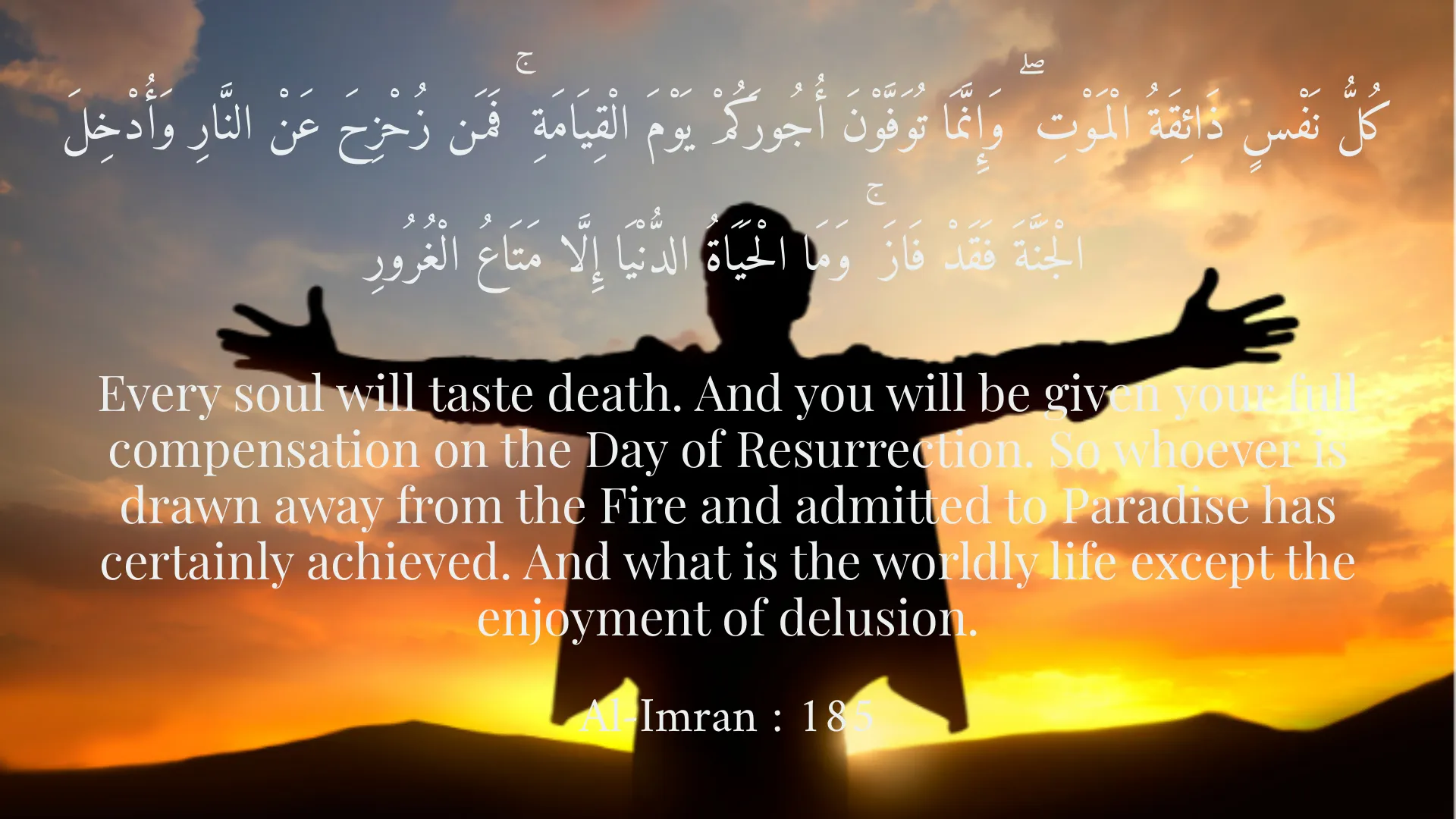
كُلُّ نَفْسٍ ذَائِقَةُ الْمَوْتِ ۖ وَإِنَّمَا تُوَفَّوْنَ أُجُورَكُمْ يَوْمَ الْقِيَامَةِ ۚ فَمَن زُحْزِحَ عَنْ النَّارِ وَأُدْخِلَ الْجَنَّةَ فَقَدْ فَازَ ۚ وَمَا الْحَيَاةُ الدُّنْيَا إِلَّا مَتَاعُ الْغُرُورِ
Every soul will taste death. And you will be given your full compensation on the Day of Resurrection. So whoever is drawn away from the Fire and admitted to Paradise has certainly achieved. And what is the worldly life except the enjoyment of delusion.
Al-Imran : 185
قُلْ يَاعِبَادِيَ الَّذِينَ آمَنتُمُ اتَّقُوا رَبَّكُمْ ۖ لِلَّذِينَ أَحْسَنُوا فِي هَذِهِ الدُّنْيَا حَسَنَةٌ ۖ وَأَرْضُ اللَّهِ وَاسِعَةٌ ۖ إِنَّمَا يُوَفَّى الصَّابِرُونَ أَجْرَهُمْ بِغَيْرِ حِسَابٍ
Say, 'O My servants who have believed, fear your Lord. For those who do good in this world is good, and the earth of Allah is spacious.'
Az-Zumar : 53
مَثَلُ الَّذِينَ يُنفِقُونَ أَمْوَالَهُمْ فِي سَبِيلِ اللَّهِ كَمَثَلِ حَبَّةٍ أَنبَتَتْ سَبْعَ سُنبُلَاتٍ ۖ فِي كُلِّ سُنبُلَةٍ مِئَةُ حَبَّةٍ ۗ وَاللَّهُ يُضَاعِفُ لِمَن يَشَاءُ ۗ وَاللَّهُ واسِعٌ عَلِيمٌ
The example of those who spend their wealth in the way of Allah is like a seed of grain that sprouts seven ears; in every ear is a hundred grains. And Allah multiplies [His reward] for whom He wills. And Allah is All-Encompassing and Knowing.
Al-Baqarah : 261
Short Story
One day, a man named Ahmad was invited to a friend's house. During their conversation, his friend asked if he had ever thought about death and what comes after. Ahmad, who was absorbed in his daily life, realized he had never considered this topic. After that day, he decided to reflect on it and began doing good deeds and repenting for his mistakes. He learned to remember death and the Day of Judgment every day and live with kindness and love for others.