Quranic Answer
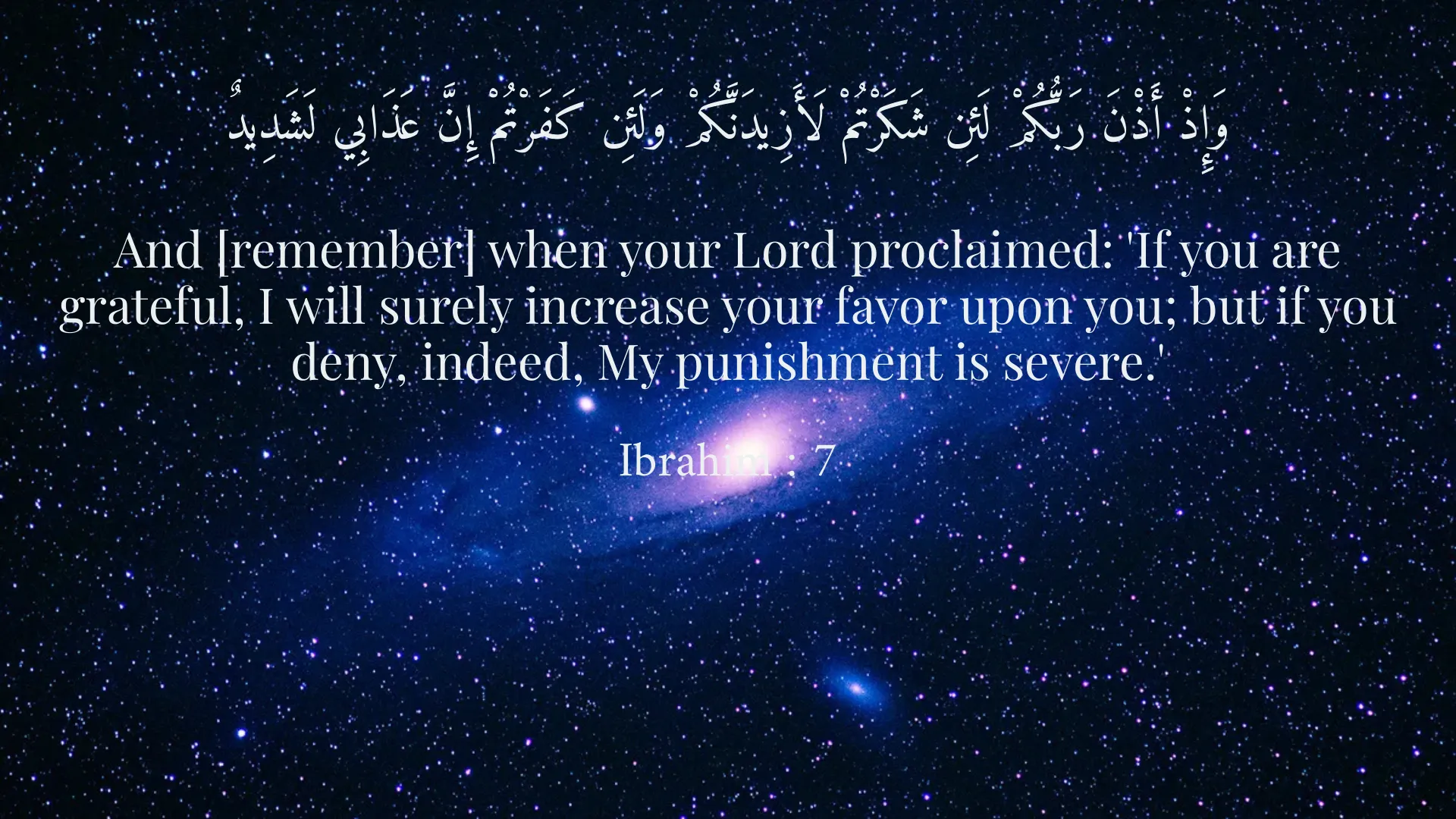
The concept of gratitude has been highly emphasized in various religious texts, with the Holy Quran providing profound insights into the characteristics of grateful servants of Allah. One such eloquent expression of gratitude is found in Surah Ibrahim, verse 7, where Allah assures, 'And [remember] when your Lord proclaimed: 'If you are grateful, I will surely increase your favor upon you; but if you deny, indeed, My punishment is severe.' This verse not only speaks to the idea that gratefulness is a means to attract divine favor but also underscores the conditional nature of blessings—where gratitude acts as a catalyst for further blessings to flow into one's life. The essence of true gratitude, as portrayed in the Quran, is not merely a verbal expression; rather it is a virtue that must originate from the heart and is expected to be evidenced through one's actions. Grateful servants exhibit their appreciation in ways that manifest the value they derive from their blessings. These manifestations of gratitude can take various forms, such as acts of kindness to others, generosity towards those in need, and an overall positive outlook on life despite adversities. Moreover, in Surah Al-Imran, verse 145, Allah explicitly states that 'And it is not [possible] for any soul to die except by permission of Allah at a decree determined.' This assertion introduces a different layer to the concept of gratitude—reminding believers that their existence and everything that enshrouds their lives is ordained by Allah, thus reinforcing the significance of being grateful for both the blessings and trials that shape their lives. Within this context, grateful servants acknowledge their mortality and the delicate balance of life that Allah orchestrates, and thus, they embody obedience and servitude in various forms. Gratitude, as highlighted in these verses, transcends the confines of mere material appreciation. Grateful servants recognize that their spiritual gifts—such as wisdom, patience, love, and faith—are as significant as tangible blessings. The understanding that every moment spent in the worship of Allah and every act stemming from devotion is a blessing in itself calls forth a heightened state of mindfulness in believers. This mindfulness encourages them to be more aware of the divine presence in their lives and to express their gratitude in both good times and bad. In times of difficulty, those who are truly grateful stand out with their capacity for patience and resilience. They view adversity as a test or a means to better themselves and draw closer to Allah. Thus, they embrace challenges with dignity, recognizing the opportunity for growth and learning embedded in each hardship. This attitude contributes to a strong and unwavering faith, which Allah loves and rewards. Their gratefulness in adversity not only reinforces their connection with the divine but enriches their character and inspires those around them. The significance of gratitude is reinforced through the idea that Allah loves His grateful servants. When one is genuinely grateful, they embody humility, recognizing their dependence on Allah for everything they possess. This intrinsic humility leads to a sense of appreciation for every blessing, manifesting in servitude and compassion towards others. Grateful individuals often extend their empathy to those suffering, aspiring to better their community and the world around them, recognizing that their blessings mean little if they cannot share with others. Furthermore, gratitude encourages an attitude of contentment. Living in a state of appreciation allows grateful servants to find peace and satisfaction in what they have rather than constantly yearning for more. This contentment fosters a positive attitude and contributes to mental health, promoting emotional stability and resilience against the stressors of life. The Quran encourages its followers to recognize that what we may perceive as trivial—like the simple act of a sunrise or the comfort of a home—are, in fact, profound blessings worth celebrating and expressing gratitude for. In conclusion, the Holy Quran offers a compelling perspective on the nature of gratitude and the virtues of its servants. Servants of Allah who practice genuine gratitude are engaged not only in verbal expressions but also demonstrate their gratefulness through actions that serve themselves and their communities. By recognizing that every moment of existence, whether filled with ease or hardship, is under Allah's will and mercy, these individuals find purpose in their relationship with the divine. This blend of patience in adversity, humility in blessings, and the continuous desire to serve illustrates the profound impact gratitude has in shaping a believer's life. It becomes an essential aspect of their journey towards righteousness and spiritual enrichment, all while inspiring others to follow the same path. Thus, gratitude is not merely a sentiment but a way of life that reflects a deep and abiding relationship with Allah.
Related Verses
وَإِذْ أَذْنَ رَبُّكُمْ لَئِن شَكَرْتُمْ لَأَزِيدَنَّكُمْ وَلَئِن كَفَرْتُمْ إِنَّ عَذَابِي لَشَدِيدٌ
And [remember] when your Lord proclaimed: 'If you are grateful, I will surely increase your favor upon you; but if you deny, indeed, My punishment is severe.'
Ibrahim : 7
وَمَايَكُنْ لَهُ أَنْ يَكُونَ لَهُ دَاعِيَةٌ وَلَكِنْ مَثَلُهُمْ كَمَثَلِ قَوْمٍ اسْتَجَابُوا لَرَبِّهِمْ فَأَهْلَكَتْهُمُ الْأُمَّةُ الَّتِي تُشَارِكُهُمْ
And it is not [possible] for any soul to die except by permission of Allah at a decree determined.
Al-Imran : 145
Short Story
Once upon a time, there was a young man named Ali who faced many challenges. He turned to prayer and asked Allah for help. In that very moment, he remembered the verses of the Quran and realized that gratitude and appreciation for blessings were vital at all times. Ali began to express his gratitude and approached his challenges with renewed confidence. To his surprise, his problems started to resolve one after another, and he felt a greater sense of peace and happiness.