Quranic Answer
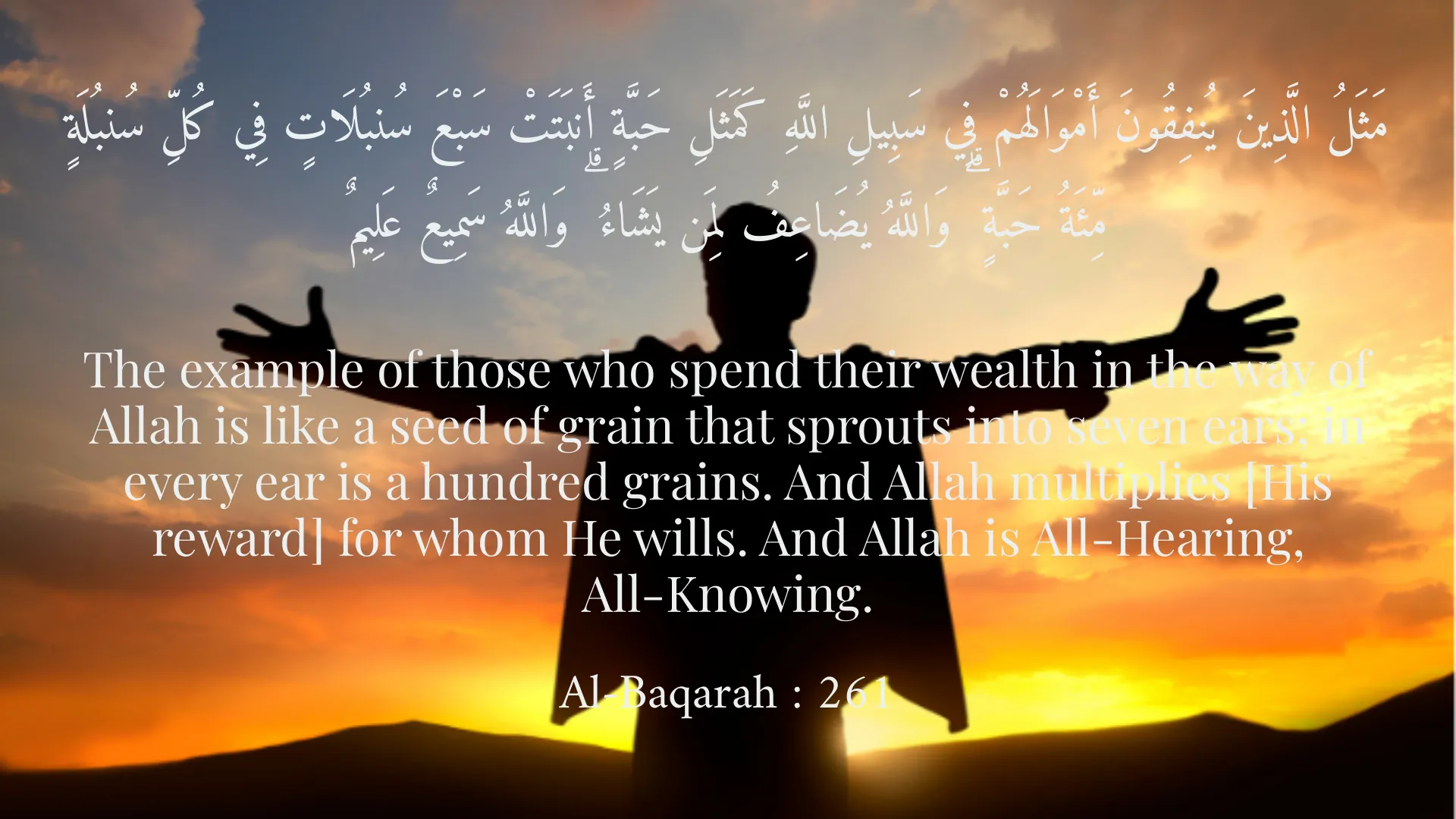
Charity, also known as 'Sadaqah' or 'Zakat' in Islamic terminology, is an essential part of Islamic teachings and holds a significant place in the Quran. The concept of giving is not merely an act of generosity but is intertwined with the principles of faith, compassion, and social responsibility. In Islam, charity is recognized as one of the righteous deeds that can lead to numerous blessings in one’s life. The Quran consistently emphasizes the importance of spending in the way of Allah and engages believers to embrace a charitable lifestyle. One of the poignant verses highlighting the importance of charity is from Surah Al-Baqarah, verse 261. Here, Allah states: "The example of those who spend their wealth in the way of Allah is like a seed of grain that sprouts into seven ears; in every ear is a hundred grains." This verse portrays a vivid imagery of growth and multiplication that comes from charitable acts. It emphasizes that charity is not a mere act of giving away wealth, but an investment that yields extensive returns. Just as a single seed can produce numerous grains, a small act of charity can lead to manifold rewards from Allah. The verse can be interpreted in various dimensions. Symbolically, it conveys the idea that charity brings about not only material blessings but also spiritual growth and enlightenment. When individuals offer their wealth selflessly for the benefit of others, they experience a profound sense of fulfillment and purpose. This spiritual aspect of charity serves to deepen the believer's connection with Allah. It reminds them that wealth is a transient gift, and sharing it can lead to a more meaningful existence. Furthermore, in Surah Al-Anfal, verse 60, Allah reinforces the significance of charity by stating that charitable acts can benefit the community as a whole: "And prepare against them whatever you are able of power and of tethered horses that you may cause terror [to] the enemy of Allah and your enemy and others besides them whom you do not know [but] whom Allah knows. And whatever you spend in the cause of Allah - it will be fully paid to you, and you will not be wronged." This verse not only indicates the societal benefit of charity but also showcases how giving can lead to protection and prosperity for both the giver and the community. By investing in charitable acts, individuals contribute to the well-being of society and increase blessings in their own lives. In the context of community, charity plays a critical role in fostering solidarity and cohesion among individuals. In times of hardship or calamity, acts of charity can lead to immediate relief and support for those in need. Islamic teachings urge believers to actively help the needy, orphans, and those facing adversity, ensuring that resources are shared equitably. This collective responsibility creates a nurturing environment, where members of society rally to support one another, bridging gaps and cultivating harmony. Moreover, the Quran teaches that the motivation behind charitable acts should be pure and sincere. Giving charity should not be a way to gain recognition or accolades but an act of devotion to Allah. The intention behind the act is paramount; hence, believers are encouraged to give selflessly without expecting anything in return. This principle aligns with the concept of 'Ikhlas' (sincerity) in Islam, where actions are performed solely for the pleasure of Allah. It serves as a reminder that even the simplest acts of kindness can be considered charity if done with the right intention, thereby encouraging a culture of generosity. The benefits of charity extend beyond material wealth. By engaging in charitable acts, individuals cultivate empathy and compassion within themselves. Helping others can transform one's mindset, leading to greater appreciation of one’s own blessings and instilling gratitude. This emotional growth is significant in a world where individualism and self-interest sometimes take precedence over communal welfare. Cultivating such qualities enables individuals to become better human beings, fostering a sense of humanity that transcends cultural and racial divides. In addition to the spiritual and emotional dimensions, charity also helps individuals mitigate the challenges they face in life. When one contributes to alleviating the burdens of others, they often find that their difficulties become lighter as well. By sharing wealth and resources, those engaged in charitable activities create an environment of support and mutual aid. Allah’s promise of reward not only encompasses the gains in the hereafter but also extends to the current life, as charitable acts foster a positive and prosperous living condition. The Quran stresses upon the ongoing nature of charity. Giving should not be limited to a one-time action but should inspire a habitual practice in the life of a believer. Continuous acts of giving, regardless of the amount, contribute to a sustained relationship with Allah and are recognized as maintaining their impact in the world. By endorsing the idea of regular charitable contributions, such as monthly donations or spontaneous acts of kindness, individuals embrace a lifestyle centered around compassion and generosity. In conclusion, the Quran firmly establishes charity as a multifaceted and enriching practice for both the giver and the receiver. The divine principles illustrated in various Surahs offer a framework guiding human conduct towards kindness and generosity, significantly impacting lives. The roles of charity extend from spiritual elevation, emotional growth, social responsibility to community coherence. Through acts of charity, believers not only seek the pleasure of Allah but also actively participate in the betterment of society. It is crucial for individuals to recognize the profound influence that giving can yield, as it paves the way for both personal and communal blessings. In our quest for prosperity and fulfillment, let us embrace charity, continuously remind ourselves of its divine rewards, and strive to uplift the lives of others in the process.
Related Verses
مَثَلُ الَّذِينَ يُنفِقُونَ أَمْوَالَهُمْ فِي سَبِيلِ اللَّهِ كَمَثَلِ حَبَّةٍ أَنبَتَتْ سَبْعَ سُنبُلَاتٍ فِي كُلِّ سُنبُلَةٍ مِّئَةُ حَبَّةٍ ۗ وَاللَّهُ يُضَاعِفُ لِمَن يَشَاءُ ۗ وَاللَّهُ سَمِيعٌ عَلِيمٌ
The example of those who spend their wealth in the way of Allah is like a seed of grain that sprouts into seven ears; in every ear is a hundred grains. And Allah multiplies [His reward] for whom He wills. And Allah is All-Hearing, All-Knowing.
Al-Baqarah : 261
وَأَعِدُّوا لَهُم مَّا اسْتَطَعْتُم مِّن قُوَّةٍ وَمِن رِبَاطِ الْخَيْلِ تُرْهِبُونَ بِهِ عَدُوَّ اللَّهِ وَعَدُوَّكُمْ وَآخَرِينَ مِن دُونِهِمْ لَا تَعْلَمُونَهُمُ اللَّهُ يَعْلَمُهُمْ ۚ وَمَا تُنفِقُوا مِن شَيْءٍ فِي سَبِيلِ اللَّهِ يُوَفَّ إِلَيْكُمْ وَأَنتُمْ لَا تُظْلَمُونَ
And prepare against them whatever you are able of power and of steeds of war by which you intimidate the enemy of Allah and your enemy and others besides them whom you do not know [but] whom Allah knows. And whatever you spend in the cause of Allah - it will be fully repaid to you, and you will not be wronged.
Al-Anfal : 60
Short Story
One day, a man filled with various questions and life's worries decided to visit a great sage. He asked the sage, 'Why is giving charity important for us?' The sage smiled and said, 'Charity is like a light that brightens your life's path. Every time you help someone in need, Allah bestows more blessings upon your life.' The man realized that charity not only aids others but also brings peace and blessings to himself. From that day forward, he consistently gave charity, and his life changed in remarkable ways.