Quranic Answer
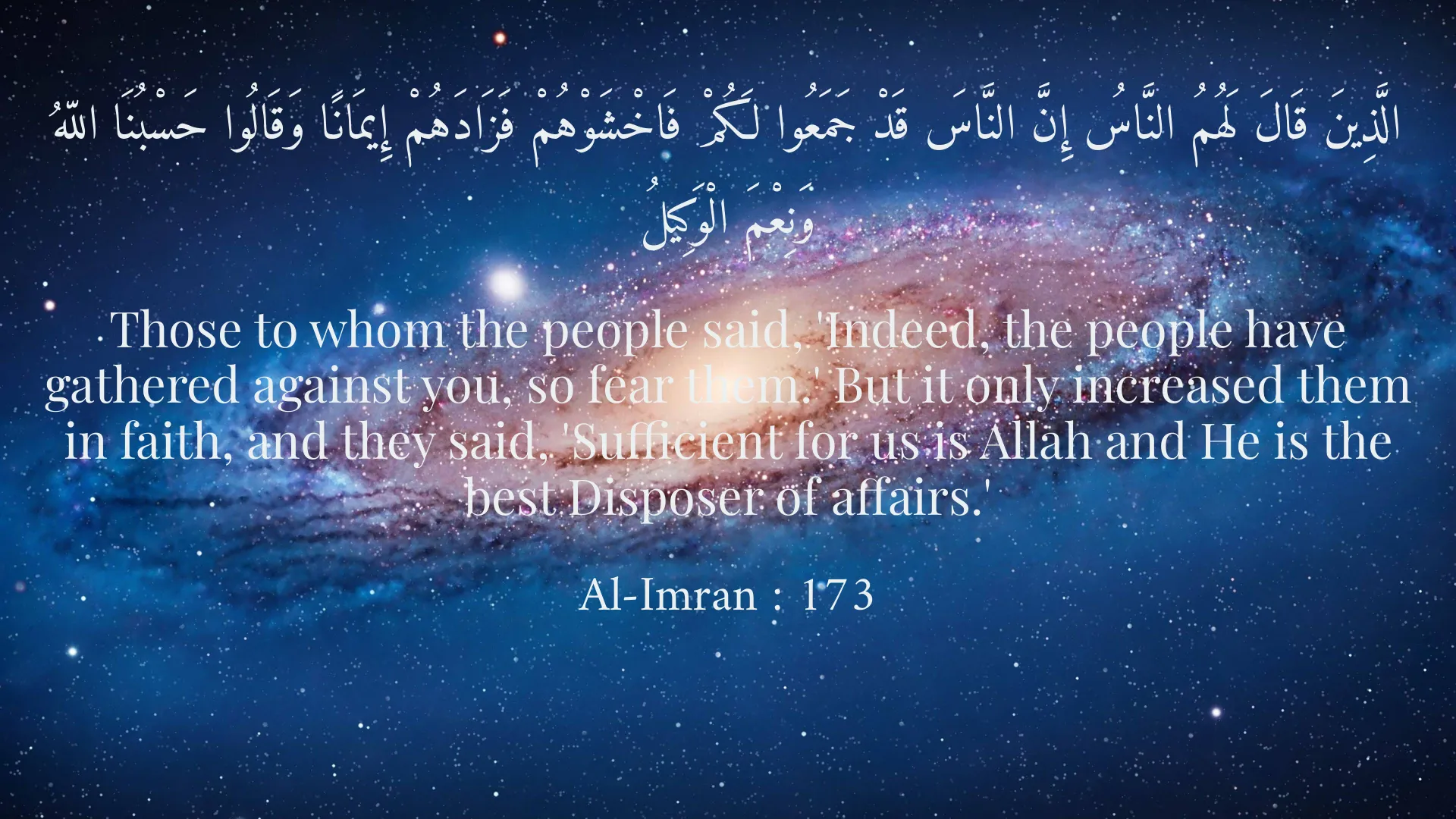
In the Holy Quran, the concept of peace is a profound and intricate theme that resonates deeply with the understanding of faith and divinity. Within its verses, God offers a myriad of methods through which He bestows peace upon His servants, particularly emphasizing the importance of resources, signs of serenity, and unwavering faith. This article delves deeper into the ways by which the Quran communicates the assurance of peace to believers, highlighting specific verses and their implications on the lives of the faithful. One of the most poignant expressions of faith leading to peace can be found in Surah Al-Imran, verse 173. Here, we encounter a moment of adversity where the believers are confronted with the daunting reality of being outnumbered and threatened: "Those to whom the people said, 'Indeed, the people have gathered against you, so fear them.' But it only increased them in faith, and they said, 'Sufficient for us is Allah and He is the best Disposer of affairs.'" This verse paints a vivid picture of the strength derived from faith. Instead of succumbing to fear and despair, the believers draw strength from their reliance on Allah, which not only bolsters their faith but also instills a sense of peace within their hearts. This reaction serves as a critical lesson in the practice of trusting in God during challenging times — a trust that alleviates fear and amplifies spiritual assurance. In addition to verses that depict the relationship between challenge and faith, Surah Al-Fath, verse 4 further enhances our understanding of divine tranquility. This verse states: "It is He who sent down serenity into the hearts of the believers." This declaration articulates not only God's promise but also His active role in fostering peace among His followers. It signifies that serenity is not merely an abstract concept; it is imparted directly from God to the hearts of those who believe. This divine intervention enables individuals to experience a profound sense of calmness, even amidst life's storms. Moreover, Surah Al-Anfal, verse 24 presents another vital dimension of peace that stems from responsiveness to God's call. It reads: "O you who have believed, respond to Allah and to the Messenger when he calls you to that which gives you life." Here, the emphasis lies on the direct correlation between obedience to divine guidance and the attainment of life-affirming peace. Responding to God and His Messenger is portrayed not just as an act of submission but as a gateway to a life enriched with peace and fulfillment. This invitation to engage actively in spiritual duties further illustrates how dedicated service to God fosters an environment conducive to tranquility and inner harmony. The establishment of prayer as a fundamental aspect of spiritual life is another significant avenue through which the Quran underscores the attainment of peace. Prayer, as a form of worship, is highlighted in various chapters of the Quran as a means of connecting with God. The act of worship serves as a sanctuary for believers, allowing them to redirect their thoughts away from worldly distractions and toward the divine. The tranquility found in prayer can be likened to a balm for the soul; it offers solace during moments of trial and tribulation. This is echoed in the hadith that denotes the importance of prayer as a source of comfort: "The prayer is the coolness of my eyes." Thus, through regular engagement in prayer, believers can cultivate a resilient spirit that thrives on tranquility and divine reassurance. Additionally, the significance of dhikr (remembrance of Allah) cannot be understated in the pursuit of peace. The Quran frequently exhorts believers to engage in the remembrance of God, emphasizing its role in calming the heart. As stated in Surah Ar-Ra'd, verse 28: "Verily, in the remembrance of Allah do hearts find rest." This powerful verse encapsulates the essence of spiritual tranquility; it posits that the act of remembering God actively mitigates anxiety and unease. In our rapidly changing world filled with uncertainties, the practice of dhikr becomes imperative in maintaining a state of peace and composure, helping believers navigate life's complexities through a profound connection with their Creator. In essence, the Quran elucidates that peace is an integral part of faith, provided through various means: steadfast faith in God, the practice of prayer, the adherence to divine guidance, and the consistent remembrance of Allah. These elements work synergistically to cultivate an inner environment that is resilient, calm, and steadfast, even in the face of adversity. Moreover, this understanding underscores the profound relationship between spirituality and psychological well-being. In a society often afflicted by stress and anxiety, the teachings of the Quran offer a refreshing perspective on how faith can serve as a cornerstone for peace and contentment. Believers are encouraged to immerse themselves in the remembrance of God, seek solace in prayer, and remain steadfast in their faith, regardless of the trials that may arise. Ultimately, the peace bestowed by God is not merely an absence of turmoil, but rather an encompassing sense of serenity that pervades the soul. It empowers believers to live purposeful lives grounded in trust and obedience to the divine will. The Holy Quran encapsulates this eternal truth, forming a timeless guide that leads its followers toward a life filled with peace, reassurance, and unwavering faith.
Related Verses
الَّذِينَ قَالَ لَهُمُ النَّاسُ إِنَّ النَّاسَ قَدْ جَمَعُوا لَكُمْ فَاخْشَوْهُمْ فَزَادَهُمْ إِيمَانًا وَقَالُوا حَسْبُنَا اللّهُ وَنِعْمَ الْوَكِيلُ
Those to whom the people said, 'Indeed, the people have gathered against you, so fear them.' But it only increased them in faith, and they said, 'Sufficient for us is Allah and He is the best Disposer of affairs.'
Al-Imran : 173
هُوَ الَّذِي أَنزَلَ السَّكِينَةَ فِي قُلُوبِ الْمُؤْمِنِينَ
It is He who sent down serenity into the hearts of the believers.
Al-Fath : 4
يَا أَيُّهَا الَّذِينَ آمَنُوا استَجِيبُوا لِلَّهِ وَلِلرَّسُولِ إِذَا دَعَاكُمْ لِمَا يُحْيِيكُمْ
O you who have believed, respond to Allah and to the Messenger when he calls you to that which gives you life.
Al-Anfal : 24
Short Story
One day, Adel was meditating and thinking about how to find more peace in his life. He decided to draw closer to God and increase his prayers. Shortly afterward, Adel realized that his stress and worries had decreased, and he felt a greater sense of happiness and peace. He recalled a verse from the Quran that stated, 'Allah brings down tranquility into the hearts of the believers.' Adel truly experienced this peace.