Quranic Answer
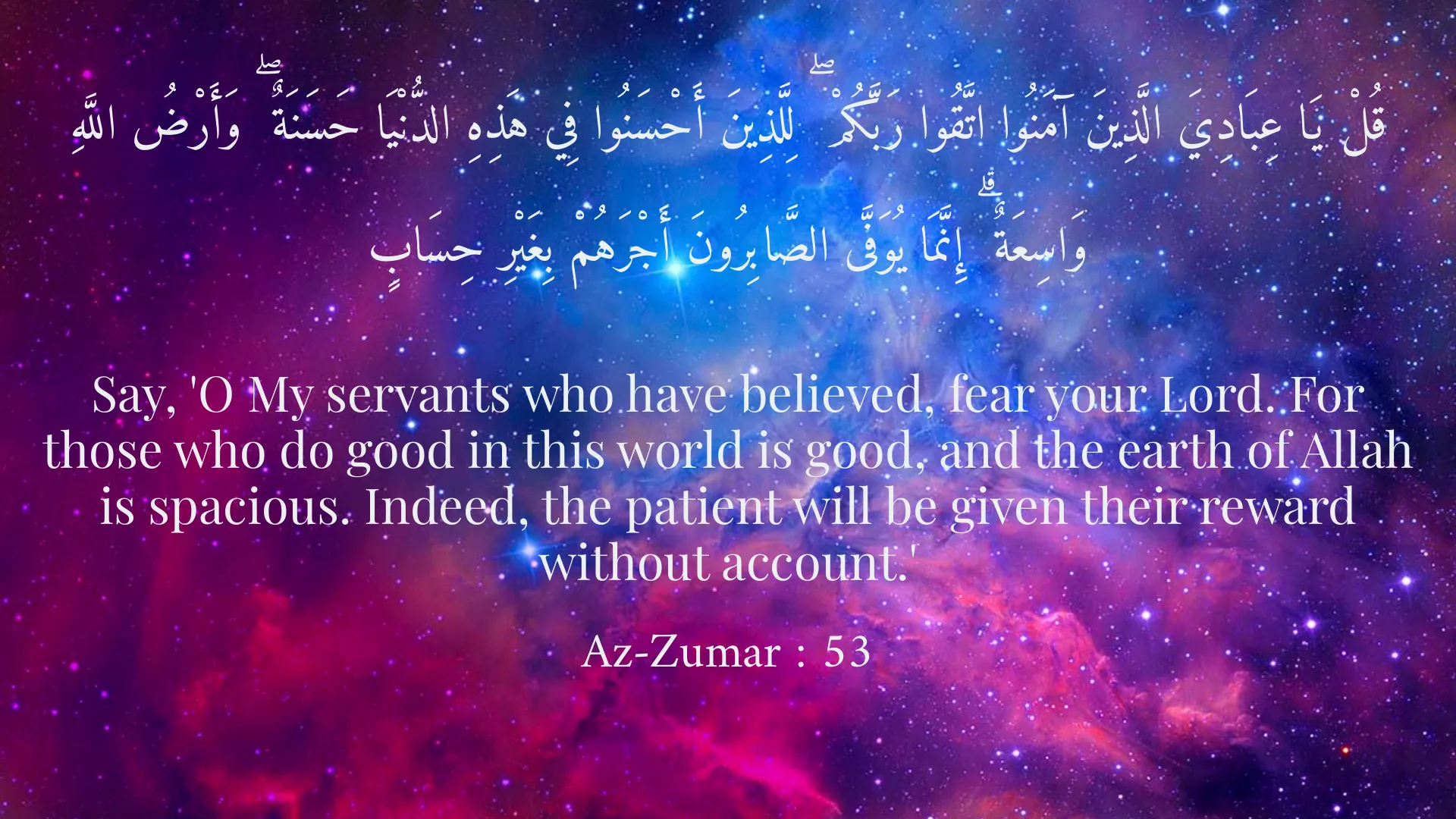
God's forgiveness is an essential theme within the Islamic faith, eloquently expressed in the Holy Quran. It serves as not only a reassurance of God's mercy but also as a guiding principle for believers seeking redemption. One prominent verse that encapsulates this concept is found in Surah Az-Zumar, verse 53, where Allah says, 'Say, O My servants who have believed, fear your Lord. For those who do good in this world is good, and the earth of Allah is spacious. Indeed, the patient will be given their reward without account.' This poignant passage underscores the depth of divine compassion and the possibility of forgiveness, no matter how vast one's transgressions may be. It invites sinners back to the right path, urging them to engage in genuine repentance and reminding them of the vastness of God’s grace. When we contemplate God's forgiveness, it becomes clear that the first essential step towards receiving it is sincere repentance. The Quran stresses that repentance must stem from a pure and honest intention. In Surah At-Tahrim, verse 8, Allah commands the believers: 'O you who have believed, repent to Allah with sincere repentance.' This verse serves as a powerful testament to God’s boundless love and mercy, illustrating that He is ever-ready to forgive those who genuinely seek Him with a contrite heart. True repentance entails not merely vocalizing regret but embodies a heartfelt desire to mend one's ways and realign one's actions according to divine guidance. Moreover, the act of repentance signifies a turning point, a return to the righteous path, emphasizing the importance of recognizing one's mistakes and striving for self-correction. This is further reinforced in Surah Al-Imran, verse 135, where Allah extols the merits of those who, when they err or wrong themselves, remember Him and seek forgiveness. The verse reads: 'And those who, when they commit an immorality or wrong themselves by transgression, remember Allah and seek forgiveness for their sins; and who can forgive sins except Allah?' Herein lies the beautiful assertion that while humans are prone to sin, they are also endowed with the ability to seek redemption. Engaging in repentance requires a conscious effort to abstain from sinful behaviors and a determined commitment to adhere to God's commandments. This effort cultivates an environment where divine forgiveness can flourish. Importantly, it’s not merely the act of repentance that brings about forgiveness but the sincerity of that repentance which validates the believer's intent for change. Each step towards repentance should comprise an acknowledgment of past wrongs paired with an earnest aspiration to rectify those misdeeds and avoid repeating them in the future. The importance of God's forgiveness extends beyond a mere transactional interaction between the believer and their Creator. It highlights the essence of personal growth, moral reflection, and the steadfast aim to achieve a state of spiritual purity. Islam places tremendous value on the importance of humility in this process; one must come to God with a humble heart, recognizing their own frailty and seeking His strength to overcome shortcomings. This humility before God not only helps nurture a deeper connection with Him but also inspires positive change in an individual’s life. Additionally, the concept of God's forgiveness encourages a communal aspect of faith amongst believers. It inspires them to embody the principles they receive through divine instruction—acting with compassion and forgiveness toward others in their lives. In essence, those who receive God’s forgiveness are encouraged to extend the same grace to those around them, creating a cycle of mercy and compassion. For instance, in Surah Al-Baqarah, verse 261, Allah likens the example of those who spend their wealth in the way of Allah to a seed of corn that sprouts seven ears, evidencing the amplification of good deeds done in pursuit of divine pleasure. Furthermore, understanding God's forgiveness allows believers to manage guilt and remorse. Many individuals struggle with past sins that weigh heavily on their hearts, potentially stalling personal and spiritual growth. The assurance of forgiveness serves as both a release and a renewal. When one genuinely repents, they are advised to leave behind the burdens of their past, allowing them to set forth on a new chapter infused with purpose and integrity. In conclusion, the deep-rooted theme of God's forgiveness in Islam offers a pathway to redemption characterized by sincere repentance and a commitment to rectify wrongs. It illuminates a transformative journey where believers can shed the shackles of sin and emerge renewed and inspired to foster a spirit of forgiveness toward others. As believers navigate their faith, this key attribute of the Almighty serves as both a guiding light and an anchor of hope, producing a culture of compassion embedded in love and responsibility toward oneself and others. The promise of divine forgiveness is not just a comforting notion; it is a call to action urging believers to engage deeply with their faith and take steps toward a better version of themselves.
Related Verses
قُلْ يَا عِبَادِيَ الَّذِينَ آمَنُوا اتَّقُوا رَبَّكُمْ ۖ لِلَّذِينَ أَحْسَنُوا فِي هَذِهِ الدُّنْيَا حَسَنَةٌ ۖ وَأَرْضُ اللَّهِ وَاسِعَةٌ ۗ إِنَّمَا يُوَفَّى الصَّابِرُونَ أَجْرَهُمْ بِغَيْرِ حِسَابٍ
Say, 'O My servants who have believed, fear your Lord. For those who do good in this world is good, and the earth of Allah is spacious. Indeed, the patient will be given their reward without account.'
Az-Zumar : 53
يَا أَيُّهَا الَّذِينَ آمَنُوا توبوا إِلَى اللَّهِ تَوْبَةً نَّصُوحًا عَسَى رَبُّكُمْ أَن يُكَفِّرَ عَنكُمْ سَيِّئَاتِكُمْ وَيُدْخِلَكُمْ جَنَّاتٍ تَجْرِي مِن تَحْتِهَا الأَنْهَارُ يَوْمَ لَا يُخْزِي اللَّهُ النَّبِيَّ وَالَّذِينَ آمَنُوا مَعَهُ
O you who have believed, repent to Allah with sincere repentance. It may be that your Lord will remove from you your misdeeds and admit you into gardens beneath which rivers flow, on the Day when Allah will not disgrace the Prophet and those who believed with him.
At-Tahrim : 8
وَالَّذِينَ إِذَا فَعَلُوا فَاحِشَةً أَوْ ظَلَمُوا أَنفُسَهُمْ ذَكَرُوا اللَّهَ فَاسْتَغْفَرُوا لِذُنُوبِهِمْ ۖ وَمَن يَغْفِرُ الذُّنُوبَ إِلَّا اللَّهُ
And those who, when they commit an immorality or wrong themselves by transgression, remember Allah and seek forgiveness for their sins; and who can forgive sins except Allah?
Al-Imran : 135
Short Story
One day, Adel was sitting in a garden, contemplating his life. He felt that sometimes he fell into sins that distanced him from God. One day, he decided to sincerely ask Allah for forgiveness. In that moment, a profound calm washed over him, and he felt that God had forgiven him. This experience reminded him that it's never too late to turn back to God.