Quranic Answer
The Quran, while not explicitly using the modern philosophical term "existential loneliness," profoundly addresses the human condition that gives rise to such feelings: the sense of isolation, the search for meaning, the ephemeral nature of worldly existence, and the inherent longing for connection. It offers a comprehensive spiritual framework that transcends the anxieties of isolation, transforming potential despair into a journey of profound discovery and unwavering connection. The Quran's approach is delivered through several key principles that help individuals navigate and overcome this sense of loneliness and emptiness. At the very core of the Quran's approach is the concept of Tawhid – the absolute Oneness of God. This foundational principle inherently counters any notion of ultimate loneliness because it posits an Ever-Present, All-Knowing, All-Loving Creator who is intimately aware of and connected to every aspect of existence. For a believer, God is not a distant, unapproachable entity, but one who is "closer to him than [his] jugular vein" (Qaf 50:16). This omnipresence means that true isolation from God is impossible; it is only a perception born from heedlessness and inattention to the Divine presence. The Quran repeatedly invites humanity to remember God, to turn to Him, and to seek solace and security in His presence. This constant and direct connection with the Creator is a powerful antidote to any sense of abandonment or insignificance. One of the most potent remedies for loneliness offered by the Quran is the practice of Dhikr, the remembrance of Allah. The Quran explicitly states, "Indeed, in the remembrance of Allah do hearts find tranquility" (Ar-Ra'd 13:28). This verse highlights that true peace and contentment are not found in external achievements, possessions, or even human relationships alone, but in the constant awareness and remembrance of God. When a person engages in Dhikr, whether through formal prayers (Salah), supplications (Du'a), or simply contemplating God's attributes, they establish a direct, intimate line of communication and connection with the Creator of the universe. This spiritual lifeline provides an inexhaustible source of comfort, solace, and strength, filling the void that worldly attachments often leave. The feeling of being heard, understood, and supported by the Lord reassures the individual that they are never truly alone. Furthermore, the Quran instills a profound sense of purpose in human existence. It clarifies that humanity was created not in vain, but with a specific, noble purpose: to worship God and to be His vicegerents on Earth. "And I did not create the jinn and mankind except to worship Me" (Adh-Dhariyat 51:56). Understanding this divine purpose transforms life from a meaningless struggle into a purposeful and meaningful journey. When individuals align their lives with this overarching objective, every action, intention, and challenge gains significance. This sense of meaning alleviates the existential dread that often accompanies a perception of a purposeless existence, replacing it with direction, clarity, and an intrinsic motivation that transcends fleeting worldly gains. The belief in an afterlife further consolidates this purpose, as this life is seen as a preparation for an eternal abode, giving even suffering and hardship a greater context and meaning. While the primary connection emphasized is with God, the Quran also acknowledges and fosters healthy human relationships and community bonds. It encourages believers to be like "a solid structure, reinforcing each other" (inferred from the description of believers as one body, and Surah As-Saff 61:4 speaks of a solid structure). The concept of the Ummah (global Muslim community) is built on principles of mutual support, compassion, and brotherhood/sisterhood. Performing congregational prayers, visiting the sick, aiding the needy, and maintaining family ties are all acts encouraged in the Quran that naturally combat social isolation and foster a sense of belonging. Even in moments of personal struggle, the knowledge that one is part of a larger community of believers, united by shared faith and values, can be a source of immense comfort. The Quran encourages compassion, forgiveness, and cooperation among people, which are crucial for building strong, supportive social structures that reduce feelings of loneliness. Moreover, the Quran's emphasis on Sabr (patience and perseverance) provides a crucial coping mechanism for dealing with life's trials, including moments of profound loneliness. It teaches that hardships and tests are part of life, and God is "with the patient" (Al-Baqarah 2:153). This perspective transforms adversity from a sign of abandonment into an opportunity for spiritual growth and deeper reliance on God. A person who understands that God is present even in their struggles and will not abandon them is less likely to feel truly alone. Finally, the Quran repeatedly reminds humanity about the transient nature of Dunya (this worldly life). Material possessions, fleeting relationships, and worldly achievements are all temporary. Clinging solely to them can lead to deep despair when they inevitably perish or fail to satisfy the soul's deeper yearnings. By shifting focus from the ephemeral to the eternal, the Quran helps individuals detach from worldly expectations that often lead to disappointment and a sense of void. This perspective allows one to embrace moments of solitude not as loneliness, but as opportunities for introspection, self-improvement, and drawing closer to God, who is the ultimate constant and source of true contentment. In summary, the Quran combats existential loneliness by establishing an unshakeable connection with the Divine, imbuing life with profound purpose, fostering supportive community bonds, cultivating resilience through patience, and redirecting focus from the transient to the eternal. It offers a spiritual architecture where the human soul, far from being lost in an indifferent universe, finds its true home and a constant companion in Allah.
Related Verses
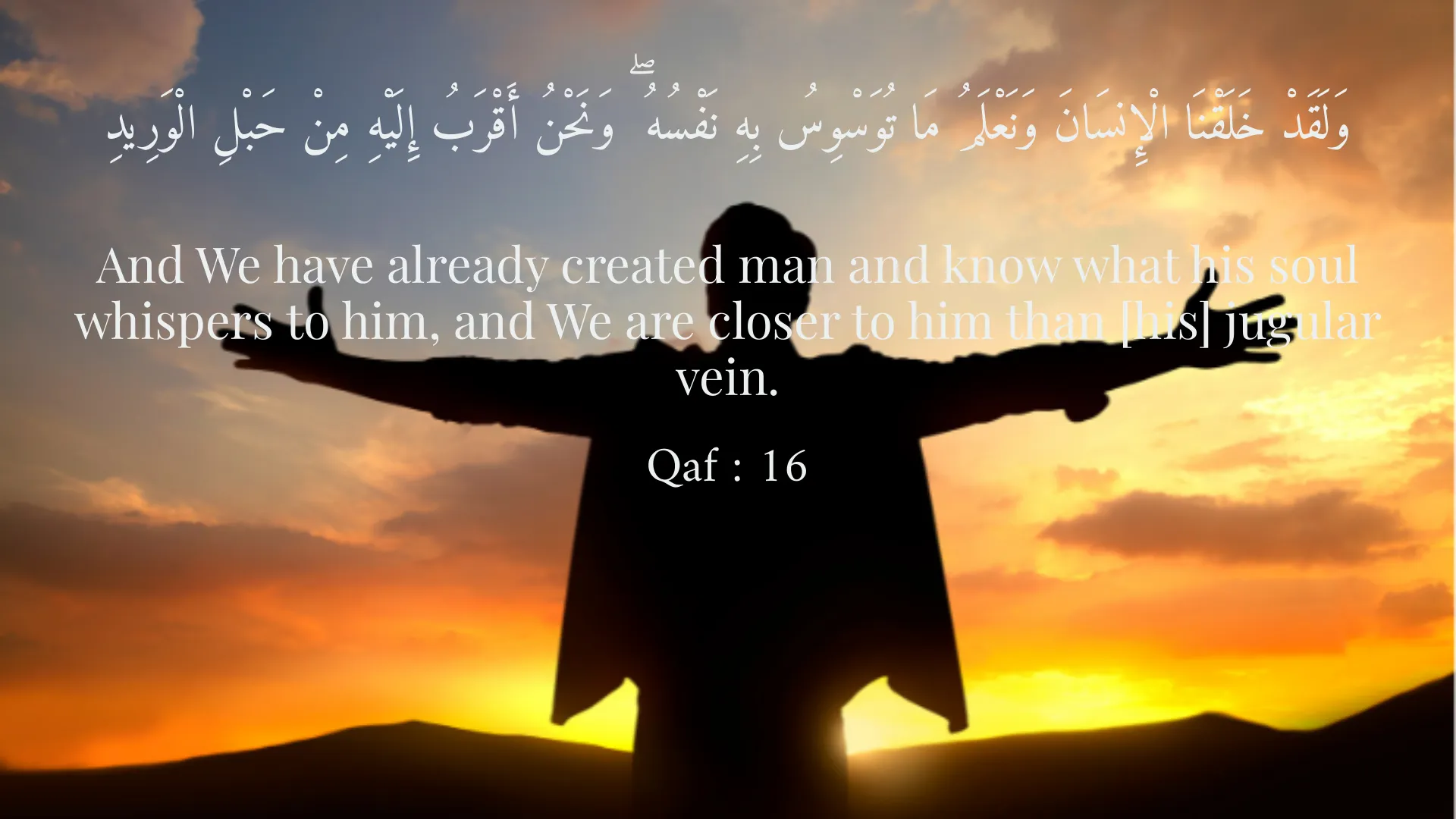
وَلَقَدْ خَلَقْنَا الْإِنسَانَ وَنَعْلَمُ مَا تُوَسْوِسُ بِهِ نَفْسُهُ ۖ وَنَحْنُ أَقْرَبُ إِلَيْهِ مِنْ حَبْلِ الْوَرِيدِ
And We have already created man and know what his soul whispers to him, and We are closer to him than [his] jugular vein.
Qaf : 16
الَّذِينَ آمَنُوا وَتَطْمَئِنُّ قُلُوبُهُم بِذِكْرِ اللَّهِ ۗ أَلَا بِذِكْرِ اللَّهِ تَطْمَئِنُّ الْقُلُوبُ
Those who have believed and whose hearts are assured by the remembrance of Allah. Unquestionably, by the remembrance of Allah hearts are assured.
Ar-Ra'd : 28
وَمَا خَلَقْتُ الْجِنَّ وَالْإِنسَ إِلَّا لِيَعْبُدُونِ
And I did not create the jinn and mankind except to worship Me.
Adh-Dhariyat : 56
يَا أَيُّهَا الَّذِينَ آمَنُوا اسْتَعِينُوا بِالصَّبْرِ وَالصَّلَاةِ ۚ إِنَّ اللَّهَ مَعَ الصَّابِرِينَ
O you who have believed, seek help through patience and prayer. Indeed, Allah is with the patient.
Al-Baqarah : 153
وَإِذَا سَأَلَكَ عِبَادِي عَنِّي فَإِنِّي قَرِيبٌ ۖ أُجِيبُ دَعْوَةَ الدَّاعِ إِذَا دَعَانِ ۖ فَلْيَسْتَجِيبُوا لِي وَلْيُؤْمِنُوا بِي لَعَلَّهُمْ يَرْشُدُونَ
And when My servants ask you concerning Me, then [answer them], "Indeed, I am near. I respond to the invocation of the supplicant when he calls upon Me. So let them respond to Me [by obedience] and believe in Me that they may be rightly guided."
Al-Baqarah : 186
Short Story
It is narrated that a king, despite all his pomp and power, felt an inexplicable emptiness and loneliness deep within his being. The more he clung to the world and its pleasures, the more this feeling consumed him. One day, he said to a wise man: "With all this grandeur and wealth, why is there no peace in my heart, and why do I always feel alone?" The wise man replied: "Peace and connection are not found in earthly treasures, but in heavenly ones. Your heart, whatever it attaches to, can only remain alone if that thing is fleeting." The king pondered this statement. One day, he passed by a monastery and saw a dervish sitting in a corner, peacefully engaged in remembrance. The dervish had neither wealth nor status, but his face showed profound tranquility. The king asked him: "O dervish, you who possess nothing, how do you live so peacefully and without loneliness?" The dervish smiled and said: "O King, you seek something that the world cannot give you. Whenever you detach your affections from what is transient and attach your heart to the Source of existence, the Most High God, you will never feel lonely. For He is ever-present and infinitely merciful. When you are with Him, the world becomes full of companions, and every moment is a new presence." The king was moved by these words and gradually adopted the dervish's way, not by abandoning the world, but by changing his perception of it and finding a deeper connection with the Lord. From then on, the feeling of loneliness left him, and his heart found profound peace.