Quranic Answer
The Holy Quran, the divine word, addresses the issue of suffering and hardship in human life in a profound and comprehensive manner. This sacred book does not view suffering as merely a random or meaningless occurrence, but rather as an integral part of divine wisdom and will, serving as a crucible for human growth and perfection. From the Quranic perspective, worldly life itself is a grand test in which humans face various forms of fear, hunger, and loss of wealth, lives, and fruits. These trials are not meant for punishment, but for the purification of the soul, strengthening of faith, and distinguishing the truthful from the liars. One of the most crucial responses of the Quran to suffering is its emphasis on the virtue of patience (Sabr). Patience in the Quran is not merely passive endurance but active steadfastness in the face of difficulties, perseverance in fulfilling obligations and abstaining from prohibitions, and steadfastness in the path of truth. Allah repeatedly calls upon believers to be patient and promises to be with the patient, aiding them. Patience not only empowers individuals to confront challenges but also elevates their spiritual status and brings them closer to God. Prayer (Salat), as a strong pillar alongside patience, is another tool the Quran introduces for seeking help in times of trouble. Connecting with God through prayer brings peace to hearts and assures individuals that they are not alone even in the hardest moments. Furthermore, the Quran stresses the divine wisdom behind suffering. Allah is All-Wise and All-Knowing, and nothing happens without His purpose. Sometimes, sufferings are expiations for past sins, lightening the burden of one's misdeeds. At other times, trials are a means of elevating the ranks and spiritual status of righteous individuals, just as prophets and saints faced more trials than others. This perspective helps individuals find wisdom behind every affliction and avoid despair. The Quran reminds us that sometimes we dislike something, though it is good for us, and sometimes we love something, though it is bad for us. One of the most hopeful messages of the Quran in dealing with suffering is the divine promise: "Fainna ma’al usri yusra. Inna ma’al usri yusra" (So, verily, with every hardship, there is ease. Verily, with every hardship, there is ease). This verse not only assures humans that hardships are not permanent but emphasizes that ease comes with hardship, not merely after it. This promise is a light in the darkness of suffering, motivating individuals to continue on a difficult path with hope for the future. The repetition serves to emphasize and reassure anxious hearts that no difficulty or problem will be endless, and relief will surely come. Gratitude (Shukr) is another effective Quranic teaching when facing suffering. Even amidst severe difficulties, the Quran asks individuals to acknowledge remaining blessings and hidden divine favors and to be grateful. Gratitude shifts one's perspective, moving them from focusing on deficiencies to appreciating what they have, which in itself leads to inner peace and increased resilience. This grateful outlook deepens one's understanding of the concept of trials and teaches that everything that comes from God, even if seemingly difficult, contains a hidden good. The Quran also views suffering as a means for returning to God and awakening hearts. In many verses, problems and calamities are presented as warnings from God so that heedless individuals do not stray from the main path of life, which is servitude and obedience to God, and return to Him. Suffering can make a person realize their weakness before the boundless power of God and recognize God as the only true refuge. This awakening leads to repentance, seeking forgiveness, and strengthening the connection with the Creator, which is the ultimate peace and happiness. Finally, the Quran points to the transient and ephemeral nature of this world. This world, with all its joys and sorrows, is temporary and not the eternal abode. With this perspective, worldly sufferings seem less significant compared to the rewards or punishments of the hereafter. This view helps individuals avoid excessive attachment to worldly matters and to see the main purpose of life as gaining divine pleasure and preparing provisions for the afterlife. This approach not only reduces the psychological burden of suffering but also gives it meaning and direction. Stories of prophets and righteous people in the Quran, such as Prophet Ayyub (Job), a prime example of patience in affliction, or Prophet Yusuf (Joseph), who rose from a well to immense power, are prominent examples showing how faith and reliance on God transform sufferings into opportunities for growth and perfection. These stories inspire people in every time and place to overcome difficult stages of life with hope and steadfastness, reaching their intended destination. Therefore, the Quran not only answers suffering but provides a comprehensive strategy for confronting it, full of hope, patience, gratitude, and reliance on God, ultimately leading to inner peace and eternal bliss.
Related Verses
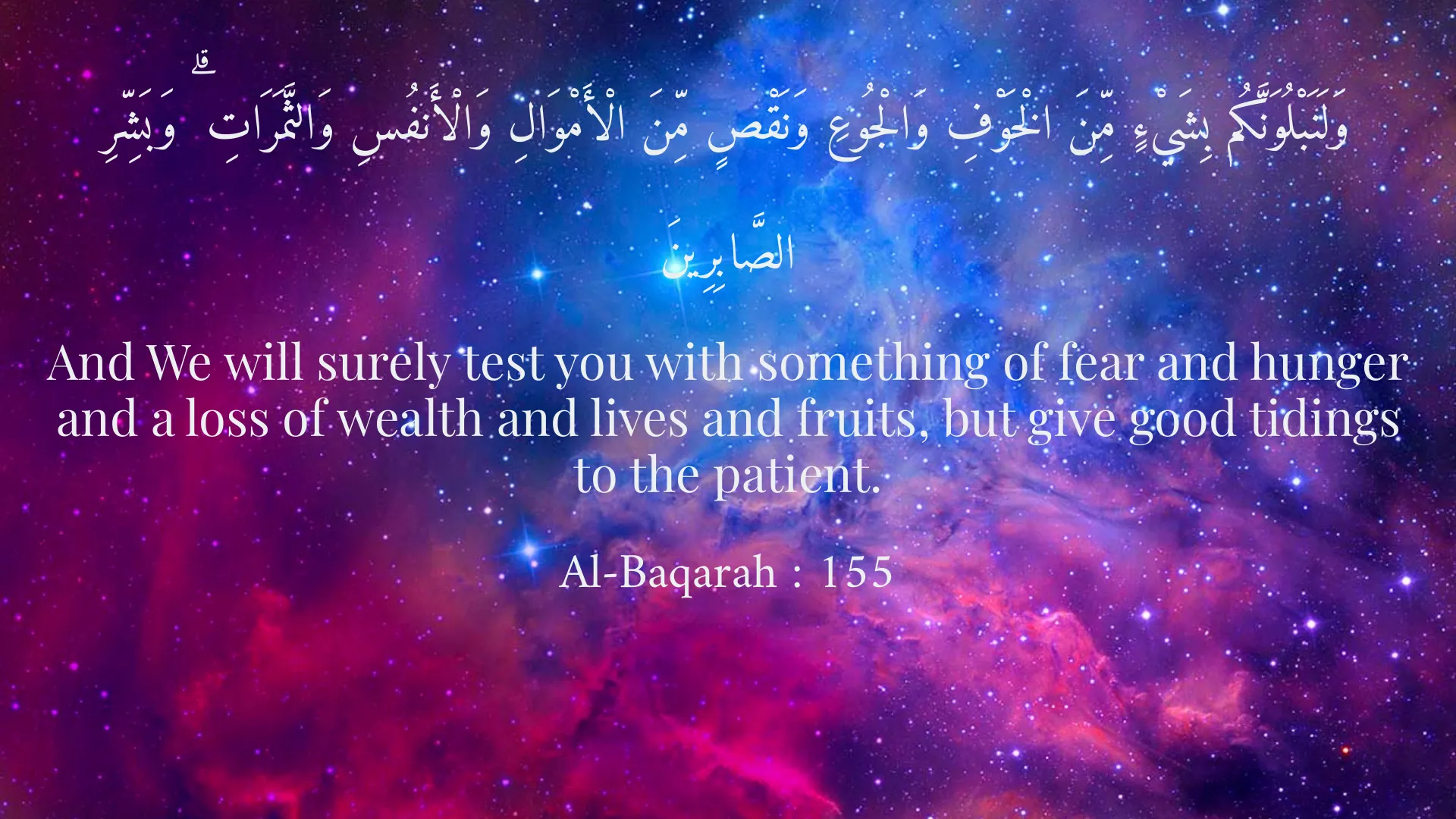
وَلَنَبْلُوَنَّكُم بِشَيْءٍ مِّنَ الْخَوْفِ وَالْجُوعِ وَنَقْصٍ مِّنَ الْأَمْوَالِ وَالْأَنفُسِ وَالثَّمَرَاتِ ۗ وَبَشِّرِ الصَّابِرِينَ
And We will surely test you with something of fear and hunger and a loss of wealth and lives and fruits, but give good tidings to the patient.
Al-Baqarah : 155
فَإِنَّ مَعَ الْعُسْرِ يُسْرًا
For indeed, with hardship [will be] ease.
Al-Inshirah : 5
إِنَّ مَعَ الْعُسْرِ يُسْرًا
Indeed, with hardship [will be] ease.
Al-Inshirah : 6
أَحَسِبَ النَّاسُ أَن يُتْرَكُوا أَن يَقُولُوا آمَنَّا وَهُمْ لَا يُفْتَنُونَ
Do people think that they will be left to say, "We believe" and they will not be tried?
Al-Ankabut : 2
وَلَقَدْ فَتَنَّا الَّذِينَ مِن قَبْلِهِمْ ۖ فَلَيَعْلَمَنَّ اللَّهُ الَّذِينَ صَدَقُوا وَلَيَعْلَمَنَّ الْكَاذِبِينَ
But We have certainly tried those before them, and Allah will surely make evident those who are truthful, and He will surely make evident the liars.
Al-Ankabut : 3
Short Story
It is narrated that in ancient times, Saadi encountered a noble man who was complaining about suffering and illness. Saadi consoled him, saying, 'My friend, there is no rose without thorns, and no world without tribulation. Know that whoever receives a wound from the Almighty, will also find a balm from Him. Suffering is apparent, but in its essence, it is a path towards divine knowledge and closeness to God. Just as heavy rain washes and purifies a stone, so too is the human heart purified by suffering, returning to its Creator. So be patient and rely on His wisdom, for after every dark night, a bright dawn is on its way.' These words brought peace to the ailing man's heart, and with reliance on God, he found recovery.