Quranic Answer
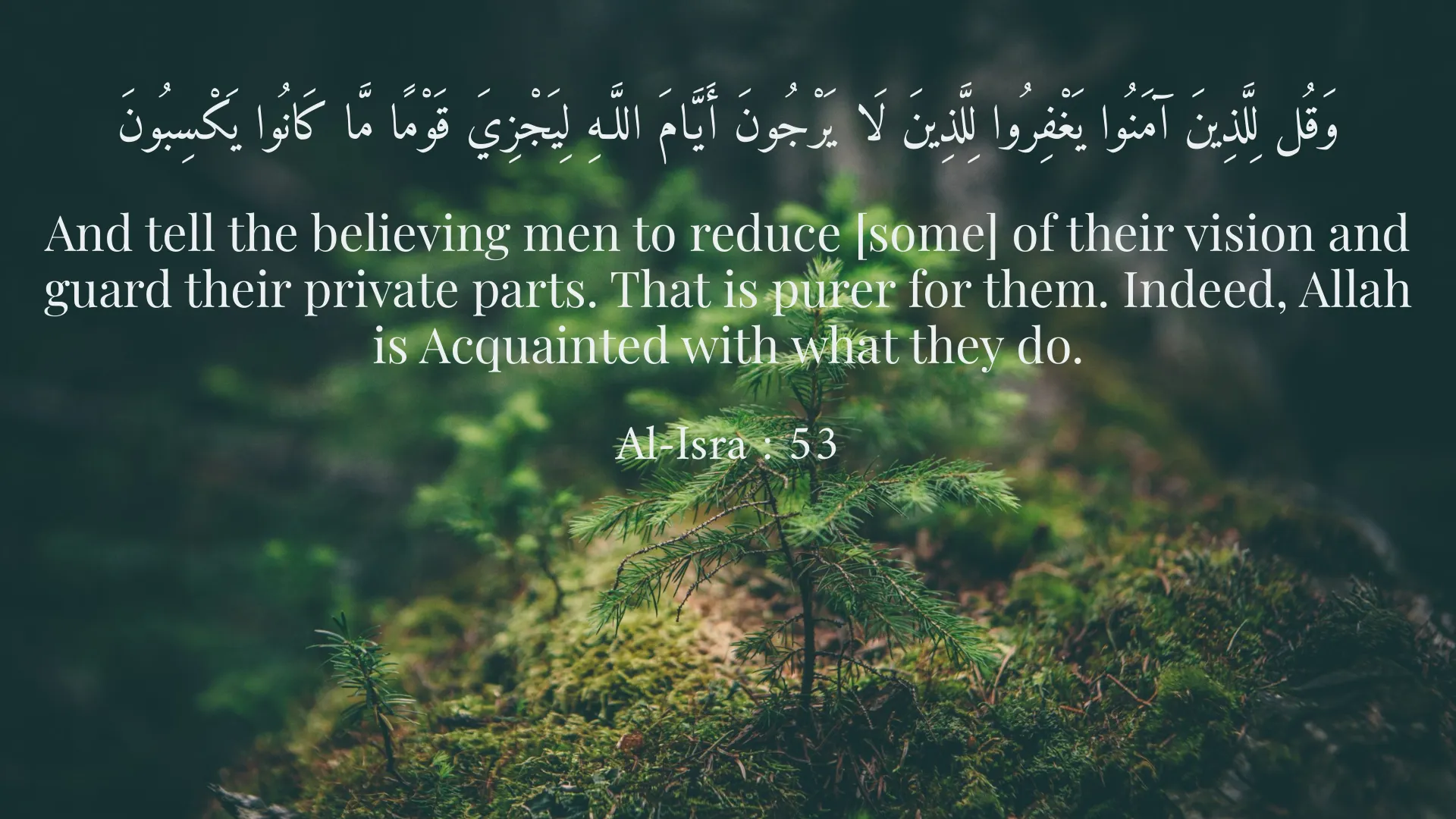
The Holy Quran, which is revered as the divine text of Islam, serves not only as a spiritual guide but also as a moral compass for millions of individuals around the globe. Central to its teachings is the critical importance of speech and the way in which language reflects one's character and intentions. The Quran emphasizes moral conduct and ethical behavior, particularly concerning how we communicate with one another. The verses in the Quran elucidate the principles of controlling one's tongue and avoiding inappropriate speech, underscoring that the words we use carry profound implications for both personal conduct and community cohesion. In Surah Al-Isra, verse 53, the Quran provides vital guidance for believers: 'And tell the believing men to reduce [some] of their vision and guard their private parts. That is purer for them. Indeed, Allah is Acquainted with what they do.' While the primary focus of this verse may seem to center on regulating one's gaze and maintaining modesty, it is integrally connected to the concept of verbal conduct. The exhortation to lower one's gaze implies an overarching principle of self-control, which is a foundation for appropriateness in speech as well. Moreover, the second part of the verse urges believers to guard their private parts, indicating an emphasis on preserving dignity and honor. This extension of modesty to verbal expressions suggests that controlling one's words is equally as important as controlling one's actions. By instructing believers to adopt a demeanor of kindness and integrity toward others, this verse sets a tone for communication that is reflective of compassion and decency. The Quranic recommendation encourages gentle and heavenly behavior, an indication that patience, respect, and understanding are more favorable than harsh and aggressive language. The message continues to resonate in Surah Al-Hujurat, verse 12: 'O you who have believed, avoid much [negative] assumption. Indeed, some assumption is sin. And do not spy or backbite each other. And would one of you like to eat the flesh of his brother while he is dead? So fear Allah; indeed, Allah is Accepting of Repentance and Merciful.' This verse explicitly admonishes believers against negative assumptions and directly prohibits behaviors such as spying and backbiting. These behaviors can create divisions, spread discord, and undermine the trust that is essential for a healthy community. The Quran paints a vivid picture of the consequences of gossip and slander by presenting a stark analogy: the notion of consuming the flesh of a deceased brother. This potent imagery not only illustrates the gravity of such acts but also serves as a powerful reminder to believers about the moral decay that can accompany harmful speech. This verse encapsulates the essence of understanding that speech, particularly harmful and negative speech, can lead to toxic environments where relationships suffer, and community ties weaken. The Quran's exhortations to engage in righteous character extend beyond mere avoidance of negative speech. Rather, it calls upon individuals to embrace positive forms of expression that promote goodwill and harmony among members of society. By prioritizing constructive dialogue, believers can contribute to a nurturing community environment, whereby individuals support one another, resolve conflicts amicably, and cultivate mutual respect. Words—16 letters that embody one of the most potent forms of human expression—are emphasized within the Islamic faith as a tool for both healing and destruction. In fostering an atmosphere that values good speech, the Quran encourages believers to practice empathy in their interactions. When believers consciously choose to promote communication that uplifts rather than belittles, they are participating in the creation of a society rooted in respect and compassion. Verbal expressions carry an inherent power to inspire, motivate, and bring individuals together. Thus, according to the Quran, the cultivation of virtuous speech reflects the overarching vision for a harmonious community. From the guidance provided in these verses, it becomes evident that the message of the Quran is not merely about controlling the tongue but rather about fostering a way of being that acknowledges the profound impact of our words on ourselves and others. Speech is an extension of the human spirit, and thus, the moral implications of what we say and how we say it cannot be overstated. In conclusion, the Holy Quran insists that believers be vigilant regarding their speech, warning against the potential hazards of negative expression and urging positive conduct. This call to action is not isolated within those two verses but is a recurring theme throughout the scripture, reminding us of the interconnectedness of our words and actions within a broader ethical and social context. Controlling our language and promoting positive discourse is essential for building a better, healthier community where mutual respect prevails. As believers, fulfilling this obligation can lead to a transformative impact on individuals and society as a whole, aligning both with divine will and the innate human desire for connection and dignity. In a world where communication is often overlooked or misused, the guidance found within the Holy Quran rings ever more relevant today. Through intentional and noble speech, we become not only better individuals but also active participants in the creation of a society grounded in understanding, compassion, and integrity. Let us heed these timeless teachings and strive towards a greater embodiment of good character, shaped by the powerful influence of our words.
Related Verses
وَقُل لِلَّذِينَ آمَنُوا يَغْفِرُوا لِلَّذِينَ لَا يَرْجُونَ أَيَّامَ اللَّـهِ لِيَجْزِيَ قَوْمًا مَّا كَانُوا يَكْسِبُونَ
And tell the believing men to reduce [some] of their vision and guard their private parts. That is purer for them. Indeed, Allah is Acquainted with what they do.
Al-Isra : 53
يَـٰٓأَيُّهَا ٱلَّذِينَ ءَامَنُواْ اجْتَنِبُواْ كَثِيرًۭا مِّنَ ٱلظَّنِّ ۚ إِنَّ بَعْضَ ٱلظَّنِّ إِثْمٌۭ ۖ وَلَا تَجَسَّسُوا وَلَا يَغْتَب بَّعْضُكُمْ بَعْضًۭا ۚ أَيُحِبُّ أَحَدُكُمْ أَن يَأْكُلَ لَحْمَ أَخِيهِ مَيْتًۭا ۚ وَٱتَّقُواْ ٱللَّهَ إِنَّ ٱللَّهَ تَوَّابًۭا رَّحِيمًۭا
O you who have believed, avoid much [negative] assumption. Indeed, some assumption is sin. And do not spy or backbite each other. And would one of you like to eat the flesh of his brother while he is dead? So fear Allah; indeed, Allah is Accepting of Repentance and Merciful.
Al-Hujurat : 12
Short Story
One day, a man was walking through a market and talking loudly with his friends. Suddenly, out of carelessness, he said something about a person who was nearby. Others quickly noticed this disrespect and it hurt that individual. A few days later, the same person sought a favor from him, and he realized how much his tongue could cause problems. He decided from that day on to speak more thoughtfully and be a good example for others. This individual recognized the power of his words and started using his tongue to express kindness and forgiveness.