Quranic Answer
The Holy Quran serves as a guide for millions of Muslims around the world, emphasizing significant themes that influence every aspect of life. Among these central themes, the importance of avoiding futility and embracing a life imbued with purpose and meaning is paramount. The Quran constantly reminds us that life is not merely about the fleeting pleasures and material possessions that surround us; it is a profound journey toward moral righteousness, spiritual fulfillment, and a deeper connection with the divine. One of the most compelling declarations towards the significance of life’s purpose can be found in Surah Al-Imran, verse 185, where it states, "Every soul will taste death. And you will only be given your [full] compensation on the Day of Resurrection. So whoever is drawn away from the Fire and admitted to Paradise has certainly succeeded. And what is the worldly life except the enjoyment of delusion?" This poignant verse underscores the transience of worldly existence, emphasizing that a life guided solely by immediate pleasures is nothing but an illusion. The Quran urges believers to seek higher meaning and understanding through actions driven by goodness and piety. The fundamental essence of human existence, as referenced in this verse, highlights the concept of eternal reward and retribution. The Quran calls upon individuals to reflect on the quality of their lives and their preparation for what lies beyond. The notion of life as a temporary stage prompts one to contemplate the true purpose of their existence, encouraging actions that align with moral virtues and a pursuit towards attaining closeness to God. Moreover, the Quran also highlights the notion that spiritual enlightenment comes to those who are receptive to divine messages and who strive to align their lives with these teachings. Surah Saba, verse 46 states, "Say, 'I only warn you by revelation.' But the deaf do not hear the call when they are warned." This verse serves as a stark reminder that the path away from futility and confusion is marked by the acknowledgment of truth. It is portrayed that those who ignore or fail to recognize spiritual guidance are likely to continue living in a state of purposelessness. Thus, the Quran reiterates the significance of engaging with the truth and responding to it with sincerity and action. To pursue a life devoid of futility, believers are called to invest their time and energies into activities that yield spiritual nourishment. The Quran encourages the dedication of time to worthwhile pursuits, emphasizing the need to engage in beneficial and constructive actions rather than succumbing to trivial distractions. In essence, the Quran distinctly draws a line between worthy endeavors and fleeting temptations that may lead the soul to a sense of loss or regret. In an era where materialism and the quest for instant gratification dominate, the teachings of the Quran serve as a guiding light, urging individuals to practice moderation in all aspects of life. This is magnified in Surah Al-Furqan, verse 67, which articulates, "And those who, when they spend, are neither extravagant nor stingy, but hold a medium between the two." Such an instruction encapsulates the principle of prudence in both financial and social matters, cultivating a balanced approach to resources and relationships. Through this balance, individuals are encouraged to avoid the pitfalls of excess while steering clear of miserliness, thus nurturing a sense of integrity and purpose in their daily lives. Furthermore, the Quran articulates that those who practice restraint and mindfulness in their pursuits are ultimately on the path toward success. The message here extends beyond the mere act of spending; it embodies a lifestyle that celebrates moderation, accountability, and generosity. In this way, financial behavior is not only a matter of personal gain but a reflection of moral responsibility that interacts with broader social and spiritual implications. The overarching theme of purpose permeates various verses throughout Islamic scriptures, continuously reinforcing the idea that life should be intentional and meaningful. This is especially critical given that the world often presents illusions that can distract individuals from their true purpose. The Quran serves as a reminder that the allure of momentary pleasures can detract from a life of authenticity and devotion, ultimately leading to dissatisfaction and disillusionment. In essence, the Quran's teachings guide believers toward introspection and self-examination, encouraging a consciousness of how one engages with the world. This reflection cultivates a sense of accountability, making individuals more aware of how their actions contribute to their spiritual growth and fulfillment. The commitment to avoiding futility is, therefore, an ethical principle that individuals are encouraged to adopt, recognizing that every moment spent in pursuit of worldly interests should resonate with a higher moral and spiritual purpose. Ultimately, the Quran instills values that promote a well-rounded life, one that focuses on goodness, virtue, and the development of a sincere relationship with God. In avoiding futility, individuals are called to embrace the essence of their existence and the depth of their spiritual potential, aligning their lives with purposeful pursuits that honor their faith and enrich their souls. Thus, the teachings of the Quran remain a timeless call to action, inviting all humanity to engage in a life that transcends the mundane and seeks the eternal, fostering a sense of community, compassion, and spiritual awakening.
Related Verses
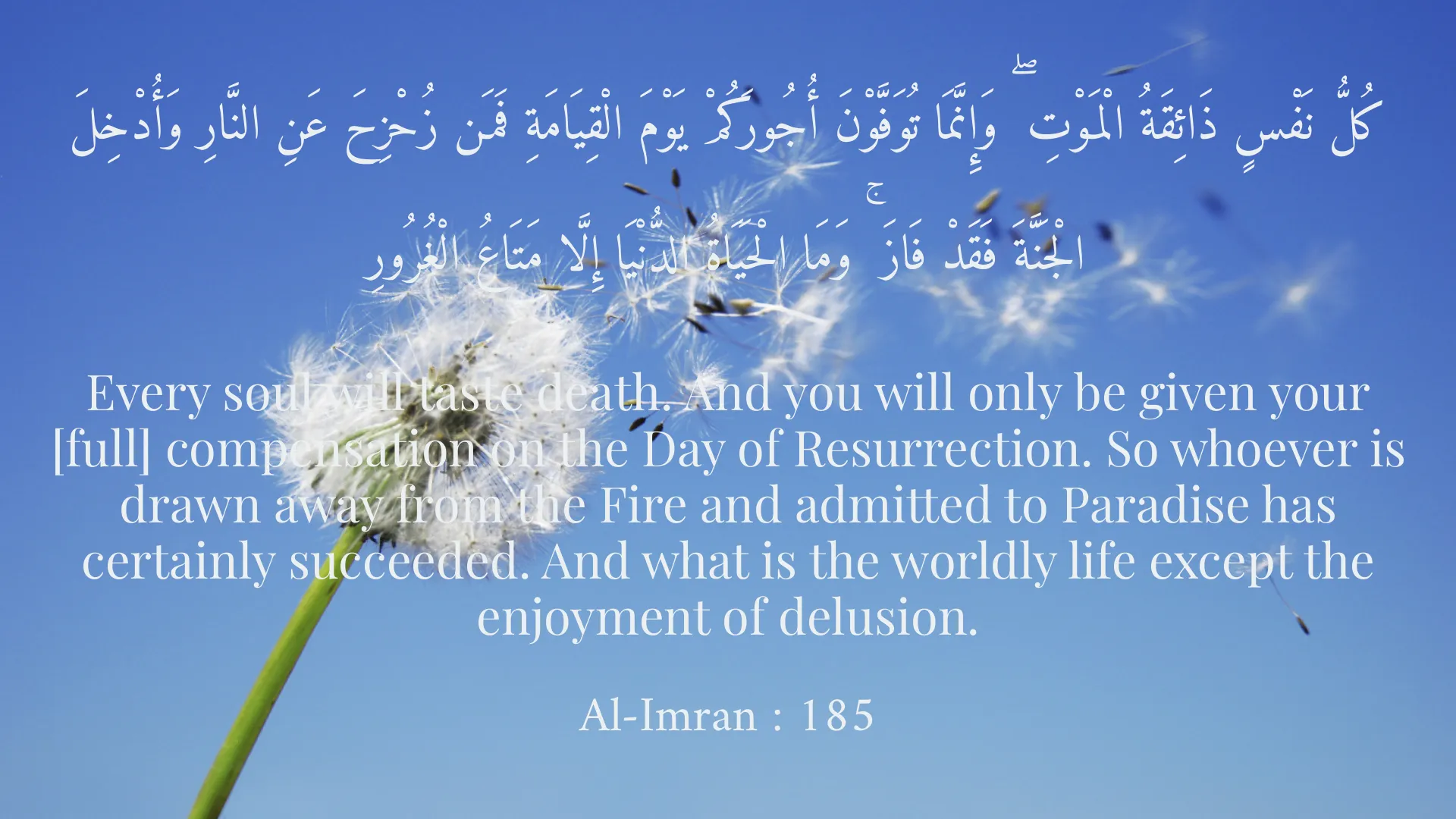
كُلُّ نَفْسٍ ذَائِقَةُ الْمَوْتِ ۖ وَإِنَّمَا تُوَفَّوْنَ أُجُورَكُمْ يَوْمَ الْقِيَامَةِ فَمَن زُحْزِحَ عَنِ النَّارِ وَأُدْخِلَ الْجَنَّةَ فَقَدْ فَازَ ۚ وَمَا الْحَيَاةُ الدُّنْيَا إِلَّا مَتَاعُ الْغُرُورِ
Every soul will taste death. And you will only be given your [full] compensation on the Day of Resurrection. So whoever is drawn away from the Fire and admitted to Paradise has certainly succeeded. And what is the worldly life except the enjoyment of delusion.
Al-Imran : 185
قُلْ إِنَّمَا أُنذِرُكُم بِالْوَحْيِ وَلا يَسْمَعُ الصُّمُّ الدُّعَاءَ إِذَا مَا يُنذَرُونَ
Say, 'I only warn you by revelation.' But the deaf do not hear the call when they are warned.
Saba : 46
وَالَّذِينَ إِذَا أَنفَقُوا لَمْ يُسْرِفُوا وَلَمْ يَقْتُرُوا كَانَ بَيْنَ ذَٰلِكَ قَوَامًا
And those who, when they spend, are neither extravagant nor stingy, but hold a medium between the two.
Al-Furqan : 67
Short Story
One day, Ali was reflecting on his life. He realized that he was spending most of his time on trivial entertainment, neglecting the essence of life. After studying the Quran, he focused on its verses and decided to dedicate his valuable time to God's path and meaningful endeavors. Ali began helping others and increasing his worship, and since then he has felt a renewed sense of purpose in life.