Quranic Answer
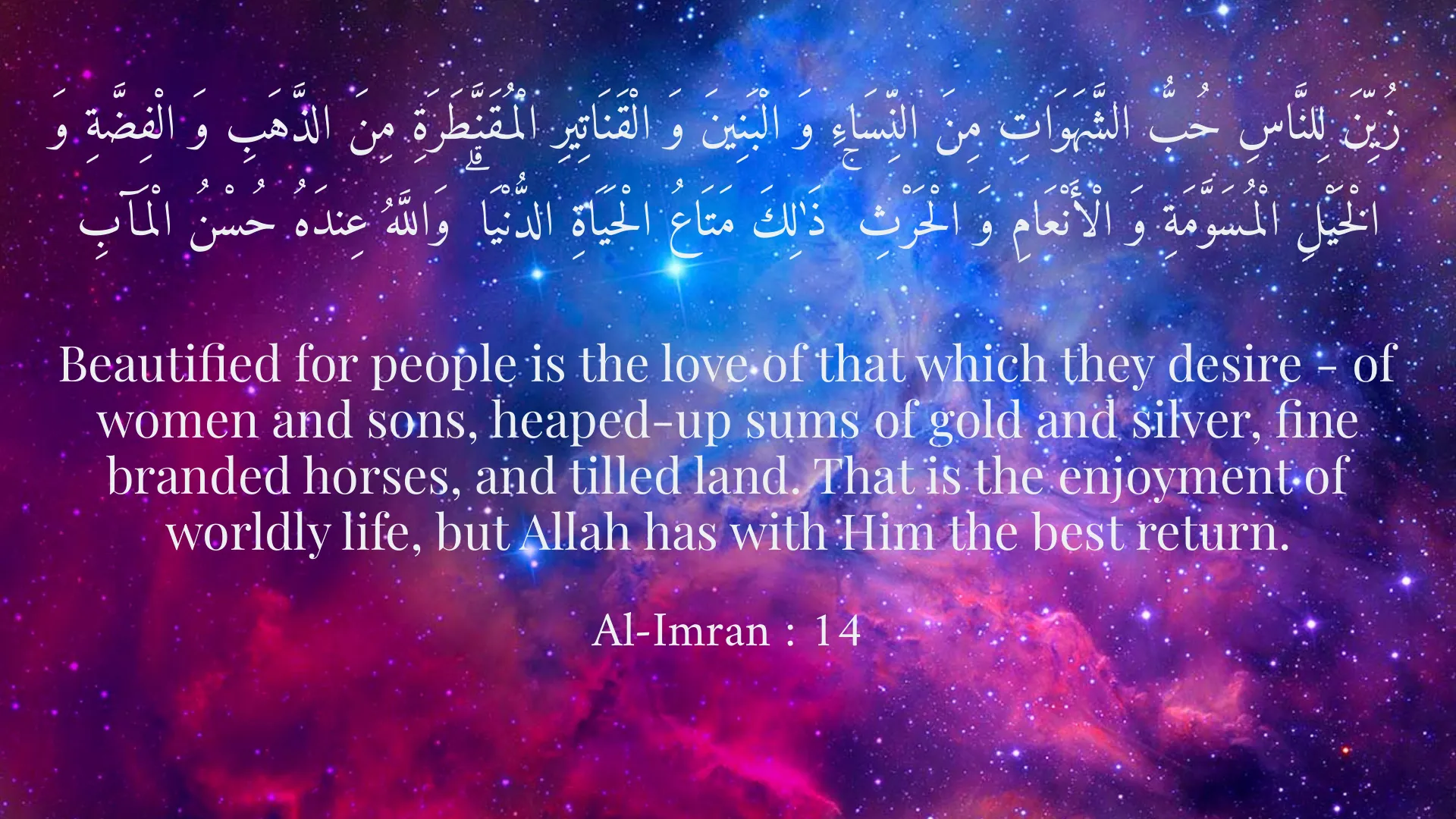
The Holy Quran is often referred to as a comprehensive guide for humanity, providing spiritual wisdom and moral direction to individuals. Among its many teachings, one of the most profound is the counsel against greed and avarice—a temptation that plagues human existence throughout history. In a world increasingly driven by materialism, the Quran offers valuable insights into the importance of relying on Allah and expressing gratitude for His countless blessings. In Surah Al-Imran, verse 14, the Quran highlights the allure of worldly desires. It states: "Beautified for people is the love of that which they desire - of women and sons, heaped-up sums of gold and silver, fine branded horses, and tilled land. That is the enjoyment of worldly life, but Allah has with Him the best return." This verse succinctly encapsulates the human experience—an innate attraction to material possessions and earthly pleasures. Yet, it serves as a solemn reminder that such fleeting enjoyment should not distract from the eternal rewards promised in the Hereafter. The verses in Surah Al-Imran remind believers of the transient nature of worldly desires. The Quran acknowledges that it is human to be attracted to wealth, beauty, and status. However, it urges people to develop a mindset that prioritizes spiritual fulfillment over material acquisition. The eternal rewards from Allah are depicted as far greater than anything this world can offer. This perspective encourages followers to live their lives with a focus on long-term satisfaction rather than short-lived pleasures. Furthermore, the Quran emphasizes the importance of balance in one's life and pursuits. While it is not inherently wrong to enjoy the blessings of this world, there is a significant need to engage in self-reflection and spiritual accountability. Material possessions should not become adoration-worthy deities that distract believers from their ultimate purpose—to worship Allah and seek forgiveness for their shortcomings. The pursuit of happiness should be coupled with mindfulness of one's actions and intentions throughout life. In addition to its general advice about worldly desires, the Quran further elaborates on the danger of greed in specific contexts. Surah Al-Baqarah, verse 188, serves as a cautionary statement against dishonesty in financial dealings. It states: "And do not consume one another's wealth unjustly or send it [in bribery] to the rulers in order that [they might aid] you [to] consume a portion of the wealth of the people in sin, while you know [it is unlawful]." This verse serves multiple functions; it underscores the importance of ethical behavior in financial transactions and urges believers to refrain from exploiting others for personal gain. Greed often manifests through self-serving actions that prioritize individual wealth over communal welfare. The Quran admonishes against wealth acquisition through unjust means—an idea rooted in deep moral and ethical teachings. This concept extends beyond merely abstaining from theft or fraud; it also includes the importance of fair treatment and transparency in all economic interactions. Believers are called upon to uphold integrity in financial affairs, establishing a social framework based on trust and respect, which contributes to the overall well-being of society. The Quran's teachings urge individuals to act according to pure intentions and maintain a reliance on Allah, thereby steering clear of greed and avarice. By fostering a spirit of generosity and community-mindedness, believers not only enrich their own lives but also contribute positively to those around them. One of the most poignant reminders in the Quran is that true wealth is not measured by material possessions but rather through acts of kindness, generosity, and love. Moreover, the concept of gratitude plays a pivotal role in countering greed. The more individuals express gratitude for what they possess, the less they may feel overwhelmed by desires for what others have. This attitude of gratitude can transform one's perspective on life, allowing for greater contentment and fulfillment. The Quran continually emphasizes thankfulness as a means to achieve harmony between one's material ambitions and spiritual obligations. In this way, humility becomes an essential quality for believers striving to live authentically. By recognizing that all bounties and successes come from Allah, individuals can defeat their inner greed and view wealth as a divine blessing rather than a sole measure of personal success. This shift in perception serves to align an individual's motives with their spiritual aspirations, leading them away from materialism and towards a profound spiritual existence. As we reflect on these teachings from the Quran, it becomes clear that the guidance it offers against greed and avarice is both timeless and relevant. In a society prone to excess and relentless pursuit of wealth, the wisdom found within the scripture serves as a crucial beacon for those seeking a more meaningful and enriching life. Through reliance on Allah, gratitude for His blessings, and a commitment to upholding ethical financial practices, we can navigate the challenges of life while remaining grounded in our spiritual values. The Quran's gentle reminders prompt a more balanced approach—one where worldly pursuits do not overshadow the fundamental tenets of faith and morality. Ultimately, the path to true enrichment lies not in the accumulation of wealth, but in cultivating deep connections with Allah and demonstrating compassion toward others. In this, we find the real essence of a fulfilling life—one that honors our commitments to both the Divine and our fellow humans.
Related Verses
زُيِّنَ لِلنَّاسِ حُبُّ الشَّهَوَاتِ مِنَ النِّسَاءِ وَ الْبَنِينَ وَ الْقَنَاتِیرِ الْمُقَنَّطَرَةِ مِنَ الذَّهَبِ وَ الْفِضَّةِ وَ الْخَيْلِ الْمُسَوَّمَةِ وَ الْأَنْعَامِ وَ الْحَرْثِ ۚ ذَٰلِكَ مَتَاعُ الْحَيَاةِ الدُّنْيَا ۗ وَاللَّهُ عِندَهُ حُسْنُ الْمَآبِ
Beautified for people is the love of that which they desire - of women and sons, heaped-up sums of gold and silver, fine branded horses, and tilled land. That is the enjoyment of worldly life, but Allah has with Him the best return.
Al-Imran : 14
وَ لَا تَأْكُلُوا أَمْوَالَكُمْ بَيْنَكُمْ بِالْبَاطِلِ وَتُدْلُوا بِهَا إِلَى الْحُكَّامِ لِتَأْكُلُوا فَرِيقًا مِّنْ أَمْوَالِ النَّاسِ بِالْإِثْمِ وَأَنتُمْ تَعْلَمُونَ
And do not consume one another's wealth unjustly or send it [in bribery] to the rulers in order that [they might aid] you [to] consume a portion of the wealth of the people in sin, while you know [it is unlawful].
Al-Baqarah : 188
Short Story
Once upon a time, there was a young man named Adel who was pure-hearted and in search of Allah’s pleasure. One day, he read a verse in the Quran that said, "Rely only on Allah and avoid greed." He recalled his younger sister who always yearned for new and beautiful things and decided to explain to her how gratefulness for what one has is far more valuable than yearning for more. From that day on, Adel learned that love and satisfaction with what he had was a much better approach than greed.