Quranic Answer
The Holy Quran, regarded as the eternal word of God by Muslims, serves not only as a spiritual guide but also as a practical manual for addressing some of life’s most challenging struggles, including feelings of depression and loneliness. As modern life becomes increasingly complex and challenging, the relevance of the Quran’s teachings continues to resonate, providing solutions and comfort for those in distress. This article explores the Quran's rich guidance on finding solace and resilience through remembrance of God, patience in adversity, and supplication, all of which function as vital tools for navigating the turbulent waters of emotional and mental hardship. ### The Principle of Remembrance One of the most profound principles found within the Quran regarding mental peace is the concept of remembrance of God, or 'Dhikr.' This practice is deeply rooted in Islamic teachings and is believed to instill a sense of tranquility in the hearts of believers. In Surah Ar-Ra'd, verse 28, Allah articulates this beautifully: 'Indeed, it is in the remembrance of Allah that hearts find rest.' This verse acts as a beacon of hope for those who are grappling with stress, anxiety, and feelings of despair. The act of remembering God can serve as a continual source of comfort and a reminder of the divine presence in one’s life. The remembrance of Allah can take various forms, including prayer, meditative reflection, and recitation of the Quran itself. Engaging in such acts encourages individuals to reflect on their life's purpose and fosters a connection with the Divine that can lead to a profound sense of peace. When faced with life's challenges, turning inward towards faith and spiritual practices enables individuals to transcend their immediate worries and find solace in a higher power. ### Patience as a Virtue Patience, or 'Sabr', is emphasized throughout the Quran as an indispensable virtue for overcoming trials and tribulations. Surah Al-Baqarah, verse 153, instructs believers with the words: 'O you who have believed, seek help through patience and prayer.' This verse underscores the importance of patience as a foundational tool for confronting difficulties and stresses that it should be supplemented by prayer. The application of patience is not merely about enduring hardship; it is about actively engaging with it through a methodical approach that combines soul-searching endurance with a trusted relationship with God. Adopting patience can signify a time of personal growth and deepening one’s faith. Each struggle presents an opportunity for enrichment, provided that an individual is willing to reflect on their experiences and seek Divine support. Additionally, patience illuminates a path to perseverance, ultimately leading to emotional resilience and a stronger character. In a world where instant gratification often overshadows perseverance, the emphasis on patience could not be more relevant. It encourages believers to cultivate an attitude of endurance, transcending immediate desires and seeking long-term fulfillment through faith. ### The Power of Supplication Furthermore, supplication or 'Dua' is portrayed within the Quran as an essential means of connecting with God and seeking His guidance and strength. Surah Ghafir, verse 60 unequivocally proclaims, 'And your Lord says, 'Call upon Me; I will respond to you.' This highlights the accessibility of God’s help through sincere prayer. The act of supplication creates an intimate dialogue between the believer and the Creator, allowing one to express their fears, worries, and aspirations directly to God. In moments where one grapples with feelings of loneliness or despair, turning to God in prayer can provide a sense of relief. It reinforces the belief that individuals are not alone in their struggles, as God is ever-present and ready to respond to their heartfelt calls. Moreover, making Dua does not only serve to request help but also acts as a calming ritual. The repetitive nature of prayer can provide a comforting structure amidst emotional chaos. ### Conclusion: A Holistic Approach to Inner Peace In summary, the Holy Quran offers timeless guidance to alleviate suffering associated with depression and loneliness. It reminds believers of the significance of turning to Allah in remembrance, reinforcing the virtues of patience, and practicing sincere supplication. Each of these practices serves as a means of connecting with the Divine and cultivating deep inner peace. By embracing these teachings, individuals can find solace in knowing that they have a steadfast source of support through their trials. The messages of the Quran are not just limited to spiritual enlightenment but serve as a holistic approach to mental and emotional well-being. In today's fast-paced world, where many suffer silently from mental health challenges, the Quran’s teachings provide an invaluable resource for finding resilience and restoring balance. Through remembrance, patience, and prayer, it is possible to navigate life’s challenges, emerge stronger, and live a fulfilling life anchored in faith.
Related Verses
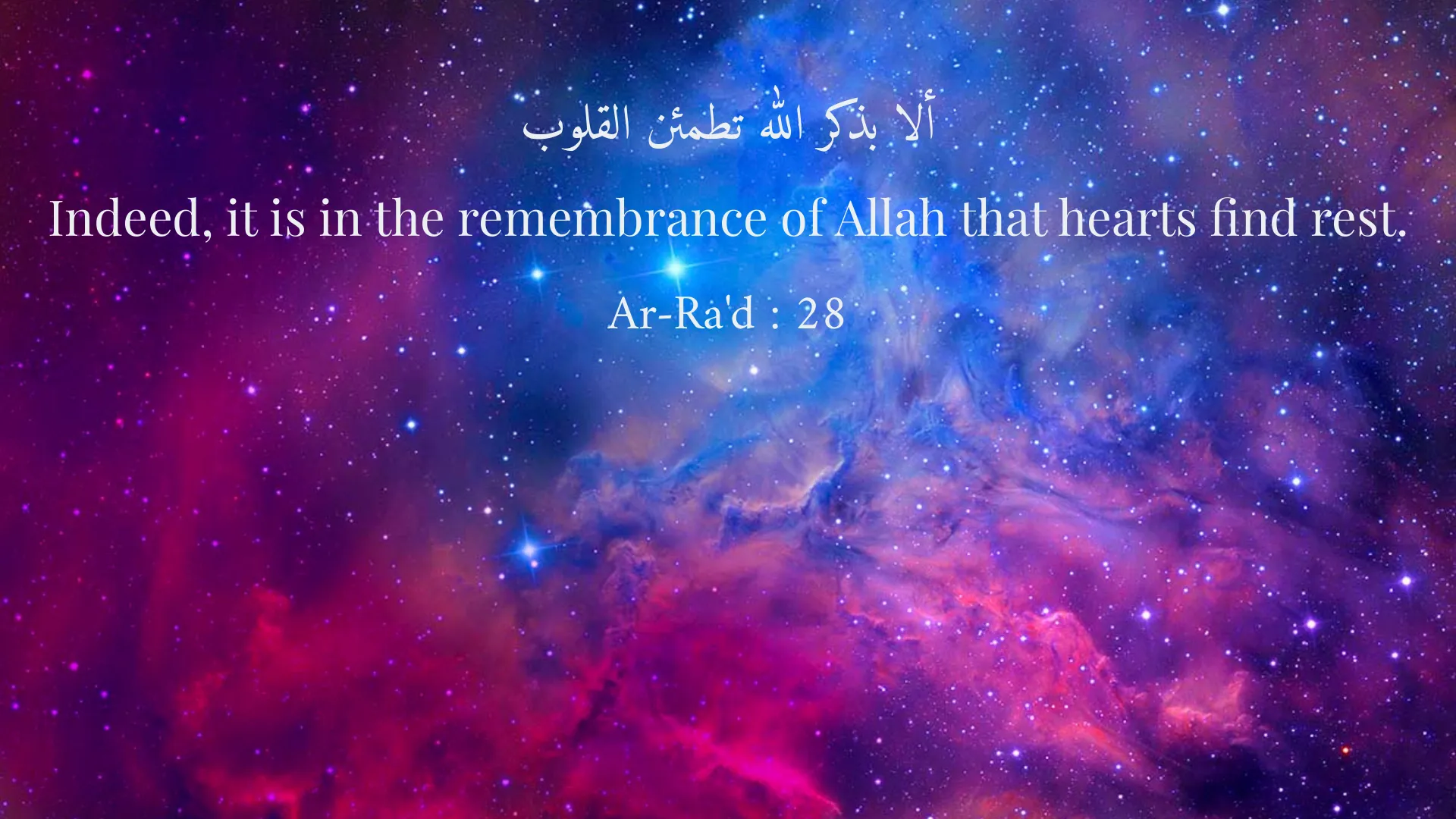
ألا بذكر الله تطمئن القلوب
Indeed, it is in the remembrance of Allah that hearts find rest.
Ar-Ra'd : 28
يَاأَيُّهَا الَّذِينَ آمَنُوا اسْتَعِينُوا بِالصَّبْرِ وَالصَّلَاةِ ۚ إِنَّ اللَّهَ مَعَ الصَّابِرِينَ
O you who have believed, seek help through patience and prayer. Indeed, Allah is with the patient.
Al-Baqarah : 153
وَقَالَ رَبُّكُمُ ادْعُونِي أَسْتَجِبْ لَكُمْ
And your Lord says, 'Call upon Me; I will respond to you.'
Ghafir : 60
Short Story
One day, a young man named Amir was suffering from loneliness and negative thoughts. One day, he decided to turn to the Quran and read a Surah. When he came across a verse about the remembrance of God, he felt his soul calming. Amir dedicated time each day to prayer and supplication, and soon realized that his depression was alleviated through God's remembrance and patience. Now he not only saw himself happier, but he also wanted to invite others toward peace.